
What you’ll learn
At Class2Class.org, global collaboration is supported by a clear educational model. This model explains how learning experiences are designed, how students engage, and what skills they develop through international collaboration.
In this article, you will understand:
- The pedagogical foundations behind Class2Class projects,
- The methodologies used to guide learning,
- And the competencies students develop through global collaboration.
By the end, you’ll be able to recognize what makes a Class2Class experience work—and how to bring that kind of meaningful global learning to your own classroom or program.
The following video will help you visualize the model in practice:
Educational foundations
Education for Sustainable Development (ESD)
ESD helps students understand how social, environmental, and economic challenges are connected. It encourages learners to think critically about real-world issues and to develop responsible attitudes and actions that contribute to a more sustainable future.
Global Citizenship Education (GCED)
GCED focuses on helping students see themselves as active members of a global community. It promotes respect for diversity, intercultural understanding, empathy, and cooperation across cultures.
Child Rights–Based Approach
Inspired by the Convention on the Rights of the Child, this approach ensures that students’ voices, participation, inclusion, protection, and well-being are central to every learning experience.
Together, these frameworks ensure that global collaboration is meaningful, inclusive, and connected to real-world challenges.
Active learning methodologies
To bring these frameworks into classroom practice, Class2Class promotes active methodologies that place students at the center of learning.
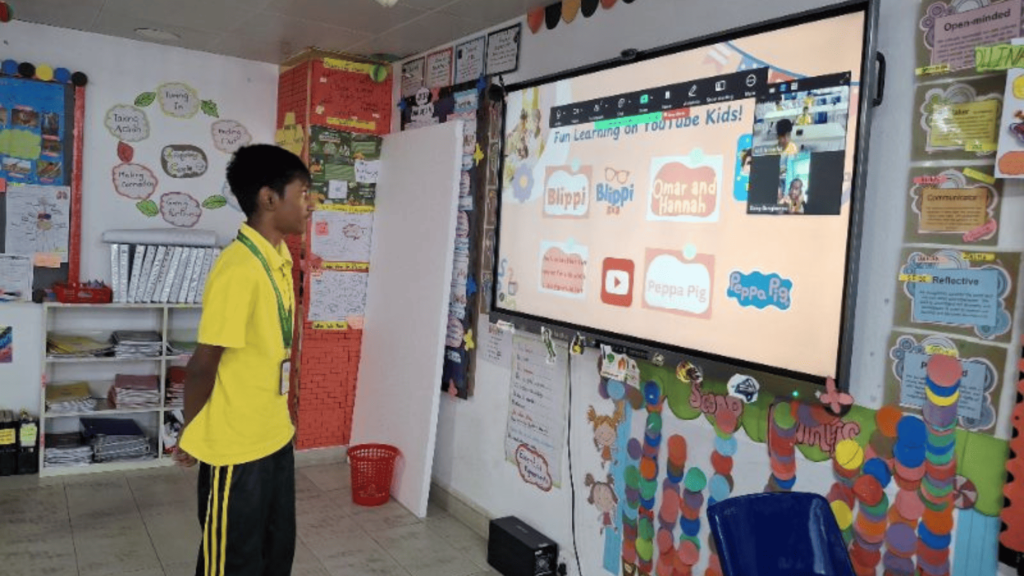
Collaborative Online International Learning (COIL) is the core methodology used on the platform. It connects teachers and students from different countries to work together on shared academic projects in virtual environments.
This approach is supported by:
- Project-Based Learning (PBL), where students explore real-world questions and apply knowledge across subjects.
- Design Thinking, which guides students through understanding needs, generating ideas, testing solutions, and reflecting on outcomes.
Together, these methodologies ensure that learning is participatory, meaningful, and connected to real-world contexts.
The Role of AI in Class2Class
At Class2Class.org, artificial intelligence is used as a pedagogical copilot, not as a replacement for teachers.
AI supports educators by:
- Helping structure international collaborative projects
- Clarifying objectives, phases, and activities
- Supporting reflection and evaluation processes
- Reducing workload and improving clarity
Teachers always retain full pedagogical control, and AI never evaluates people — it supports learning design and reflection.
Evaluation as a Learning Tool
Evaluation in Class2Class is a formative and supportive process. Its goal is not to judge, but to help students and teachers reflect, understand progress, and improve learning experiences.
Evaluation focuses on:
- Making learning visible
- Strengthening global competencies
- Supporting project design and facilitation
- Encouraging reflection and growth
Initial and final evaluations help capture learning journeys, while future versions will integrate formative evaluation throughout the project.
Additional Resources
To deepen your understanding of the Class2Class.org educational model, we recommend reviewing the complete presentation.