


When teachers from six countries turned the simple question “What do you do in your free time?” into a global collaboration project, students in Ukraine, Italy, India, the United States, Bangladesh and Turkey discovered that hobbies, sports and traditional meals are some of the easiest ways to make a friend across the world — including one live session that put four classrooms on screen at the same time.
What happens when teachers take something every student already has — a hobby, a sport, a favourite meal — and turn it into a global collaboration project? That is exactly what teacher Olena from Ukraine did when she created “Free-Time Activities, Hobbies and Sport” project on Class2Class.org.
Instead of a textbook lesson on daily routines, students from Ukraine, Italy, India, the United States, Bangladesh and Turkey came together online to introduce themselves, present their hobbies and learn how children in other countries spend their afternoons. The result was a warm, lively series of live meetings full of music, sport, food, and one very memorable birthday surprise.
What Is This Project About?
Free-Time Activities, Hobbies and Sport is a global collaboration designed for students aged 9 to 15. The aim is simple and personal: share what you do outside of school, and learn what your peers do on the other side of the world.
Teachers from five countries joined the project on Class2Class.org:
- Olena, Anna and Viktoriia — Ukraine
- Stefania and Barbara — Italy
- Jhansi, Ayyapparaj and Sangeeta — India
- Kellie — United States
- Ayşen and Dilay — Turkey
- Nasim — Banglasdesh
The collaboration followed a clear structure each session:
- Greetings with flags and class posters.
- Welcome words from each teacher.
- Self-introductions from every student (name, age, hobby).
- Presentations on free-time activities, sport clubs and personal achievements.
- A closing game on Kahoot or Wordwall.
- A short feedback round at the end.
As a project-based learning experience, students were not just listening to a lesson — they were preparing real presentations, performing in front of an international audience, and answering live questions from peers in another country.
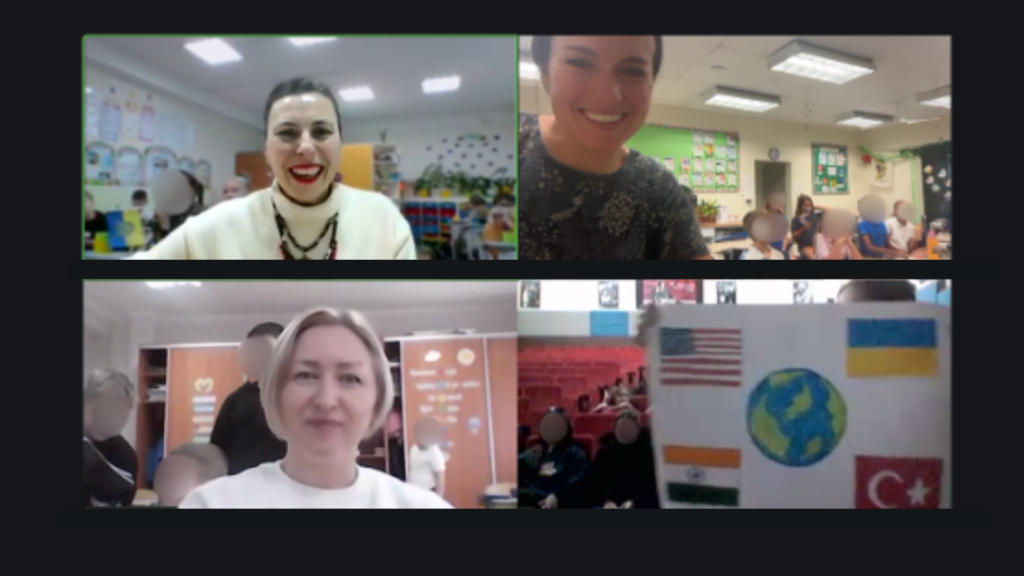
Classrooms from Ukraine, EEUU, India and Turkey during a live session.
The Impact on Students
This project did much more than practise vocabulary. By working with peers from other countries, students grew in ways that go well beyond the lesson plan.
Students used English as a real, working language. They introduced themselves, presented hobbies, answered questions and even sang together — all live, all in front of an audience that did not share their first language.
Comparing winter weather, sports clubs, school subjects and traditional meals gave students a concrete way to see how daily life is similar and different across countries. Ukrainian students discovered Italian art schools and homemade lasagna; Italian students learned about cross-country skiing and traditional borshch. This is what intercultural awareness looks like.
One thing that often happens is that students find it hard to open up to classmates they don’t know, so shyness is common at first. But by the end of the meetings, they were proudly presenting their guitars, footballs, drawings and skis on camera. That kind of confidence is hard to teach in any other way.
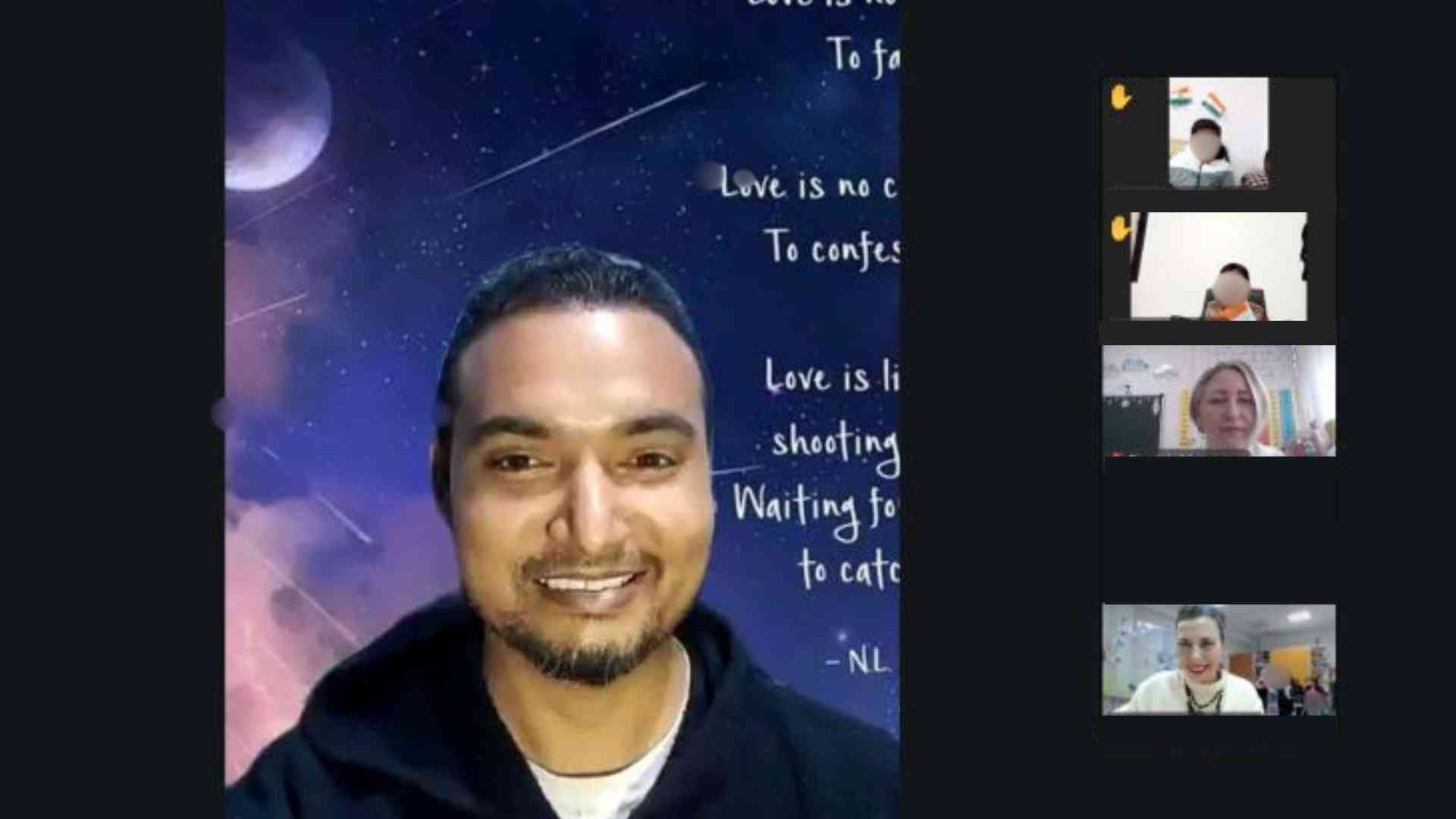
Classrooms from Ukraine, Bangladesh, EEUU, India and Turkey during a live session.
Teachers and students from each country had to coordinate slides, videos, timing and translations. Working in a multinational team taught flexibility, patience and care for the other side of the screen.
For most students, this was their first real conversation with a child from another country. Small moments — a shared birthday song, a planned “cooking battle” between lasagna and dumplings — turned global citizenship from an abstract idea into a personal friendship.
The Story: How the Global Collaboration Unfolded
The first thing the Ukrainian students saw on screen was sunshine. The Italian classroom was warm and bright. Their teacher in Ukraine laughed and explained the contrast on her side of the call:
“In our country, we have snow and frost. The real winter started in our country.” — Olena, teacher, Ukraine
That single sentence already taught the students something they could never get from a textbook — that two classrooms in Europe can wake up to completely different weather on the same morning.
Then the introductions began. Each student stepped up to the camera, said their name and age, and shared a hobby. The Ukrainian side opened with short videos and presentations on basketball, swimming, jogging and cross-country skiing. One student, a young cross-country skier, explained with quiet pride that he has been training for eight years, that he is a candidate for master of sports, and that last year he took third place at a regional championship. Another student, Dasha, brought her guitar. “My father taught me this, and I continue to do it on my own,” she said — a small, simple line that captured exactly what the project was about.
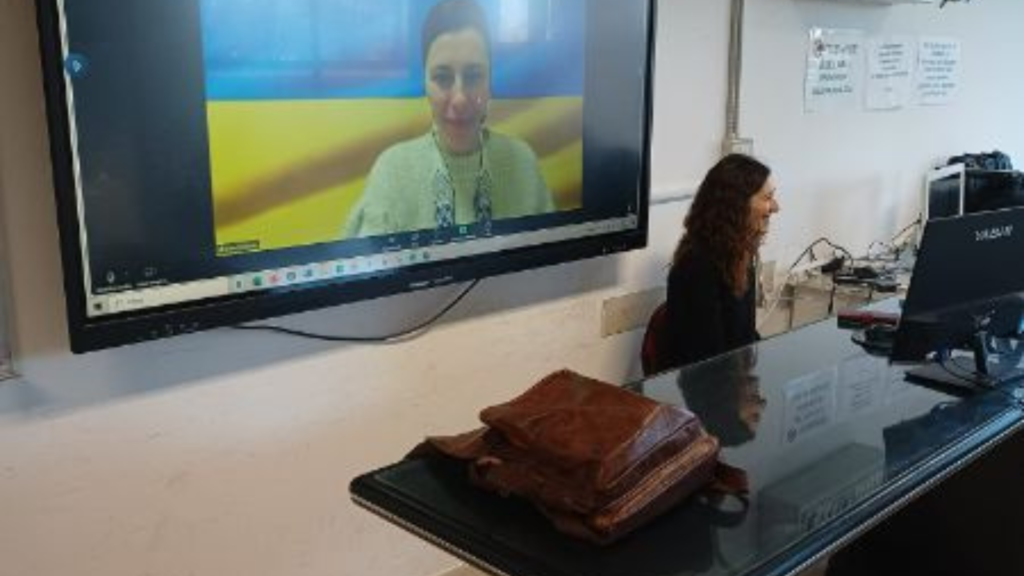
Ukranian teacher Olena and italian teacher Stefania during their live session.
The Ukrainian team also presented traditional dishes — borshch, vinaigrette salad and pumpkin porridge — with a line that made the Italian class smile: “We couldn’t miss this part of our presentation, because this meal makes us strong as we are.”
Then it was Italy’s turn. Iram shared that she goes to an art school and loves drawing. Julia explained that she dances every day, two hours a day. A young chef described how he had made homemade lasagna the day before, which sparked an idea that everyone agreed on at once — a future cooking battle, Italian lasagna versus Ukrainian dumplings. Alessandro talked about football, training three times a week as a midfielder and goalkeeper, and quietly admitted that his school does not have a football team. Another student introduced her hobby with one shy word that lit up the call: horse riding.
In the middle of the presentations, the class discovered that it was one student’s birthday. Without a script and without a pause, the Ukrainian classroom prepared a surprise. The teacher counted to three and the whole group sang Happy Birthday through the screen to a student they had only met that morning. Moments like that turn a class project into a memory students keep for years.
The meeting closed with a Wordwall picture-guessing game. Students from both sides shouted out the answers in English — skiing, football, reading, swimming, surfing the internet, skateboarding, playing the guitar, riding a bike. By the time the bell rang, no one wanted to log off.
“Our students are really very happy to communicate with students from different countries. They like to learn more about different cultures and traditions. It is very fun to communicate and play together, to share their abilities and skills.” — Olena, project teacher, Ukraine
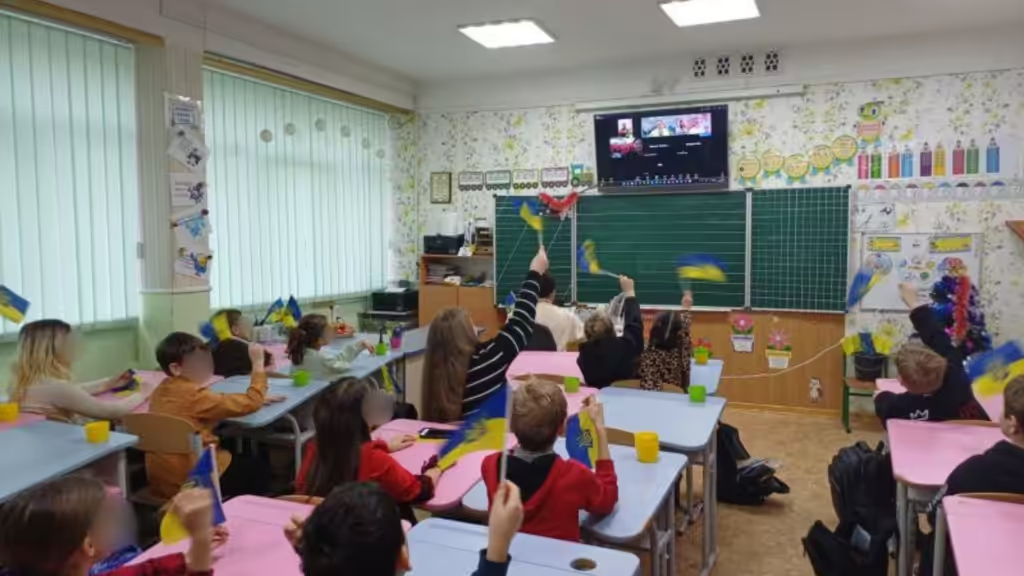
The Ukraine–Italy meeting was only one of several live sessions in this project. In a second session, the same Ukrainian team welcomed three more countries on the screen at the same time: classrooms from the United States, Turkey and India joined Ukraine in a single four-country live exchange. Photos from that day show students waving across four different classrooms at once, holding up posters and flags, and listening as each country took its turn to introduce its hobbies, sports and traditional meals.
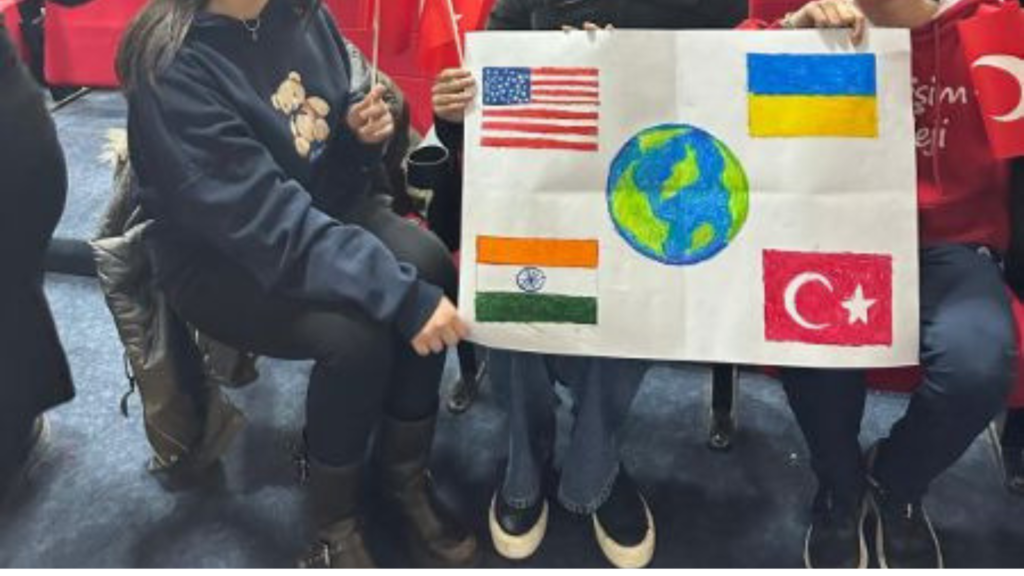
Turkish students during their presentation celebrating the encounter of four different countries.
Coordinating four classrooms across four time zones, four languages and four school schedules is not a small thing. It is, in itself, the success story. Teachers from all these countries brought together students from five countries on three continents into the same live conversation about something every child understands: free time.
That is what made this project work. The agenda was simple — flags, greetings, introductions, presentations, a quick Kahoot, a feedback round — but behind it sat a group of teachers willing to plan, message, test the link, and show up for each other so their students could meet.
Start Your Own Global Collaboration
If this project inspires you, you can bring a similar experience to your classroom. The idea is simple: pick a topic your students already care about, connect with a partner teacher in another country, and let the global collaboration begin. You can start by exploring the How it Works section.
Whether your students love hobbies, sports, food, music, climate action or any other topic, there is a classroom out there ready to collaborate. You can shape it as a one-session exchange, like the Ukraine–Italy meeting, or extend it into a multi-week project-based learning experience with presentations and certificates at the end. The approach is up to you.
Class2Class.org is completely free and connects a global community of educators in over 170 countries.