In partnership with



Go to event page

📅 June 12 · International Awareness Day
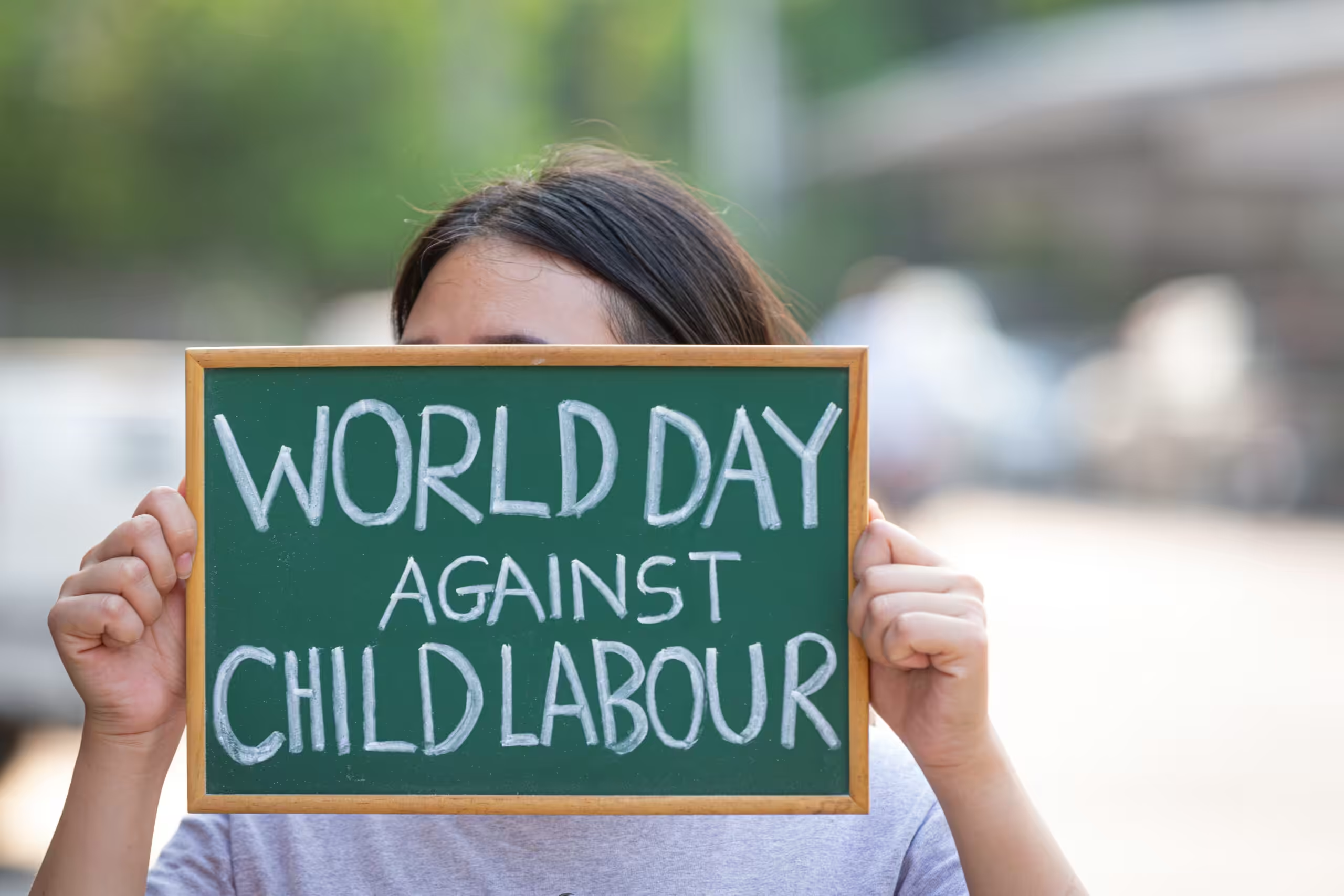
Each year on June 12, World Day Against Child Labor unites classrooms, communities, and governments behind one truth: no child should trade school, play, or safety for work. Join teachers around the globe using Class2Class to turn awareness into action through hands-on collaborative projects that defend children’s rights and dignity.
Established by the International Labour Organization in 2002, World Day Against Child Labor shines a light on the 160 million children worldwide still trapped in labor that robs them of education, health, and a future they deserve. The day directly champions SDG 8: Decent Work and Economic Growth, and specifically Target 8.7 — ending child labor in all its forms. It also speaks to SDG 4: Quality Education, because every child kept out of work is a child given the chance to learn. Read more on the United Nations observance page.
For teachers, World Day Against Child Labor is far more than a date on the calendar — it is an invitation to turn classrooms into spaces of empathy and advocacy. When students explore the lives of children their own age halfway across the world, they build the global awareness and moral courage that education for sustainable development asks of them. Class2Class is the free, global classroom platform that makes those cross-border conversations possible, connecting teachers from 137 countries to co-create projects that turn understanding into action.
Want to explore more awareness days? Visit our SDG Calendar for year-round project based learning opportunities.
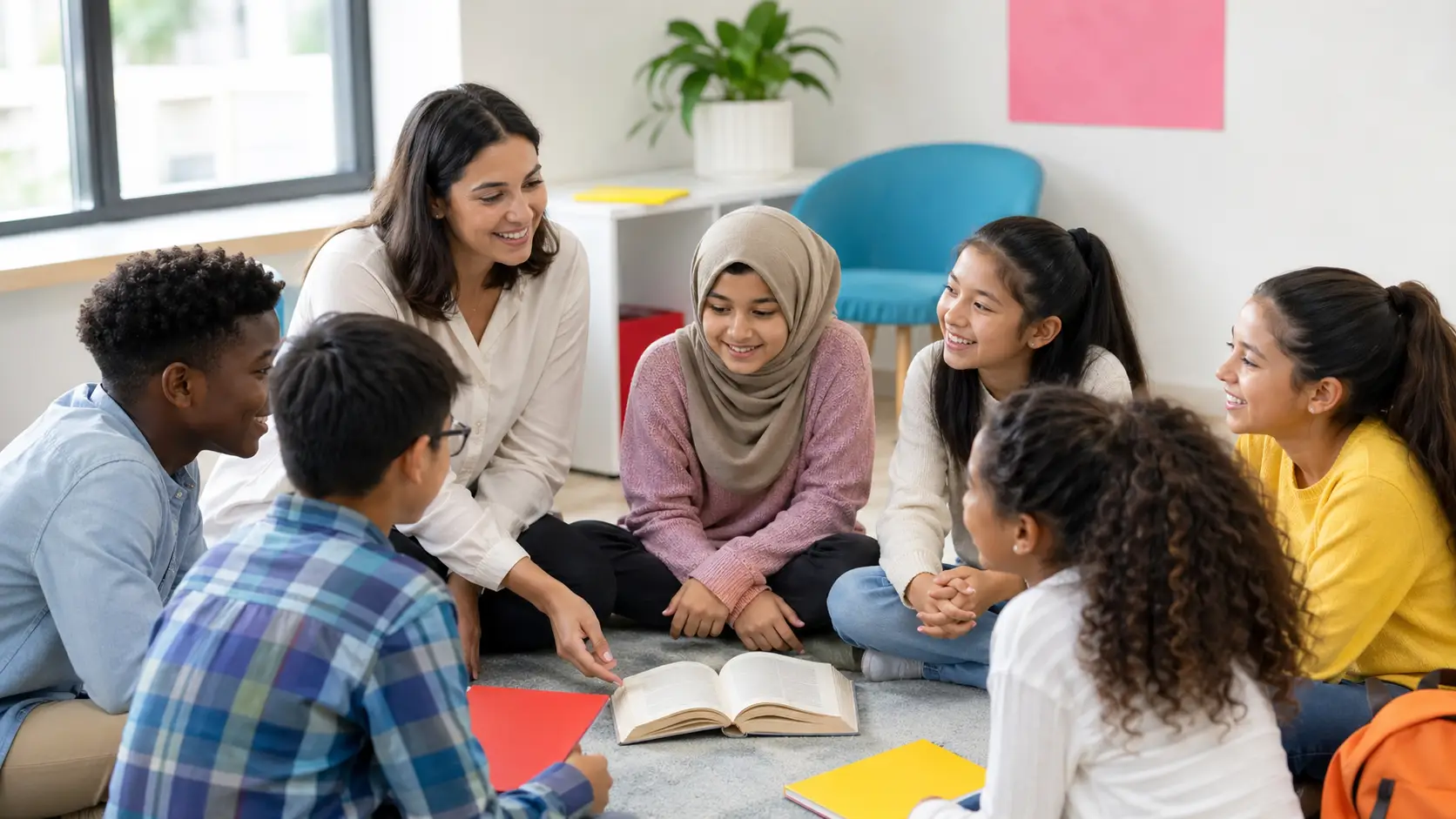
These projects build the competencies students need to become informed, compassionate advocates for every child’s right to a safe, joyful childhood.
Students step into the lived experiences of peers around the world, growing the empathy that fuels lasting advocacy.
Learners see themselves as part of a worldwide community where every child’s rights matter, regardless of borders.
Through inquiry into the causes of child labor, students learn to question, analyze, and evaluate complex social issues.
From creative storytelling to advocacy campaigns, students learn to communicate ideas that move audiences and inspire action.
Two ready-to-launch Class2Class projects help your students mark World Day Against Child Labor with purpose — choose the one that fits your classroom.

Ages 6–13 · English
Young students use art as a language of empathy, weaving a global tapestry of hope that explores children’s rights with partner classrooms abroad.

Ages 13–18 · English
Teens use design thinking in international teams to investigate child labor and launch awareness campaigns that turn insight into impact.
Project Idea · Ages 6–13
Crafting Compassion invites students aged 6–13 to use art as a language of empathy. Through collaborative crafts shared with partner classrooms abroad, young learners explore what every child needs to thrive — education, play, dreams, safety — and weave their voices into a global tapestry of hope. It is a gentle yet powerful introduction to World Day Against Child Labor for elementary classrooms.
Across several sessions, students learn what child labor is and how it affects children worldwide, then respond creatively. They craft symbolic pieces — a tapestry, a poster, a small handmade object — and present them to partner students from another country via Class2Class. The shared activity becomes a vehicle for honest conversation about children’s rights, the value of education, and the power of solidarity. By the end of the project, students are not just informed: they have made something that proves their voice and compassion matter.
Empathy & Intercultural Understanding
Through storytelling and shared crafts with international peers, students build deep empathy for children whose realities differ from their own.
Creativity & Innovation
Students translate complex ideas about children’s rights into accessible, original artwork that speaks louder than statistics.
Communication
Presenting their work to a partner classroom abroad, students practice clear, confident expression of ideas that matter.
Collaboration & Teamwork
Weaving teams within and across countries teaches students that meaningful change starts with showing up for one another.
Project Idea · Ages 13–18
Advocates in Action engages students aged 13–18 in a structured design-thinking journey to confront the realities of child labor. Working in international teams via Class2Class, teens investigate the issue, empathize with affected children, ideate solutions, and launch an awareness campaign that turns insight into impact — making World Day Against Child Labor a launchpad for sustained advocacy.
Guided by the five stages of design thinking — empathize, define, ideate, prototype, test — students research the scope, causes, and consequences of child labor through interviews, data analysis, and direct dialogue with peers abroad. They identify a specific facet of the issue (consumer choices, school access, policy gaps) and prototype a creative response: a social media campaign, a podcast, a community event, or a school-wide initiative. Teachers facilitate; teens lead, building the leadership and problem-solving skills they will carry far beyond the classroom.
Critical Thinking & Problem-Solving
Students apply the design-thinking framework to one of the most complex social challenges of our time, learning to break it down and build solutions.
Leadership
From facilitating team meetings to launching public campaigns, students grow the leadership muscles that turn good intentions into measurable action.
Research & Investigation
Students gather primary and secondary data on child labor, evaluating sources and synthesizing evidence to ground their advocacy in truth.
Empathy & Intercultural Understanding
Cross-border conversations with international partners give students a felt understanding of how child labor looks different across contexts — and why every voice matters.
Join teachers from 137 countries turning June 12 into a year-round commitment to children’s rights. Explore our SDG Calendar for more awareness days and project-based learning opportunities that empower students to defend the dignity of children everywhere.