



Many teachers put off international classroom collaboration for a simple reason: they assume it requires months of planning, technical expertise, or a background in project-based learning. Once they start, they often find the opposite. A clear structure, a ready partner class, and students who connect across borders more naturally than expected. Global collaboration without experience is not only possible — it is exactly where most teachers begin.
This article gives you five concrete steps to practice global collaboration without experience. No special training. No technology expertise. No previous international project required.
Step 1: Global Collaboration Without Experience Starts With Letting Go of the Expert Myth
The first barrier to global collaboration is not the platform, the language, or the time zone. It is the belief that you need to be an expert before you can start.
You don’t.
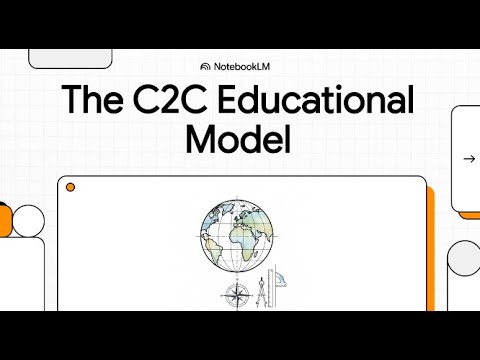
Class2Class is built around two ideas that work well together. The first is project-based learning (PBL) — students learn by working on a real question and building something to share, not by memorizing a list of facts. The second is COIL (Collaborative Online International Learning) — that learning happens alongside a partner class in another country.
Together, these two ideas create the structure behind every Class2Class project. You don’t need to master either of them before you begin. The platform guides you through both as you go.
You can learn more about the educational model behind Class2Class in this short tutorial:
Research on virtual exchange confirms this: teachers with no prior international collaboration experience successfully run meaningful cross-cultural exchanges in their first attempt when they have a clear, low-stakes structure to follow (O’Dowd, 2018). The structure does the heavy lifting. Your job is to facilitate the conversation. This is why global collaboration without experience is not an exception — it is the norm for first-time participants.
The best way to see this for yourself is to open the Project Assistant on Class2Class. In a few minutes, it walks you through building a complete international project — topic, learning objectives, activities, and a full timeline. You don’t need to know how to structure any of that in advance. The tool guides each step, and you can adjust everything it suggests.
Step 2: Use a Ready-Made Map, Not a Blank Page
One of the most common reasons teachers delay their first international project is the feeling that they have to design everything from scratch. You don’t.
The Project Definition Assistant (PDA) inside the Class2Class platform walks you through the four phases of any project in about 15 minutes. The four phases are:
- Definition — choose your topic and set a clear goal.
- Execution — students exchange work with the partner class.
- Reflection — students think about what they learned and how the collaboration felt.
- Dissemination — students share their work with their community.
You describe your class, your topic, and your available time. The Project Assistant proposes a full plan with learning objectives, suggested activities, and a timeline. You review it, adjust what doesn’t fit your class, and save. The final project is always yours to shape.
You can also go to the Discover section and browse projects that are already active. You can see what topics other teachers are running, how long each project takes, and participating teachers. If a project fits your class, you can join it directly and connect with the teacher already leading it. This is one of the fastest ways to start: you follow a structure that is already built and connect with a partner who is already looking for collaborators.
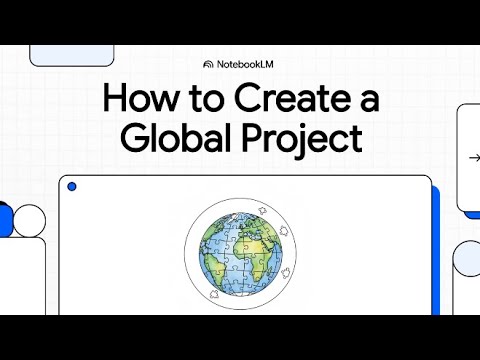
Watch how the Project Assistant works step by step:
Step 3: Explore What Is Already Happening — Then Decide Your Path
You don’t need to design a project before you know what global collaboration looks like in practice. The Discover section on Class2Class shows you active projects from teachers in more than 144 countries. You can filter by topic, age group, or duration, and explore what others are running right now.
Browsing this section is a useful first step even before you decide what kind of project you want to run. You see real topics — cultural traditions, environmental questions, creative challenges — and real timelines that teachers have already planned. If something fits your class, you can join directly. If you prefer to build your own, you open the Project Assistant and start from your idea.
Both paths lead to the same place: a structured international collaboration with a partner class, ready to run. The difference is where you begin — with someone else’s framework or your own.
Neither option requires you to have prior experience. Global collaboration without experience is the starting point the platform was built for. The structure is already there, whichever path you choose.
UNESCO’s 2021 report on the future of education argues that learning relationships — the connections students build across different contexts — are one of the most powerful drivers of meaningful education. Whether you join an existing project or create your own, you are building one of those relationships for your students.
Step 4: Pick a Topic Your Students Already Know
Global collaboration without experience becomes much easier when the content is familiar. The topic of your first exchange does not need to be ambitious or curriculum-defining. It just needs to be something your students can talk about with confidence.
Real examples from Class2Class teachers show how well this works when the topic is close to students’ daily lives. In one project, students from six countries — Ukraine, Italy, India, the United States, Bangladesh, and Turkey — connected around healthy hobbies, sports, and free time. They discovered that sharing what you do after school is one of the easiest ways to build a friendship across the world. No complex curriculum alignment was required. No technology expertise. Just a question every student could answer: What do you like to do when school is over?
In another project, a teacher in Bangladesh used K-pop as the entry point — a music genre that his students loved and that connected them with students in several other countries almost instantly. The collaboration grew from a shared interest into a structured exchange that touched on culture, language, and creative expression. The teacher did not start as an expert. She started with something her students cared about.
When you choose a familiar topic for your first exchange, you give your students the confidence to speak first. And when students speak first, the collaboration works. That is global collaboration without experience in its most natural form — a real human exchange, built on something both sides already know.
Good beginner topics could include:
- Daily school routines
- Food and family traditions
- A local environmental issue
- A celebration or holiday
- A sport or artistic practice
Any of these can anchor a project on Class2Class. None of them require a specialized curriculum.
Step 5: Trust the Platform to Handle the Logistics
One of the reasons teachers hesitate before their first international project is logistical anxiety: How do I find a partner class? What if the partner doesn’t respond? How do I manage the time zone difference?
These are real questions, and Class2Class was built to answer them.
When you create a project and set its visibility to open collaboration, other teachers looking for a partner can find your project and request to join. When you browse the Discover section and join an existing project, the connection is already established. You are not sending cold emails to strangers. You are joining a structured environment where both teachers have agreed to participate.
The OECD’s Learning Compass 2030 identifies student agency — the ability to take initiative, make decisions, and take responsibility — as one of the most important outcomes of modern education. Global collaboration develops that agency because students are not just receiving content; they are producing it, sharing it, and responding to real audiences in real time. The platform gives you a safe, structured space to make that happen.
You are not doing this alone. The tool is free. The matching works. The structure is there. What Class2Class asks of you is one thing: the decision to start.
The First Step Is Smaller Than You Think
The gap between “I’ve never done this” and “I’ve done this” is not a year of training. It is one project. One connection. One moment when your students receive a message from a class in another country and realize the world is bigger — and closer — than they thought.
Global collaboration without experience is how every teacher in this field started. The Connect approach on Class2Class was designed specifically for that first step — a clear path, a ready structure, and a partner class waiting on the other side.
You don’t need to be an expert. You just need to begin! Start your first international project this week.
References
O’Dowd, R. (2018). From telecollaboration to virtual exchange: state-of-the-art and the role of UNICollaboration in moving forward. Journal of Virtual Exchange, 1(1). https://journal.unicollaboration.org/article/view/35567
UNESCO (2021). Reimagining our futures together: A new social contract for education. https://unesdoc.unesco.org/ark:/48223/pf0000379707
OECD (2018). The future of education and skills 2030: OECD Learning Compass. https://www.oecd.org/education/2030-project/