

What you’ll learn
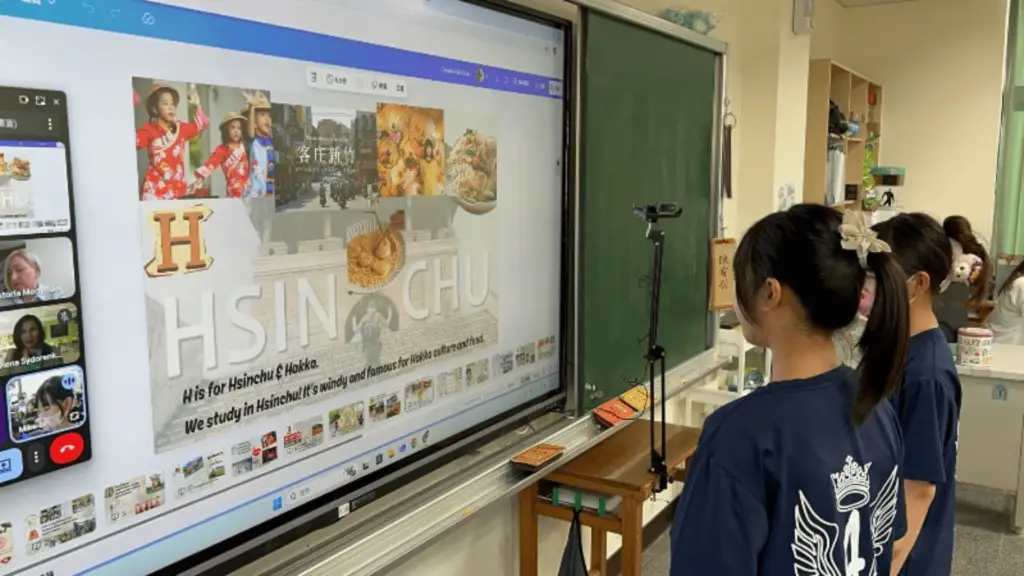
Global collaboration happens when two or more classrooms in different countries work together on a shared learning goal. Students exchange ideas, explore real-world issues, and create something meaningful together, guided by their teachers.
In this article, you’ll learn what global collaboration really means in practice, why it transforms learning, and how you can begin integrating it into your own classroom—step by step.
Watch this short video to see how global collaboration works in real classrooms and how teachers guide students through international learning experiences.
Why does global collaboration transform learning?
When classrooms connect across borders, learning changes. Students are not only learning about the world, they are learning with the world.
Through global collaboration, students develop:
- Language skills by communicating with real peers
- Cultural awareness by understanding different perspectives
- Critical thinking by comparing ideas and solving problems together
- Engagement and motivation through real connections
- Global citizenship by working on shared challenges
- Empathy and respect by interacting beyond stereotypes
These benefits appear naturally when collaboration is meaningful and well guided.
From a local classroom to a global classroom
Comparing both experiences helps to better understand it.
In a local classroom:
- Learning stays inside one school,
- Tasks are internal,
- Communication is mostly teacher-to-student.
In a global classroom:
- Students connect with peers in another country,
- Tasks are collaborative,
- Communication flows between students and teachers across borders,
- Learning outcomes are created together.
Global collaboration does not replace your curriculum — it expands it.
How does global collaboration usually work?
Most global collaborations follow a simple and clear flow.
- Connect: Teachers meet, choose a topic, and agree on a timeline.
- Introduce: Students meet their partner class and explore the project theme.
- Collaborate: Classes work together on shared activities and ideas.
- Reflect: Students exchange feedback and talk about what they learned.
- Celebrate: Teachers and students share results and recognize the experience.
This structure helps keep projects focused, manageable, and meaningful.
Additional Resources
Download the PDF to review the core concepts of global collaboration and explore examples you can apply in your classroom.