
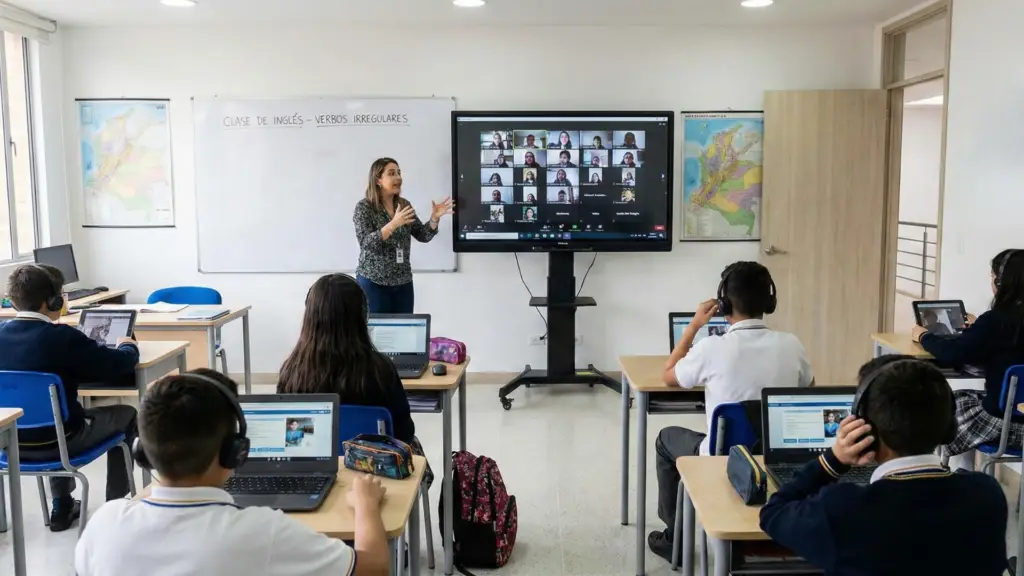
What if your writing assignments connected students with peers across continents? What if oral presentations sparked genuine conversations with international audiences? What if every lesson naturally built the global competencies your students need for their future?
International collaboration through COIL (Collaborative Online International Learning) makes this possible—not by adding to your workload, but by transforming what you’re already teaching into something more powerful, relevant, and engaging.
COIL connects your classroom with students in other countries to work on shared projects. Research consistently shows that students participating in well-designed COIL projects demonstrate increased motivation, improved language proficiency, and deeper cultural understanding. But perhaps most valuable for teachers: students take genuine ownership of their learning.
Let’s explore five specific ways international classroom collaboration transforms your English teaching practice while building the competencies students need to thrive in our globally connected world.
Way #1: Writing Becomes Authentic Communication
The challenge: Students write essays for grades, not to communicate ideas that matter to them. The only reader is you.
How COIL changes this: International collaboration gives every writing assignment a real audience who genuinely cares about the content. This transforms how students approach writing.
When students know peers in other countries will read and respond to their work, narrative writing shifts from classroom exercise to genuine storytelling. Students discover they must explain cultural context—they can’t assume international readers understand their references, traditions, or daily experiences. This naturally develops more sophisticated descriptive writing and builds intercultural communication competency.
The difference is profound: students self-edit more carefully because they want to be understood. They ask vocabulary questions because precision matters to them. They revise willingly because they take pride in representing their culture well. You spend less time forcing revision and more time facilitating authentic communication.
Way #2: Speaking and Listening Gain Real Purpose
The challenge: Students practice dialogues from textbooks or present to classmates who aren’t genuinely listening. Listening means watching videos and answering comprehension questions.
How COIL changes this: Video conferences with international classrooms create genuine communication needs. Students must speak clearly enough to be understood across accents and technology connections. They must listen actively to comprehend peers whose English pronunciation differs from their teacher’s.
Students naturally develop crucial collaboration and communication competencies: adjusting speaking pace for non-native listeners, asking clarifying questions politely, rephrasing when someone doesn’t understand, and navigating time delays with patience. These sophisticated abilities serve them far beyond your classroom.
The motivation is built-in. Students want to be understood by their new international friends. They want to understand what their partners are saying. This intrinsic motivation drives practice and improvement in ways traditional exercises rarely achieve.
Way #3: Reading Comprehension Deepens Through Multiple Perspectives
The challenge: Students read assigned texts and answer comprehension questions. You discuss themes and literary devices. But many students see reading as something done for school, disconnected from their lives.
How COIL changes this: International collaboration transforms reading into comparative, cross-cultural experience. When students discuss the same text with peers from different countries, they discover that cultural background profoundly shapes interpretation.
Imagine your students reading a story about family relationships, then discussing it with partners who have completely different cultural expectations about family structure, generational roles, or individual versus collective decision-making. Suddenly, literary analysis isn’t abstract—it’s understanding how lived experience shapes what we notice, what we question, and what we assume.
This naturally develops critical thinking and global awareness through collaboration. Students learn that skilled readers consider multiple interpretations, that cultural context affects comprehension, and that understanding requires curiosity about perspectives different from their own.
These discussions also reveal gaps in comprehension. When an international partner asks about something they found confusing, your students often realize they skimmed past it, making assumptions they didn’t examine. This builds stronger, more careful reading habits.
Way #4: Vocabulary and Grammar Develop in Meaningful Context
The challenge: Vocabulary lists and grammar worksheets feel disconnected from real communication. Students memorize for tests and forget immediately. They don’t see how language mechanics enable them to express complex ideas.
How COIL changes this: When students need specific vocabulary or grammatical structures to communicate with international partners, they learn differently. The language has immediate, obvious purpose.
Students acquire new words not from decontextualized lists, but because they need them to explain their culture, understand their partners, or collaborate on projects. A student discussing Sustainable Development Goals with international classmates naturally learns words like “implementation,” “advocacy,” and “initiative”—not from flashcards, but from needing to discuss solutions to real problems. This builds digital literacy as students navigate online collaboration tools while developing academic language in authentic contexts.
Grammar mistakes suddenly matter differently. When unclear pronoun references confuse an international reader, students revise to improve clarity—not for a grade, but for successful communication. Subject-verb agreement isn’t just a rule to memorize; it’s what makes writing clear to readers.
This approach also exposes students to language variation. They encounter British versus American spelling, different idioms and expressions, and various ways of structuring formal versus informal communication. This builds linguistic flexibility and adaptability—awareness that standard textbook English represents just one variety.
Way #5: Cultural Competence Develops While Meeting Curriculum Standards
The challenge: Cultural awareness lessons often feel like separate additions to the “real” English curriculum. You teach a unit about another culture, students create presentations, and everyone moves on without deep understanding.
How COIL changes this: Cultural understanding develops naturally and deeply through sustained interaction with international peers. Students don’t learn about cultures in abstract ways—they learn with and from actual people from different cultures.
Unlike one-off culture lessons, global classroom partnerships involve ongoing relationships. Students build genuine connections with international peers over weeks or months, developing true intercultural communication competency through continuous interaction.
They learn to recognize their own cultural assumptions—those invisible beliefs about what’s “normal” that shape how they communicate. They practice asking respectful questions about differences. They explain their own culture to curious outsiders, becoming ethnographers of their daily lives. They navigate miscommunication with patience, learning that most confusion comes from different cultural contexts rather than bad intentions
Real Success Stories From Our Teacher Community
Example 1: “K-pop Talk: Bridging Cultures Through Music”
Led by Teacher Nasim Mia from Bangladesh
When Nasim noticed his students’ enthusiasm for K-pop music, he recognized an opportunity to transform that passion into meaningful language learning. Rather than dismissing popular culture as a distraction, he created a global collaboration project connecting his Bangladeshi classroom with international partners through shared musical interests.
The Project: Students from different countries discussed K-pop—not just as entertainment, but as a window into cultural identity, globalization, and artistic expression. Through structured discussions and collaborative activities, students analyzed song lyrics and music videos, comparing how peers from different cultures interpreted the same artistic content. They researched the cultural context behind K-pop’s global phenomenon and shared their own countries’ music traditions, creating reciprocal cultural exchange.
Why It Succeeded: Nasim built on existing student motivation. But to communicate effectively with international peers about this shared interest, students needed sophisticated language skills. The project addressed multiple English curriculum standards simultaneously—literary analysis through examining lyrics as poetry, research skills through investigating K-pop’s cultural impact, comparative analysis through contrasting interpretations, and oral communication through discussing personal connections to music.
The Real Impact: Students were so invested in sharing perspectives with international peers that they voluntarily revised writing multiple times and practiced presentations without being told. By starting with something students already cared about, Nasim eliminated the common “when will I use this?” barrier.
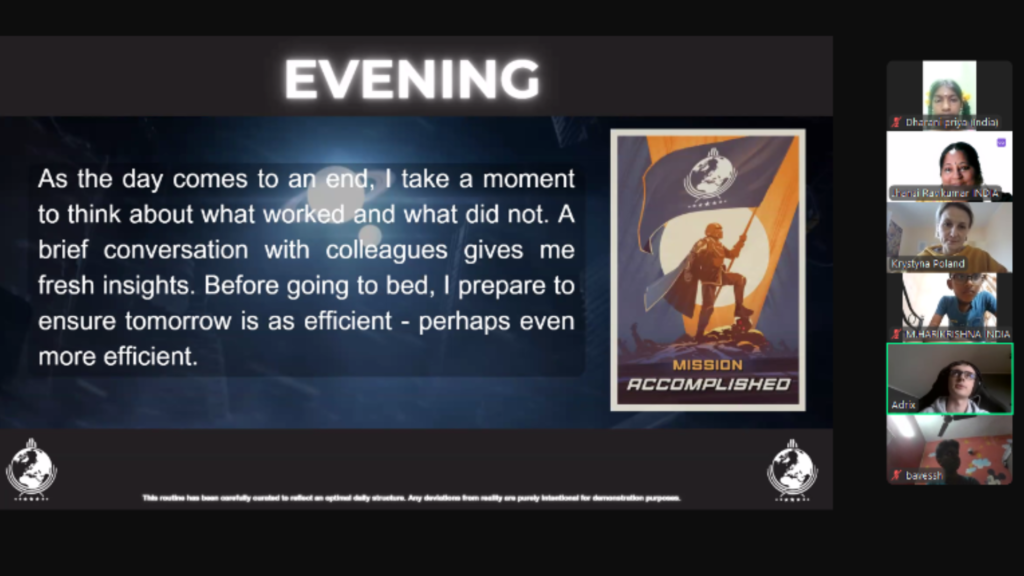
Example 2: “A Day in My Life”
Led by Teacher Krystyna Jakubowicz from Poland
Sometimes the most powerful COIL projects emerge from the simplest concepts. Krystyna created a project built on a straightforward idea: students describe a typical day in their lives to peers in other countries. But this seemingly basic premise became a profound window into how culture shapes everyday experiences.
The Project: Students from Poland partnered with classrooms across continents to create detailed narratives, presentations, and multimedia pieces documenting their daily routines. But this went far beyond a simple “My Daily Routine” vocabulary exercise. Students wrote descriptive narratives, created photo essays or video diaries, and compared daily life across different countries. They discussed how factors like climate, culture, family structure, and economic context shape routines that feel “normal” to each group.
Why It Succeeded: The genius lies in its universality and accessibility. Every student—regardless of English proficiency level—can participate meaningfully because everyone has a daily routine to share. Beginning English learners can create simple timelines with photos and basic sentences. Advanced students can craft sophisticated narratives exploring how their daily choices reflect broader cultural values.
Students discovered that their “normal” needed explanation for international audiences. Polish students writing about their afternoon “podwieczorek” (traditional snack time) had to explain this cultural practice. Partners in other countries shared completely different daily rhythms shaped by climate, family structures, and cultural traditions.
The Real Impact: Students learned to write descriptively for audiences without shared context—a sophisticated skill. They understood why specific details and clear explanations matter in cross-cultural communication. Beyond writing skills, the project developed genuine cultural understanding: students realized that differences in daily routines don’t mean anyone is doing life “wrong”—they reflect different cultural values, environmental contexts, and social structures.
How Class2Class Makes International Collaboration Simple
Ready-to-Use Educational Resources
Planning a global collaboration project from scratch takes significant time. Class2Class provides comprehensive free resources that dramatically reduce your preparation workload: detailed lesson plans designed specifically for each collaboration level, student worksheets created for international projects, video tutorials demonstrating best practices from experienced COIL teachers, and assessment rubrics adapted for collaborative learning.
Safe and Secure Learning Environment
Student safety remains paramount. Class2Class creates a safe online learning environment through teacher-moderated communication tools that give you oversight and control, privacy protections meeting international educational standards like GDPR or COPPA, secure platforms designed specifically for educational use, clear guidelines for appropriate online communication, and administrative oversight capabilities for school leaders.
Supportive Global Community
Perhaps most importantly, you will be joining a global community of educators who are dedicated to promoting global citizenship. Regular professional development webinars address common challenges, technical support is available when issues arise, and certificates recognise your professional growth.
You won’t be implementing international collaboration in isolation. You’re part of a global movement that is transforming the way students learn languages, develop cultural competence and prepare for our interconnected world.
Your students are growing up in a world where their success will depend partly on their ability to communicate effectively across cultures. As English teachers, we have both the opportunity and the responsibility to prepare them—not just with grammatical accuracy and vocabulary knowledge, but with genuine experience building connections, navigating differences, and collaborating with diverse partners.
Join us at Class2Class.org and start your collaborative journey today!