
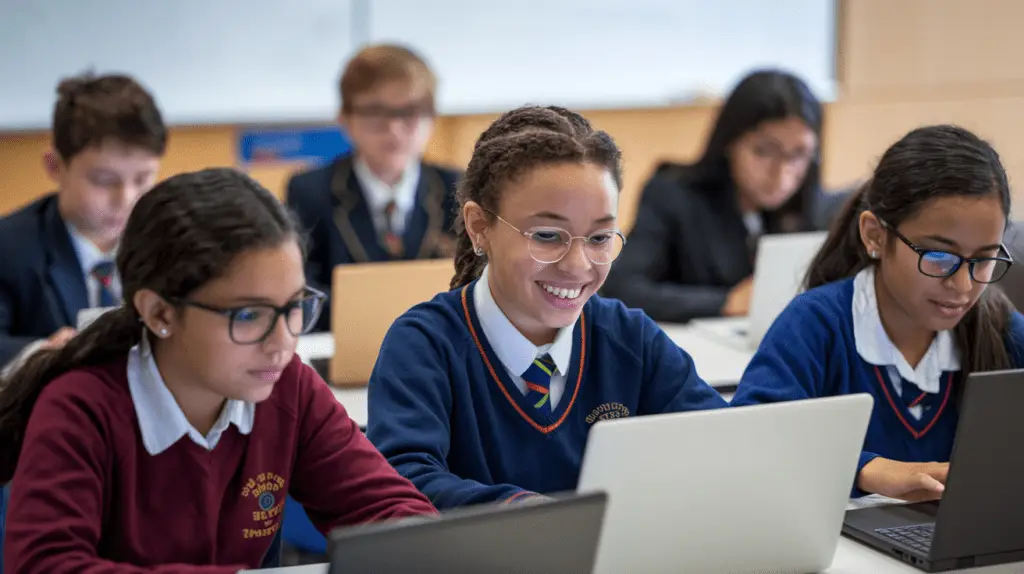
Are you a high school teacher eager to bring the world into your classroom? Collaborative Online International Learning (COIL) for high school is transforming education, and Class2Class is leading this exciting movement. Our platform empowers educators like you to create meaningful, cross-cultural experiences that prepare students for an increasingly interconnected world.
COIL for high school isn’t just a trend; it’s a powerful educational approach that combines technology, global awareness, and project-based learning. By implementing COIL strategies, you can foster critical 21st-century skills such as digital literacy, cross-cultural communication, and collaborative problem-solving.
Let’s explore five innovative COIL for high school strategies that can revolutionize your classroom:
1. Virtual Cultural Exchange Projects
Imagine your students collaborating with peers from Japan on a project exploring sustainable urban development. Through Class2Class’s secure platform, they can share ideas, compare local initiatives, and develop joint proposals. This type of virtual cultural exchange goes beyond traditional pen pal programs, offering deep, meaningful interactions that broaden perspectives and challenge assumptions.
To implement this strategy, start by connecting with a partner classroom through our global network. Together, you can design a project that aligns with your curriculum and the UN Sustainable Development Goals (SDGs). Students can use video conferencing, shared documents, and multimedia presentations to collaborate effectively across time zones.
For example, a high school in New York might partner with a school in Tokyo to compare and contrast urban sustainability initiatives in their respective cities. Students could conduct virtual tours of local green spaces, interview city planners via video calls, and collaborate on designing eco-friendly urban solutions that incorporate elements from both cultures.
2. Global Problem-Solving Challenges
COIL for high school becomes even more impactful when students tackle real-world problems together. Create a challenge that addresses a global issue, such as plastic pollution in oceans. Partner with a classroom from a coastal region and have students collaborate to research, brainstorm, and propose innovative solutions.
Class2Class provides a structured framework for these challenges, including templates for project planning, communication guidelines, and assessment rubrics. By working on these global challenges, students develop critical thinking skills, learn to navigate cultural differences, and gain a sense of global citizenship.
For instance, a class in California could team up with students in Indonesia to address marine plastic pollution. They might use our platform to share data on local beach clean-ups, analyze the types of plastic found, and collaboratively develop strategies for reducing plastic waste in their communities. This hands-on approach not only educates students about environmental issues but also empowers them to take action on a global scale.
3. Collaborative Digital Storytelling
Harness the power of narrative to bridge cultural divides. In this COIL for high school strategy, students from different countries co-create digital stories that explore shared themes or experiences. For example, high school students from the United States and India might collaborate on a series of short films documenting “A Day in the Life” of teenagers in their respective countries.
Our platform offers easy-to-use tools for video editing, subtitling, and sharing, making the technical aspects of this project manageable for students of all skill levels. This creative process not only improves language skills but also fosters empathy and cultural understanding.
Students could work in mixed international teams to create short documentaries, podcasts, or interactive web stories. They might explore topics like family traditions, local festivals, or the impact of technology on teenage life. Through this process, students learn not only about each other’s cultures but also about the art of storytelling and digital media production.
4. International Virtual Debates
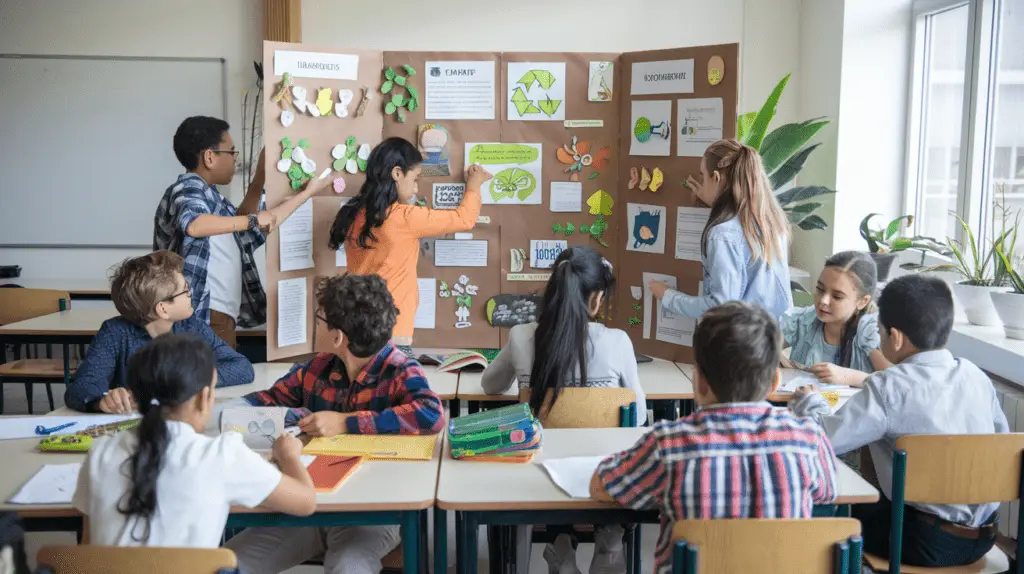
Develop your students’ critical thinking and argumentation skills through international virtual debates. COIL for high school can include structured debates on global issues, where students from different countries research, prepare, and argue various perspectives. Topics could range from climate change policies to the impact of social media on society.
Class2Class provides a secure, moderated environment for these debates, ensuring respectful and productive discussions. We also offer resources for debate preparation, including guides on cross-cultural communication etiquette and strategies for effective online presentations.
For example, a debate on “The Role of Social Media in Modern Democracy” could involve students from the United States, Brazil, and India. Each team would research the topic from their country’s perspective, considering factors like internet access, freedom of speech laws, and recent political events. The debate itself would be conducted via video conference, with students taking turns presenting arguments and rebuttals.
5. Collaborative Online Research Projects
Transform traditional research assignments into dynamic, international collaborations. Pair your students with peers from another country to investigate a topic of mutual interest. For instance, students could explore the impact of globalization on local traditions, comparing and contrasting their findings from different cultural perspectives.
Our platform facilitates this process with shared document spaces, citation tools, and presentation templates. Students learn not only about the subject matter but also about different research methodologies and academic traditions around the world.
A collaborative research project might involve students from France and Morocco investigating the influence of colonialism on their respective educational systems. They could use our platform to share historical documents, conduct joint interviews with educators, and collaboratively analyze data. The final product could be a co-authored research paper or a multimedia presentation showcasing their findings.
Implementing COIL for High School: Best Practices
To make the most of these COIL for high school strategies, consider the following best practices:
Start Small: Begin with a short-term project to build confidence and iron out any technical issues. For example, you might start with a two-week cultural exchange project before moving on to more complex collaborations.
Set Clear Objectives: Align your COIL activities with specific learning outcomes and curriculum standards. This ensures that the international collaboration enhances rather than detracts from your core educational goals.
Provide Cultural Context: Prepare students for intercultural communication by discussing cultural norms and potential misunderstandings. Consider hosting pre-project workshops on cultural sensitivity and effective cross-cultural communication.
Encourage Reflection: Incorporate regular reflection activities to help students process their experiences and learning. This could include journaling, group discussions, or creating reflective videos or blogs.
Leverage Technology Wisely: Use Class2Class’s suite of tools to enhance collaboration without overwhelming students. Our platform is designed to be intuitive and user-friendly, allowing students to focus on the content of their collaboration rather than the technical aspects.
The Impact of COIL on High School Education
COIL for high school is more than just an engaging teaching method; it’s a transformative educational experience. Teachers who have implemented COIL through Class2Class report significant improvements in student engagement, cultural awareness, and digital literacy skills.
As one educator from Spain shares, “Class2Class has opened my students’ eyes to the world. They’re not just learning about other cultures; they’re actively engaging with them. The growth I’ve seen in their communication skills and global awareness is remarkable.”
By integrating COIL into your high school curriculum, you’re not only enhancing your students’ academic skills but also preparing them for success in a globalized world. You’re fostering the development of global citizens who can navigate cultural differences, collaborate across borders, and contribute to solving global challenges.
Ready to Transform Your Classroom with COIL?
Class2Class makes implementing COIL for high school simple and accessible. Our platform provides:
- A global network of educators eager to collaborate
- Ready-to-use project templates aligned with SDGs
- Secure communication tools for student interactions
- Professional development resources for teachers
- Ongoing support from our dedicated team
Don’t let geography limit your students’ learning experiences. Join the Class2Class community today and unlock a world of collaborative opportunities for your high school classroom.
By embracing COIL for high school, you’re not just teaching—you’re opening doors to global understanding and preparing your students for the interconnected future that awaits them. Let Class2Class be your partner in this exciting educational adventure.
To learn more about the power of global education, check out this article on the importance of global citizenship education from UNESCO.