

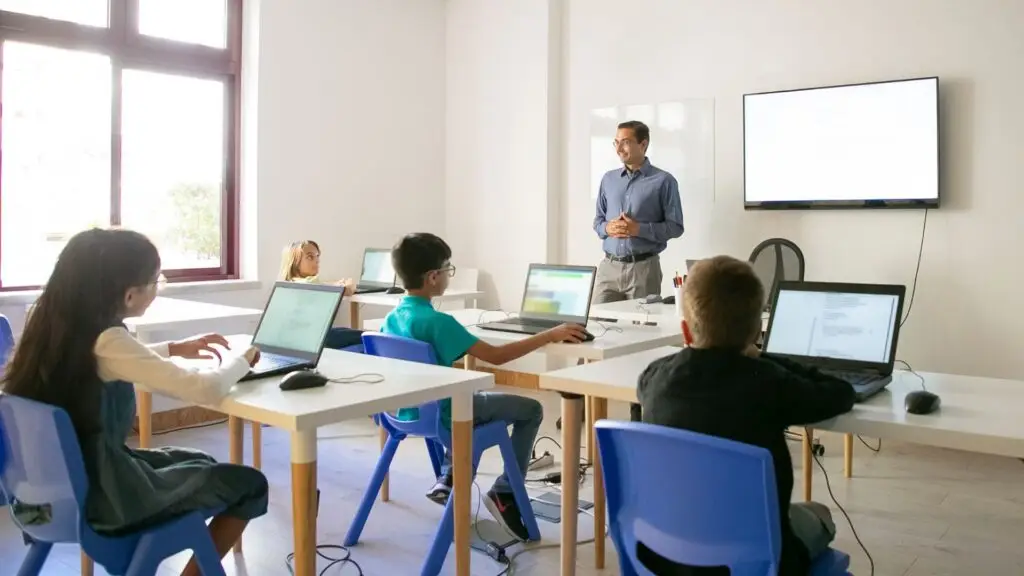
Are you starting a new school year and thinking about how to set the tone for the months ahead?
The beginning of the academic year is a unique moment. Classrooms are coming to life, routines are still taking shape, and there’s space to imagine learning experiences that go beyond the familiar. Decisions made at this stage—what projects to prioritize, how students will collaborate, and which perspectives will be part of the classroom—often shape the entire year.
Global classroom collaboration doesn’t require perfect conditions or long-term planning. In fact, it often works best when it begins early in the school year, while goals are being defined and curiosity is high. When teachers connect classrooms at this moment, global learning becomes something that grows naturally alongside the curriculum, rather than something added later under pressure.
Connecting with another classroom at the start of the academic cycle opens the door to meaningful exchanges, shared inquiry, and projects that feel relevant to students’ lives. It allows teachers to build global learning into the foundation of the year—setting expectations, fostering openness, and helping students see themselves as part of a wider world from day one.
Exploring Shared Topics
At the beginning of the school year, many teachers introduce themes that guide learning throughout the months ahead—sustainability, community life, global citizenship, or social responsibility. These themes create meaningful opportunities for global collaboration.
When students explore these topics with peers from other classrooms, they begin to see how similar realities are experienced and understood in different ways. A single theme can connect to local contexts, cultural perspectives, and community experiences, helping students broaden their understanding and see the world through multiple lenses.
Starting these exchanges early supports students in:
- Developing critical thinking from the start
- Recognizing that real-world topics can be approached in many ways
- Learning to value diverse perspectives and experiences
As the year progresses, these early conversations can naturally grow into deeper inquiry and collaboration. Global learning becomes an ongoing part of the classroom journey, rather than a one-time activity, helping students connect their local experiences with a wider global context.
Building Connections Around Familiar Moments in the School Year
Global collaboration is most effective when students can both relate to and learn from one another. At the start of the school year, classrooms around the world share familiar moments—new routines, first projects, classroom expectations, and a renewed sense of curiosity.
These shared experiences create natural opportunities for connection. Students can exchange reflections about what a new school year looks like in their classroom, compare daily routines, or discuss goals they have set for the months ahead. Even when contexts differ, these early experiences provide common ground.
Working from these familiar moments helps students feel more confident engaging with peers from other classrooms. It lowers barriers, encourages participation, and fosters curiosity. As connections strengthen, collaboration can move beyond introductions toward deeper learning, supported by trust built from the very beginning of the year.
When classrooms connect around shared moments at the start of the year, teachers are better positioned to plan projects that fit naturally within their schedules and teaching rhythms.
In this sense, calendar alignment becomes a strategic advantage:
- Projects fit naturally into the school year
- Teachers avoid forcing artificial timelines
- Collaboration feels like part of teaching, not extra work
This doesn’t mean all calendars are identical—term structures and holidays still vary. But the overall rhythm of the school year often aligns more easily, making it simpler to design meaningful projects that work for everyone involved.
And importantly, this approach doesn’t exclude cross-hemisphere collaboration. It simply expands the range of global partnerships teachers can choose from.
Designing Meaningful Global Projects from the Start of the School Year
Designing a global collaboration at the beginning of the school year doesn’t require a complex structure. In fact, projects that work best often start with clarity and simplicity, leaving room to grow as students gain confidence.
1. Start with a clear but flexible focus
Choose a central theme or question that connects to what you’re already teaching and can be explored from different classroom realities. A clear focus gives direction, while flexibility allows each class to contribute from its own context without forcing uniform outcomes.
2. Design for progression, not perfection
Early in the year, it helps to think in stages. Begin with small exchanges—introductions, reflections, or shared observations—and allow collaboration to deepen over time. This approach reduces pressure and lets the project evolve naturally alongside students’ skills and routines.
3. Make collaboration visible and manageable
Plan simple ways for students to share their work, ideas, or questions. Whether through short texts, visuals, or videos, visible collaboration helps students feel part of a shared process and keeps momentum without overloading schedules.
These three tips can be very useful, but if you want to learn more or discover others that will help you develop collaborative projects for your class, check here.
For many teachers, having a simple structure to capture these ideas makes the planning process easier. A free project template can help translate an initial idea into a clear, collaborative plan—offering a starting point that can be adapted and refined as the school year unfolds.
Starting the School Year with Global Learning in Mind
The beginning of the school year is a moment full of possibility. Choices made now—what kinds of projects to explore, how students connect with the world, and which voices enter the classroom—often shape learning long after routines are established.
Global collaboration doesn’t need to be fully planned from the start. Sometimes it begins with a simple exchange, a shared question, or the curiosity to see how learning looks beyond the classroom walls. When these connections are introduced early, they have time to grow naturally, alongside students’ confidence and understanding.
For many teachers, having a space where these connections can quietly take shape makes the difference. Class2Class.org offers a way to explore global learning at your own pace—finding ideas, discovering classrooms, and letting collaboration evolve in a way that feels right for your context.
How Class2Class Supports Global Collaboration
Beginning a global collaboration often starts with curiosity: the idea that connecting with another classroom could enrich learning, even if the path forward isn’t fully defined yet. Class2Class.org is designed to support educators at this early stage, when possibilities are open and the school year is still taking shape.
Instead of searching for connections on scattered platforms or starting from scratch, teachers can discover classrooms that are also exploring global collaboration. Shared interests, compatible project ideas, and similar teaching approaches help connections feel natural, allowing collaboration to emerge gradually rather than all at once.
The platform’s flexible structure reflects the reality of classrooms. Some collaborations begin with small exchanges and grow over time; others take shape as longer projects that evolve alongside the curriculum. This adaptability invites teachers to experiment, adjust, and find a rhythm that works for their students without pressure.
By creating a supportive space for connection and exploration, Class2Class helps global collaboration feel less like an extra task and more like an opportunity—one that can quietly become part of how the school year unfolds.
Join us and start the year with a global collaboration!