

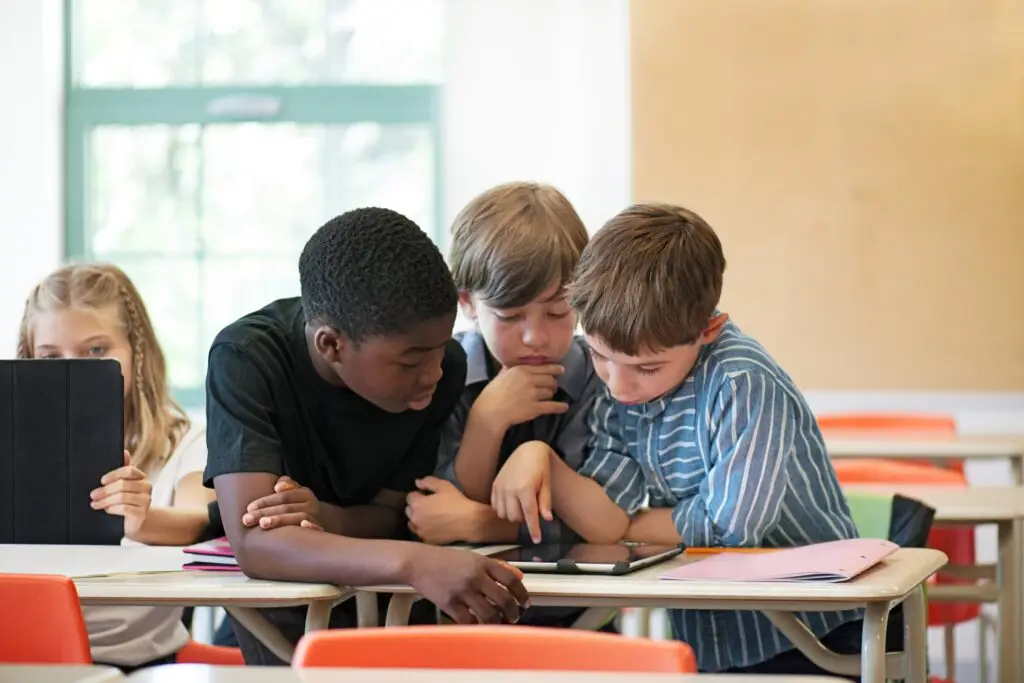
Education for sustainable development is reshaping how teachers prepare students for a world facing climate change, inequality, and resource depletion. Rather than adding another subject to an already crowded curriculum, education for sustainable development (ESD) weaves sustainability thinking into what you already teach — giving students the knowledge, skills, and values they need to act responsibly for the planet and their communities.
If you have ever wondered how to make classroom learning feel more relevant and future-oriented, education for sustainable development offers a concrete path forward. This guide explains what education for sustainable development means, why it matters in K-12 settings, what competencies it builds, and how you can start integrating it into your practice today.
What Is Education for Sustainable Development?
Education for sustainable development is a learning framework that equips people with the knowledge, skills, values, and attitudes needed to address interconnected global challenges. UNESCO, the leading international body behind the framework, defines ESD as education that “empowers learners to take informed decisions and act responsibly for environmental integrity, economic viability and a just society, for present and future generations” (UNESCO, 2017).
ESD is not a standalone subject. It is an approach to teaching and learning that can be embedded across disciplines — from science and geography to language arts and social studies. The goal is to help students understand how environmental, social, and economic systems are connected, and to develop the agency to contribute to solutions.
UNESCO’s ESD for 2030 framework guides the current global effort. Adopted as a follow-up to the Global Action Programme (2015–2019), it outlines five priority action areas: advancing policy, transforming learning environments, building educator capacity, empowering youth, and accelerating local-level action (UNESCO, 2020).
Why Education for Sustainable Development Matters in K-12
Young people are growing up in a world shaped by the climate crisis, biodiversity loss, rising inequality, and rapid technological change. Traditional curricula often address these topics in isolation — a chapter on ecosystems here, a civics unit on human rights there — without helping students see the connections between them.
ESD changes that. Research published in Frontiers in Education found that ESD programs have a significant positive effect on students’ sustainability behavior, reinforcing that early, structured exposure to sustainability concepts influences how young people think and act (Abdullahi et al., 2024). A 2024 study in Sustainability further confirmed that ESD improves academic performance, motivation, and students’ ability to solve complex problems.
For K-12 teachers, this matters because education for sustainable development:
- Connects classroom content to real-world challenges students care about
- Builds critical thinking, collaboration, and systems thinking skills
- Aligns with curriculum standards through cross-disciplinary integration rather than additional workload
- Prepares students for active citizenship in a world that demands it
Education is both a goal in itself (SDG 4) and a means for achieving all 17 UN Sustainable Development Goals. As UNESCO states, “education represents an essential strategy in the pursuit of the SDGs.”
Ready to Bring ESD into Your Classroom?
Class2Class connects your classroom with partner schools around the world through SDG-aligned projects. Choose from short cultural exchanges to full design thinking collaborations — all completely free.
8 Key Competencies ESD Develops in Students
UNESCO identifies eight key competencies that education for sustainable development cultivates. These are not abstract ideals — they are observable, teachable skills that map directly to what K-12 teachers already value:
- Systems thinking — Understanding how environmental, social, and economic systems interact and influence each other
- Anticipatory thinking — Envisioning possible futures and assessing the consequences of actions
- Normative competency — Reflecting on the norms and values underlying one’s own actions and those of society
- Strategic competency — Designing and implementing innovative actions that advance sustainability
- Collaboration — Learning from others, building shared understanding, and working in diverse teams
- Critical thinking — Questioning assumptions, evaluating information, and reasoning through complexity
- Self-awareness — Reflecting on one’s role in local and global communities
- Integrated problem-solving — Applying multiple frameworks to develop viable solutions to complex problems
These education for sustainable development competencies align closely with the OECD PISA Global Competence Framework, which emphasizes that students need to examine local, global, and intercultural issues, understand different perspectives, engage in open interaction, and take action for collective well-being.
For teachers, this means education for sustainable development is not “extra content” — it is a pedagogical approach that strengthens the very skills most 21st-century curricula already target.
3 Practical Ways to Bring Education for Sustainable Development into Your Classroom
Map SDGs to Your Existing Curriculum
You do not need a new syllabus to teach sustainability. The 17 UN Sustainable Development Goals provide a ready-made framework that maps onto subjects you already teach. A science unit on energy becomes a gateway to SDG 7 (Affordable and Clean Energy). A social studies discussion on poverty connects to SDG 1. A health class exploring nutrition links to SDG 2 (Zero Hunger) and SDG 3 (Good Health and Well-Being).
Edutopia recommends completing this mapping as a whole-staff activity — identifying which SDGs connect to which subjects and grade levels, then building from there.
Use Project-Based Learning Around Real Problems
ESD thrives when students work on authentic challenges. Instead of reading about water scarcity, students can research their community’s water usage, compare it with a partner classroom’s findings from another country, and co-design conservation strategies.
This is where project-based learning and international collaboration become powerful. When students investigate a real problem, gather evidence, propose solutions, and present their work, they practice systems thinking, collaboration, and critical thinking simultaneously — the exact competencies ESD aims to build.
Adopt a Whole-Institution Approach
The most effective ESD implementation goes beyond individual lessons. UNESCO’s whole-institution approach calls for sustainability to be embedded in curriculum, school operations, governance, and community engagement. This means students learn what they live and live what they learn — from recycling programs in the cafeteria to democratic decision-making in student councils.
Countries like Finland have made progress by integrating sustainability as a cross-cutting theme across all formal subjects at primary and secondary levels, rather than treating it as an add-on (Development Education Review). The international Eco-Schools Programme, now active in thousands of schools, provides another practical model for schools seeking this holistic approach.
How Class2Class Supports Education for Sustainable Development
Class2Class was built on the conviction that classrooms can be where solutions begin, not just where lessons end. Two of the platform’s educational foundations are Education for Sustainable Development (ESD) and Global Citizenship Education (GCED) — meaning sustainability is woven into the platform’s design, not added as an afterthought.
Here is how the Class2Class model operationalizes ESD:
Projects aligned with the SDGs. Every collaboration on Class2Class connects to one or more of the 17 Sustainable Development Goals. When teachers create a project, they select the SDGs their work addresses — grounding student learning in real global challenges rather than abstract exercises.
Three approaches for every comfort level. Teachers choose from Connect (1–2 hours of intercultural exchange), Collaborate (4–8 hours of project-based learning around a shared SDG topic), or Create (10+ hours of design thinking to develop a real solution). This means any teacher can start with ESD — even with limited time or experience — and deepen their practice over time.
8 competencies grounded in global frameworks. The Class2Class competency model draws from the OECD PISA Global Competence Framework and UNESCO’s ESD and GCED frameworks. Students develop intercultural communication, global awareness, collaboration, digital literacy, critical thinking, emotional intelligence, adaptability, and creativity — all tracked across projects through the Changemaker Journey.
The teacher as the learning designer. In the Class2Class model, the teacher is always the facilitator, designer, and strategic guide. AI serves as a pedagogical copilot that supports project planning and evaluation — but the teacher’s professional judgment always leads. This reflects ESD’s emphasis on educator capacity as a priority action area.
A free, accessible platform. Class2Class is completely free — no hidden fees, no premium tiers. This matters because ESD values equity and inclusion. A teacher in rural Argentina and a teacher in urban India can collaborate on the same project with the same access to tools and resources.
Getting Started with ESD: A Simple Checklist for Teachers
If you are ready to bring education for sustainable development into your practice, here is a starting point:
- Pick one SDG that connects to a topic you already teach this semester
- Find a partner classroom through a platform like Class2Class to add international perspective
- Design a short project where students investigate a real problem related to that SDG
- Include reflection — ask students to consider what they learned about themselves and others
- Share the outcomes — have students present findings to peers, families, or the school community
- Reflect on your own practice — what worked, what would you change, and what SDG comes next?
You do not need to overhaul your entire curriculum. Start small, build on what works, and let your students’ curiosity guide the way.
The Future Depends on What Happens in Classrooms Today
Education for sustainable development is not a passing trend. It is a response to the reality that the generation sitting in classrooms right now will inherit — and need to address — the most complex challenges humanity has faced. As a teacher, you are uniquely positioned to help students develop the competencies, awareness, and agency they need to become thoughtful, active contributors to a more sustainable world.
The tools and frameworks exist. The global community of educators is growing. The question is not whether ESD belongs in your classroom — it is how you will make it your own.
Explore how Class2Class can help you connect your classroom to the world and bring education for sustainable development to life through collaborative, SDG-aligned projects.