Sustainable Development Goals: choose one for your classroom
The Sustainable Development Goals are 17 UN goals adopted in 2015 as part of the 2030 Agenda. In the classroom, use them to connect a topic you already teach with a real question about people, the environment or fair access to opportunities.
Choose a goalLast updated
You do not need to cover all 17 goals at once. Start with a question students can investigate: what happens to our school waste, who can use a local space, or what helps people learn? The goal supplies a wider context; the lesson still needs a clear subject aim.
Choose a Sustainable Development Goal for your classroom
- Begin with a subject topic you already teach.
- Choose one related goal and read its official description.
- Turn it into a question students can investigate locally.
- Decide what evidence students will collect and how they will explain it.
- Add a partner class when another perspective will help.
Swipe horizontally to see all columns
| Goal | Possible subject connection | A question to begin |
|---|---|---|
| SDG 4: Quality Education | Writing, citizenship or school life | What helps students take part in learning? |
| SDG 5: Gender Equality | Literature, history or citizenship | Whose experiences are included in the sources we use? |
| SDG 6: Clean Water and Sanitation | Science or geography | What can local evidence tell us about water use? |
| SDG 12: Responsible Consumption and Production | Mathematics, science or design | What do we throw away, and what could we reduce? |
| SDG 13: Climate Action | Science or geography | How do local climate data compare with another place? |
Use a narrow question and suitable evidence. A few observations, teacher-selected data or fictional examples can be enough to begin. For climate work, separate a short weather observation from a claim about long-term climate. If you use a sensitive topic, avoid asking students to disclose family circumstances.
How the 17 goals connect
The UN's 17 goals cover social, environmental and economic concerns, including poverty, health, education, equality, water, consumption and climate. They are connected: a decision about water can also affect health, education and fairness. Use the official goal pages to check the goal and its targets.
SDG Target 4.7 includes education for sustainable development, human rights, peace, global citizenship and cultural diversity. It gives a reason to connect these questions with learning. Students can connect the wider goal with a useful question in their own community.
Plan evidence, a response and reflection
Decide what students should understand in the subject and what they should be able to explain. In a waste enquiry, they might classify observations, compare amounts and support a proposed change. Assess the evidence and reasoning as well as the final poster or presentation. The sustainability project guide offers more ideas for a local enquiry.
- What did we observe or find in a source?
- How does the issue look in another community?
- Who might be helped or left out by our proposal?
- What changed after feedback, and what do we still not know?
Keep reflection short and connected with the task. Students can write an individual explanation, discuss a decision or review a first version after feedback. A thoughtful small response is more useful than a large campaign students cannot explain.
Add another classroom's perspective
Partner classes can investigate the same question in different settings. Agree a shared method, compare the findings and ask each other about the context. For water or climate, record how and when data were collected so the comparison is meaningful.
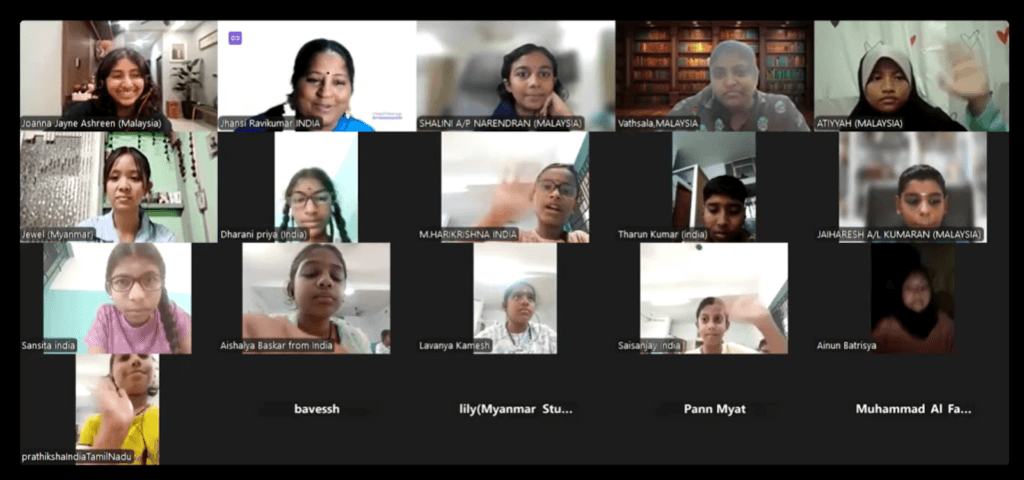
Sandra Maj, a teacher from Poland, describes celebrating World Environment Day with Class2Class teachers and students in the platform's teacher feedback. Her experience illustrates a reason to connect: teachers can share an activity and discuss it with another class.
Find materials and support on Class2Class
Class2Class is free for teachers and students. Browse current project ideas, read the activity details and choose one that fits the lesson. You can adapt a shared project around a global goal, then agree the plan with a partner teacher.
Use a short video, a diagram or a quiz when it helps students answer the question, rather than adding resources for their own sake. Check the material before using it and offer a non-video or paper alternative where needed.
The teacher training page provides platform guidance. For subject knowledge, start with the official UN goal descriptions and a relevant curriculum resource. A colleague or partner teacher can help you check the scope of the lesson.
Anuradha Sharma, a teacher from India, praises the platform's lesson plans and the opportunity to work with teachers elsewhere in the same teacher feedback. Choose materials for your own class, then keep the planning notes and student examples that will help you improve the next task.
Frequently asked questions
Do I need to teach all 17 Sustainable Development Goals?
No. Choose one goal that fits a subject lesson and a question students can investigate. Show wider connections when they help explain that question.
Are the SDGs only about the environment?
No. They also cover poverty, health, education, equality and other social and economic concerns. Climate and nature are part of the wider framework.
Can a younger class work with the SDGs?
Yes. Use a concrete topic such as sharing resources, school waste or access to learning. Choose simple sources and a task appropriate for the class.
Explore classroom projects
Explore classroom projects and choose one that connects a global goal with a question your students can investigate.