
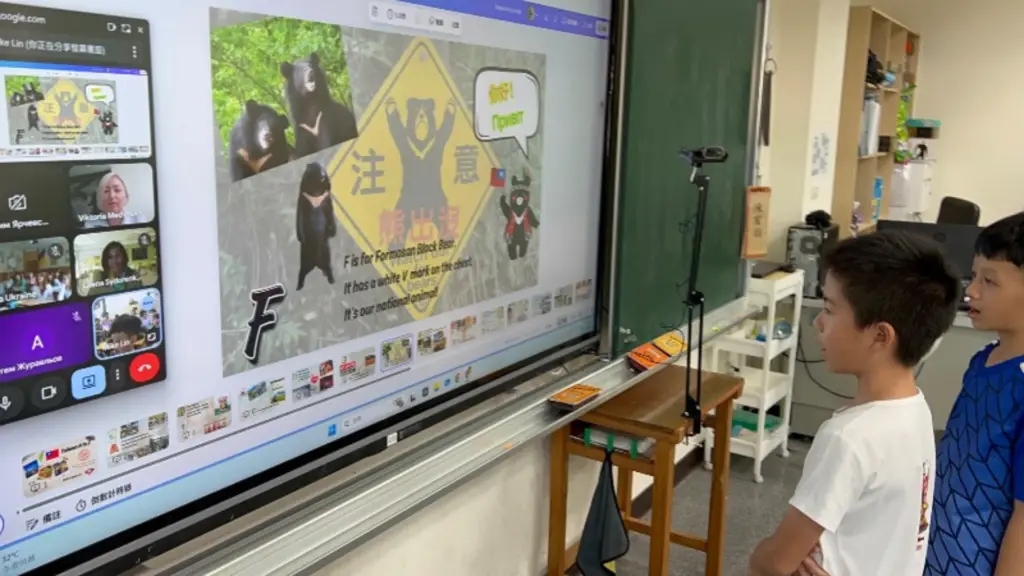
When students work on a project-based learning (PBL) experience, they are already doing something meaningful: investigating real questions, producing tangible outcomes, and building skills they will use beyond the classroom. But what happens when those students begin collaborating not just with classmates, but with a class in another country? Research and classroom practice both point to the same answer: the learning deepens significantly.
Collaborative Online International Learning (COIL) does not simply add a global dimension to PBL. It introduces new conditions that expand what PBL already does well, enriching the problem space, diversifying the team, and raising the relevance of the outcome.
This article will explore these two approaches and explain how the Class2Class.org (C2C) educational model applies them together in a structured, accessible way for K–12 teachers.
What Project-Based Learning Is and What International Collaboration Adds
Project-based learning is a pedagogical approach in which students investigate and respond to an authentic question, problem, or challenge over an extended period, producing a meaningful product or action as a result. As the Buck Institute for Education defines it, “In PBL, students acquire knowledge and skills by working over an extended period to investigate and respond to an authentic question, problem, or challenge” (Larmer & Mergendoller, 2010).
The Fundación Chile guide on PBL notes that “integrating new information makes sense for students when it is put into practice with a purpose relevant to their lives” (Sotomayor, Vaccaro & Téllez, 2021). This is precisely what a well-designed project does: it makes learning purposeful.
PBL is already one of the strongest approaches available to K–12 teachers. What international collaboration adds is a new dimension of possibility: students investigating the same challenge from two different cultural contexts, a genuine audience that extends across borders, and a shared purpose that makes learning feel urgent and real. These are not replacements for what happens in the classroom: they are expansions of it.
How COIL Deepens the PBL Experience
Collaborative Online International Learning (COIL) is a methodology that connects students and educators from different countries to collaborate on shared academic experiences through digital tools. In this sense it “creates shared academic experiences that enrich course content and foster global citizenship” (Rubin & Guth, 2022).
When COIL is integrated with PBL, several things happen that a domestic project alone cannot produce:
- The problem becomes genuinely complex. Students must now consider how a challenge — climate change, food systems, digital access — manifests differently in another country. This comparative dimension is cognitively richer and requires deeper analysis.
- The audience becomes real. Knowing that students in another country will see, respond to, or build on their work raises the stakes and the quality of student output.
- Communication skills are tested authentically. Students must communicate across linguistic and cultural differences — not as a classroom exercise, but as a practical necessity.
- Global competencies are developed. The OECD (2018) defines global competence as “the capacity to examine local, global, and intercultural issues” and to act for “collective well-being.” PBL with COIL is one of the few approaches that makes this capacity visible in student work, not just measurable on a test.
In short, COIL does not simply add an international flavor to a PBL project. It restructures the conditions under which learning happens — expanding the problem space, diversifying the team, and raising the relevance of the outcome.
What Research Tells Us
Research on PBL consistently shows that active, student-centered methodologies produce stronger learning outcomes than passive instruction, particularly for skills that transfer to real-world contexts (Thomas, 2000; Krajcik & Shin, 2014). A 2023 meta-analysis of 66 studies confirmed that PBL significantly improves learning outcomes compared to traditional models, with a moderately positive effect size across subject areas and age groups (Zhang & Ma, 2023). PBL improves content knowledge, motivates students, and supports collaboration skills.
Research on international online collaboration adds a complementary layer. Studies on COIL and virtual exchange programs show that structured international collaboration increases intercultural competence, deepens critical engagement with global issues, and improves students’ ability to communicate across differences (O’Dowd, 2018; Helm, 2018; Hackett et al., 2023). While much of this research has been conducted in higher education contexts, the underlying principles of structured intercultural collaboration — building empathy, analyzing difference, and co-creating across cultures — apply equally to K–12 settings, as educators implementing these approaches consistently report.
When both approaches are combined, the evidence points toward a synergistic effect. A project grounded in a real, curriculum-aligned challenge becomes more cognitively demanding when students must account for different cultural realities. And intercultural exchange becomes more meaningful when it is attached to a shared, substantive task — not just a cultural showcase.
UNESCO (2015) frames this connection explicitly: global citizenship education and education for sustainable development are not add-ons to the curriculum — they require pedagogical approaches that embed global thinking into the actual work students do. PBL combined with COIL is one of the most practical ways to fulfill that goal at the K–12 level.
How the Class2Class.org Model Puts This into Practice
The C2C educational model integrates PBL, Design Thinking, and COIL as complementary frameworks — not as separate activities, but as a unified design. As the C2C Educational Model states, “PBL and Design Thinking provide the pedagogical structure; COIL provides the international collaboration framework that gives projects their global meaning” (Class2Class.org, 2025).
In practical terms, every project on the C2C platform follows a structure where:
- Students start from a meaningful challenge rooted in their own context (local to global).
- You, as the teacher, connect them with a partner classroom in another country to investigate the same challenge from a different angle.
- They produce a shared outcome — a presentation, campaign, report, or creative product — that reflects both perspectives.
- They reflect on what they learned, both academically and interculturally.
This structure mirrors the core phases of PBL — inquiry, investigation, creation, and public sharing — while embedding COIL as the context in which all of it happens. For projects that involve co-creating solutions, Design Thinking guides the process: students empathize with a real need, define the challenge, generate ideas, prototype a response, and iterate with their partner class. The result is a global classroom experience that is academically substantive and culturally enriching.
C2C projects are organized around three project approaches: exploring cultures, exploring global challenges (aligned with the UN Sustainable Development Goals), and creating solutions. Each approach scales the level of collaboration and complexity, allowing teachers to start at a level that fits their class and grow from there.
What This Looks Like for Students
When project-based learning and collaborative online international learning are combined well, students are not just doing a project. They are building competencies that the OECD, UNESCO, and educational researchers consistently identify as essential for the 21st century:
- Intercultural communication — working with peers who think, speak, and live differently
- Critical thinking — comparing perspectives and analyzing why the same issue looks different in different places
- Collaboration — navigating a real team across time zones and languages
- Digital literacy — using tools to connect, share, and co-create across borders
- Global awareness — understanding how local realities connect to larger patterns and challenges
- Emotional intelligence — recognizing and managing emotions while building empathy across cultural difference
- Adaptability and leadership — navigating change and inspiring collaborative action within a diverse team
These are not soft skills. They are the specific competencies measured by the OECD PISA Global Competence Framework (OECD, 2018) and embedded in UNESCO’s Global Citizenship Education frameworks and they develop most effectively through structured, sustained international project work.
Getting Started: From Theory to Your Classroom
The strongest argument for PBL with COIL is not found only in academic papers — it is found in classrooms where teachers have seen their students become genuinely invested in a project because someone on the other side of the world is counting on them.
If you are ready to try this approach, Class2Class.org provides the structure to make it work without months of planning. Here is how to begin:
- Choose a project approach that fits your curriculum — exploring cultures, a global challenge, or co-creating a solution.
- Create your project on the platform and make it public so partner teachers from other countries can join.
- Connect with a partner class using C2C’s community tools to find teachers at a compatible level and schedule.
- Use the platform’s resources — including the Project Assistant — to structure your project phases and keep both classes aligned.
- Launch the collaboration with your students and document what they produce together.
Class2Class.org is free to join and designed specifically for K–12 teachers who want structured, meaningful international collaboration. Join Class2Class.org and start your first global classroom project today.
References
Class2Class.org. (2025). The Class2Class.org educational model.
Hackett, S., Janssen, J., Beach, P. et al. (2023). The effectiveness of Collaborative Online International Learning (COIL) on intercultural competence development in higher education. International Journal of Educational Technology in Higher Education, 20, 5. https://doi.org/10.1186/s41239-022-00373-3
Helm, F. (2018). The practices and challenges of telecollaboration in higher education in Europe. Language Learning & Technology, 19(2), 197–217.
Krajcik, J., & Shin, N. (2014). Project-based learning. In R. K. Sawyer (Ed.), The Cambridge handbook of the learning sciences (2nd ed., pp. 275–297). Cambridge University Press.
Larmer, J., & Mergendoller, J. R. (2010). Seven essentials for project-based learning. Educational Leadership, 68(1), 34–37.
O’Dowd, R. (2018). From telecollaboration to virtual exchange: State-of-the-art and the role of UNICollaboration in moving forward. Journal of Virtual Exchange, 1, 1–23.
OECD. (2018). Preparing our youth for an inclusive and sustainable world: The OECD PISA global competence framework. OECD Publishing.
Rubin, J., & Guth, S. (Eds.). (2022). The guide to COIL virtual exchange: Implementing, growing, and sustaining collaborative online international learning. Stylus Publishing.
Sotomayor, C., Vaccaro, C., & Téllez, A. (2021). Aprendizaje basado en proyectos: Un enfoque pedagógico para potenciar los procesos de aprendizaje hoy. Fundación Chile.
Thomas, J. W. (2000). A review of research on project-based learning. Autodesk Foundation.
UNESCO. (2015). Global citizenship education: Topics and learning objectives. UNESCO Publishing.
Zhang, L., & Ma, Y. (2023). A study of the impact of project-based learning on student learning effects: A meta-analysis study. Frontiers in Psychology, 14, 1202728. https://doi.org/10.3389/fpsyg.2023.1202728