
Something shifts when students connect with a real peer in another country. It does not happen on the first day. But over the course of an international collaborative project, teachers start to notice it.
This article looks at five concrete changes that teachers observe and that students express when they take part in an international collaborative project — grounded in real C2C classroom stories and in what the research says about why these changes happen.
How an International Collaborative Project Changes Communication
The first thing teachers notice is that language becomes a tool, not a test.
When students have a real audience in another country, the purpose of communication changes. They prepare more carefully, choose their words with more attention, and speak with more intention — not because the assignment requires it, but because they genuinely want to share something with someone who has never heard it before.
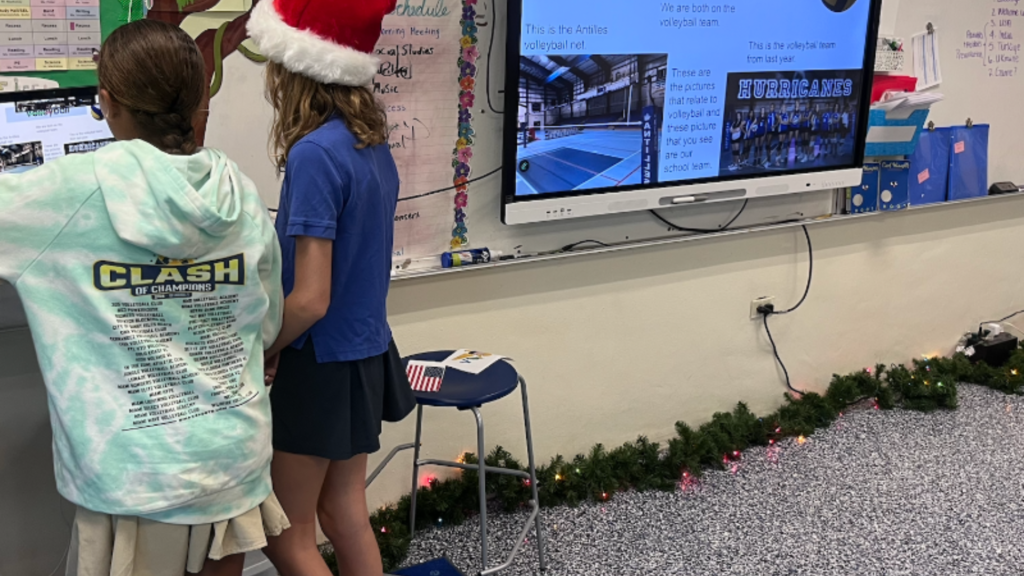
In the project Global Collaboration in Action: Healthy Hobbies, Sports and Free Time Across 6 Countries, students from Ukraine, Italy, India, the United States, Bangladesh, and Turkey introduced themselves, presented their hobbies, answered live questions, and even sang together — all in English, all in real time, in front of classmates they had only recently met. Teacher Olena from Ukraine described what she saw:
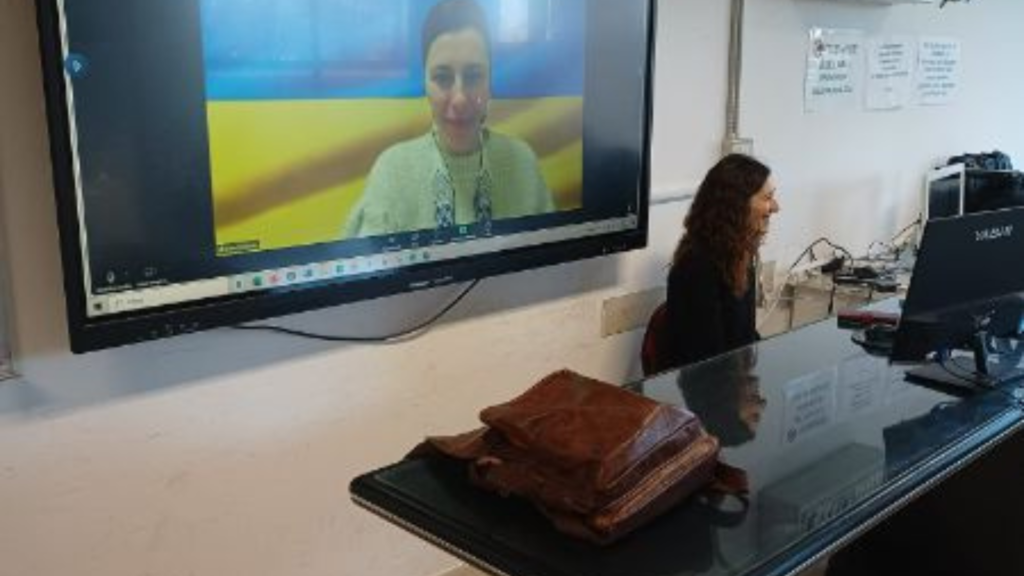
“Our students are really very happy to communicate with students from different countries. They like to learn more about different cultures and traditions. It is very fun to communicate and play together, to share their abilities and skills.”
This is Intercultural Communication — one of the eight competencies C2C projects are designed to develop. It is not only about grammar or vocabulary. It is about choosing words with care, asking questions with respect, and listening to a perspective shaped by a different culture, a different school, a different daily life.
The OECD Learning Compass 2030 frames student agency as a core element of meaningful learning. One of its clearest signs is when a student actively chooses to communicate — not because they are required to, but because they want to be heard. Global projects can create exactly that motivation. It is one of the most visible shifts teachers report in students who are taking part in an international collaborative project for the first time.
5 Changes Teachers Observe Across Projects
These are not guaranteed outcomes — every class and every international collaborative project is different. But teachers who have run more than one international collaborative project describe similar patterns. Here are five changes that tend to emerge with time and practice.
1. From shy to present
Some students who are usually quiet in class find it a little easier to step forward when the audience is new. Many teachers describe students who arrived at the first session uncertain and, by the end, did something they did not expect from themselves.
In the Hobbies Project, students who were hesitant at the start were, by the end of the sessions, “proudly presenting their guitars, footballs, drawings and skis on camera.” Their teacher observed: “That kind of confidence is hard to teach in any other way.”
2. From passive to prepared
When students know the audience is real, some prepare more carefully than usual. They revise their slides, rehearse what they will say, or ask the teacher for feedback on their pronunciation. One Ukrainian student in the project presented eight years of cross-country skiing training — including a third-place finish at a regional championship — with quiet pride. Another, Dasha, brought her guitar and said: “My father taught me this, and I continue to do it on my own.” That single sentence, in front of peers from Italy, carried a weight that no homework exercise would.
3. From local to global awareness
Some students begin to see their own experience from a different angle. They start to ask: why is it different there? What does that mean for us? In the K-Pop Global Collaboration Project, students from Bangladesh, India, and other countries used music as the starting point for a much deeper conversation. As the article describes: “Students were comparing entertainment industries, sharing how music shapes identity in their countries, and finding common ground through shared passion.”
A student who learns that her Italian partner attends an art school, or that her classmate in Bangladesh experiences K-pop differently than she does, is developing Global Awareness — the ability to read a local reality through a global lens. This is what happens in real intercultural exchange. An international collaborative project creates the conditions for exactly this kind of discovery.
4. From individual to collaborative
The first time a class runs an international collaborative project, team coordination is slow. Students figure out time zones, language differences, and how to give feedback to people they have never met in person. Over time, some groups develop habits they did not have before — posting updates without being reminded, checking in with partners, adapting when a session needs to be rescheduled.
This is Collaboration & Teamwork developing — not in theory, but in practice. Research on virtual exchange confirms it: O’Dowd (2018) found that students in structured online international learning developed real interpersonal competencies that standard classroom instruction rarely produces.
5. From task to meaning
The most significant change is harder to measure but, when it happens, easy to recognize. By the end of a project, some students stop describing it as “a school assignment” and start describing it as “something we did.” The certificate matters less than the connection. In the K-pop global collaboration, what students carried out of the project was not the recognition they received at the end — it was the peers they met across borders and the confidence they built by presenting to an international audience.
This is the Changemaker Journey beginning in an international collaborative project — students moving from Explorer (first encounter with the competency) to Collaborator (beginning to apply it with others). The teacher sees it not in a test score, but in how the student talks about the project afterward.
What Makes These Changes Possible
These changes do not happen by accident. They happen because of how the project is structured.
In the C2C framework, every international collaborative project moves through four phases: Definition (students choose the topic and set the goals), Execution (they build and share real work), Reflection (they make sense of what happened), and Dissemination (they share their results with a wider audience). Each phase creates a different kind of growth. The Reflection phase, in particular, is where students connect what they experienced with what they learned — a step that is often skipped in traditional group work.
The teacher’s role across all four phases is that of a facilitator. You design the structure, guide the process, and observe what changes. The students do the growing.
UNESCO’s 2020 report on Global Citizenship Education shows that students who engage in real cross-cultural collaboration develop a more nuanced understanding of both global issues and their own local context. A project does not need to be about climate change to produce this. A session about hobbies, sports, and food can do it too — as long as students are in a real conversation with real peers.
What This Looks Like in Your Classroom
You do not need a long project to start seeing these changes. A single Connect session — even 90 minutes — is enough to begin the cycle.
The impact of an international collaborative project builds with every session. The pattern teachers describe is consistent: students arrive uncertain and leave having done something they did not think they could do. The Ukrainian students who sang Happy Birthday through the screen to a classmate they had just met — in the middle of a live exchange with Italy — were carrying something from that moment forward. That experience does not disappear when the call ends.
The student who presents in front of an international audience once will find the next time easier. And the time after that easier still. That is what an international collaborative project builds — not in one session, but across them.
Internal References
- Global Collaboration in Action: Healthy Hobbies, Sports and Free Time Across 6 Countries
- La colaboración global en acción: el K-pop en el aula
- The 8 C2C Competencies: What They Are and Why They Matter
- Class2Class — How it Works
Academic References
- OECD Learning Compass 2030
- O’Dowd, R. (2018). From telecollaboration to virtual exchange. Journal of Virtual Exchange, 1(1). Link
- UNESCO (2020). Global Citizenship Education: Topics and Learning Objectives. Link