What Is a Global Education Platform? A Practical Overview for K-12 Teachers
- April 29, 2026
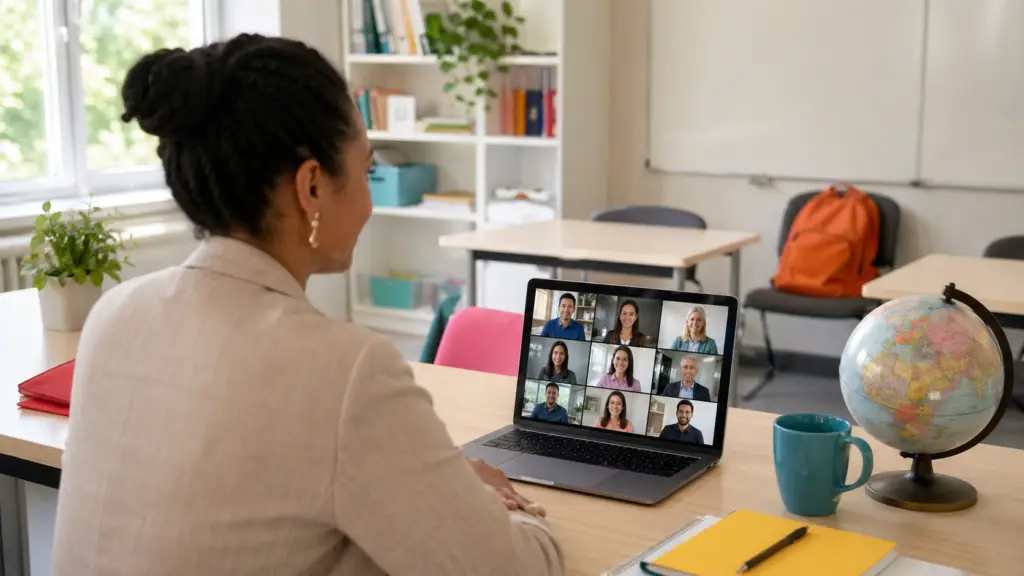
Your students have never been more connected to the world—yet many have never had a meaningful conversation with someone from another country. That’s the gap a global education platform is designed to close.
As a teacher, you’re probably hearing more about international collaboration, virtual exchange, and global citizenship. But what exactly is a global education platform, and how does it work in a real classroom? This guide breaks down everything you need to know, with practical examples and clear next steps.
Understanding Global Education Platforms
A global education platform is a digital tool that connects K-12 classrooms across countries for collaborative learning experiences. Unlike social media or generic video conferencing tools, these platforms are purpose-built for educational collaboration between teachers and students in different locations.
The core function is simple: match your classroom with partner classrooms abroad, then provide the structure and tools to run joint projects together. Think of it as a matchmaking service plus project workspace, all designed specifically for cross-border classroom partnerships.
These platforms typically handle three key challenges teachers face when trying to go global. First, finding partner teachers who share your goals and grade level. Second, managing the logistics of different time zones, languages, and school calendars. Third, providing frameworks for projects that genuinely engage students rather than just creating pen-pal exchanges.
What separates a global education platform from other digital platforms for global education is the emphasis on sustained, curriculum-connected collaboration. You’re not just video calling another classroom once—you’re building multi-week projects where students work together toward shared learning goals.
Why Teachers Use Global Education Platforms
The practical benefits extend far beyond the buzzwords. Teachers report that international collaboration transforms how students engage with academic content, particularly when that content connects to real-world issues.
Consider a middle school science teacher in California partnering with a classroom in Indonesia for a climate unit. Instead of reading about rising sea levels in a textbook, students interview each other about environmental changes they’ve personally observed. The Indonesian students share photos of coastal erosion near their homes. The California students research drought patterns affecting their state. Together, they create a joint presentation comparing impacts across two regions.
That’s the difference a platform makes—it turns abstract concepts into conversations with real people experiencing real situations. Students remember these lessons because they’re connected to relationships, not just readings.
Beyond content learning, global platforms address skills that employers consistently request but traditional classrooms struggle to teach. Cross-cultural communication, digital collaboration, perspective-taking, and adaptability all develop naturally when students work with partners from different contexts.
For many students, especially those in schools without diverse populations or travel opportunities, a global education platform provides their first sustained interaction with peers from other countries. This matters for building the global citizenship education that prepares students for an interconnected world.
Teachers also appreciate the motivational boost. Students who zone out during standard lessons suddenly engage when they know their partner classroom is counting on them. Accountability shifts when you’re not just turning in work to your teacher—you’re collaborating with students who expect your contribution.
Key Features to Look for in a Global Education Platform
Not all platforms are created equal, and the wrong choice can turn an exciting idea into a frustrating experience. Here’s what actually matters when evaluating options.
Teacher Matching and Vetting
The platform should actively match you with appropriate partner teachers based on grade level, subject area, language capabilities, and project goals. Random connections waste time. You need a teacher in Brazil who teaches 7th grade social studies, speaks English, and wants to run a project on urban development—not just any teacher in South America.
Look for platforms that verify teachers are actually working in real schools. Some systems require school email addresses or institutional verification. This protects your students and ensures you’re partnering with legitimate educators who will follow through on commitments.
Project Templates and Frameworks
Starting from scratch is intimidating. Strong platforms provide ready-made project frameworks you can adapt. For example, a template for a literature exchange project might outline week-by-week activities: Week 1 introductions, Week 2 book selection, Weeks 3-4 reading and discussion posts, Week 5 joint presentation creation.
These frameworks should be flexible enough to customize but structured enough to prevent the “now what?” moment after you’ve connected with a partner. The best platforms also include COIL projects for students that align with established virtual exchange methodologies.
Communication and Collaboration Tools
You’ll need multiple ways for students to interact. Asynchronous options like discussion boards and shared documents work across time zones when live video calls aren’t practical. When you do want synchronous interaction, integrated video conferencing saves the hassle of juggling multiple platforms.
File sharing, project galleries for showcasing student work, and private messaging between teachers are all essential features. The platform should also allow students to interact safely without requiring personal email addresses or social media accounts.
Safety and Privacy Controls
Student safety is non-negotiable. The platform must include moderation tools, privacy settings that prevent students from accessing personal information about each other, and clear terms of service that comply with educational privacy laws like FERPA and COPPA.
Teachers should be able to monitor all student interactions, approve posts before they go live if needed, and immediately remove inappropriate content. Look for platforms that don’t require students to create public profiles or share identifying information beyond first names and classroom location.
Cost and Accessibility
Many schools can’t afford expensive platform subscriptions. Free options exist and work well, though some charge for premium features. Consider whether the platform is accessible to partner schools in countries with limited technology infrastructure or internet bandwidth.
The interface should work on various devices—not everyone has new computers or tablets. Mobile-friendly design matters when students or partner schools primarily access the internet via smartphones.
Common Types of Projects on Global Education Platforms
Understanding what actually happens on these platforms helps you envision possibilities for your classroom. Here are proven project types across different subjects and grade levels.
Subject-Based Collaborative Investigations
Partner classrooms investigate the same topic from different geographical or cultural perspectives. A 5th grade science class in the US and one in Kenya might both study water conservation, documenting local water usage patterns, interviewing community members, and creating joint recommendations applicable to both contexts.
In math, students might collect and compare data on topics like school schedules, family sizes, or local economics, then create graphs and statistical analyses showing patterns across regions. Language arts classes can read the same novel or short stories, discussing themes through the lens of their different cultural contexts.
UN Sustainable Development Goal Projects
The 17 SDGs provide ready-made frameworks for meaningful collaboration. Students select a goal like Quality Education, Clean Water, or Climate Action, research how it manifests in their communities, exchange findings with partners, and develop action plans or awareness campaigns.
A high school in India and one in the US might both tackle SDG 12 (Responsible Consumption). The Indian students document e-waste disposal challenges in their city. The US students research fast fashion consumption patterns. Together they create a social media campaign about sustainable consumer choices relevant to teens in both countries.
Cultural Exchange and Identity Projects
These projects help students understand daily life, traditions, and identity in different contexts. Elementary students might create “day in the life” photo essays or record videos showing their school routines, then compare similarities and differences.
Older students can explore more complex topics like how history is taught differently in various countries, how media portrays different cultures, or how teenagers navigate identity formation across contexts. These projects build empathy and challenge stereotypes through direct interaction.
Creative Collaborative Productions
Students create something together—a documentary, podcast, digital magazine, art exhibition, or performance. A middle school art class in South Korea and one in Mexico might collaborate on a digital gallery exploring “home” through visual art, with students creating pieces and writing artist statements that complement each other.
Drama students might write and rehearse scenes that incorporate perspectives from both classrooms, performing them via video. Music classes can collaborate on compositions that blend musical traditions from different cultures.
Overcoming Common Challenges
Even with a good platform, international collaboration presents logistical hurdles. Here’s how experienced teachers handle the most frequent obstacles.
Time Zone Coordination
Live video calls between California and India require someone to meet at an inconvenient time. The solution is designing projects that emphasize asynchronous work with occasional synchronous moments.
Students post discussion responses, project updates, or questions that partners respond to within 24-48 hours. Save live calls for key moments like project kickoffs, mid-point check-ins, or final presentations. One well-planned video call every two weeks is often sufficient.
Language Barriers
Not every collaboration requires matching language proficiency. Many platforms connect classrooms where English is a common language, even if it’s not the first language for either group. Students practice language skills authentically while focusing on content.
Set expectations early about communication norms—encourage clear, simple language, patience with mistakes, and use of visuals to support text. Translation tools can help, but the goal is communication, not perfection.
Mismatched Technology Access
If your partner classroom has limited technology, design projects that don’t require constant high-bandwidth access. Students can work offline, then post updates once or twice per week when they have internet access.
Focus on text and image-based exchanges rather than video-heavy content. A shared document where students write entries works better than expecting constant video uploads from a school with bandwidth constraints.
Varying School Calendars
Schools in different countries have different breaks, holidays, and academic calendars. When planning projects, map both calendars and build in buffer time.
Four to six week projects work better than longer ones because they’re more likely to fit within both schools’ shared available time. Communicate regularly with your partner teacher about upcoming breaks so you can plan work accordingly.
How Class2Class Serves as a Global Education Platform
Class2Class specifically addresses the needs outlined above as a free global collaboration platform for teachers . The platform connects K-12 classrooms in over 140 countries, with particularly strong networks in South Korea, India, the US, and Indonesia. Teachers create profiles, search for partners based on grade level and subjects, and access project templates for COIL, virtual exchange, and SDG-focused collaborations. The system includes built-in global education collaboration tools for asynchronous and synchronous work, all within a safe environment designed for student use. Because it’s free, schools anywhere can participate regardless of budget constraints.
Getting Started With a Global Education Platform
Ready to bring global collaboration into your classroom? Here’s a practical roadmap for launching your first project.
- Define your goals and constraints. What do you want students to learn? What grade level and subject? How much class time can you dedicate weekly? Be realistic about your capacity before searching for partners.
- Choose a platform and create your profile. Complete your teacher profile thoroughly—specific information about your school, grade level, subjects, and project interests helps partners determine if you’re a good match. Upload a professional photo and verify your school email if the platform offers this option.
- Search strategically for partner teachers. Use filters to narrow options based on your criteria. Reach out to 3-5 potential partners with personalized messages explaining your project idea and asking about their interest and availability. Don’t be discouraged if not everyone responds—finding the right match sometimes takes a few tries.
- Plan collaboratively with your partner teacher. Once you’ve connected with someone, schedule a video call to discuss project details. Align on learning objectives, timeline, student expectations, and assessment approach. Document everything in a shared planning document both teachers can reference.
- Start small and grow. Your first project doesn’t need to be elaborate. A three-week collaboration focused on a single topic is better than an ambitious plan that becomes overwhelming. Learn from the experience, gather student feedback, and expand in future iterations.
Conclusion
A global education platform transforms abstract ideas about international collaboration into concrete classroom reality. These tools handle the logistics of finding partners, managing communication, and structuring projects so you can focus on what matters most—creating meaningful learning experiences for students.
The key is choosing a platform that matches your needs, starting with manageable projects, and being patient through the learning curve. Your first collaboration might have bumps, but the impact on students makes the effort worthwhile. When a student in your classroom realizes their perspective isn’t universal, when they build genuine friendships across borders, when they tackle real problems with international peers—that’s when global education moves from concept to reality.
Ready to bring this into your classroom? Class2Class connects K-12 teachers in 144 countries — free to use, free to match with a partner classroom, free to launch your first international project.