


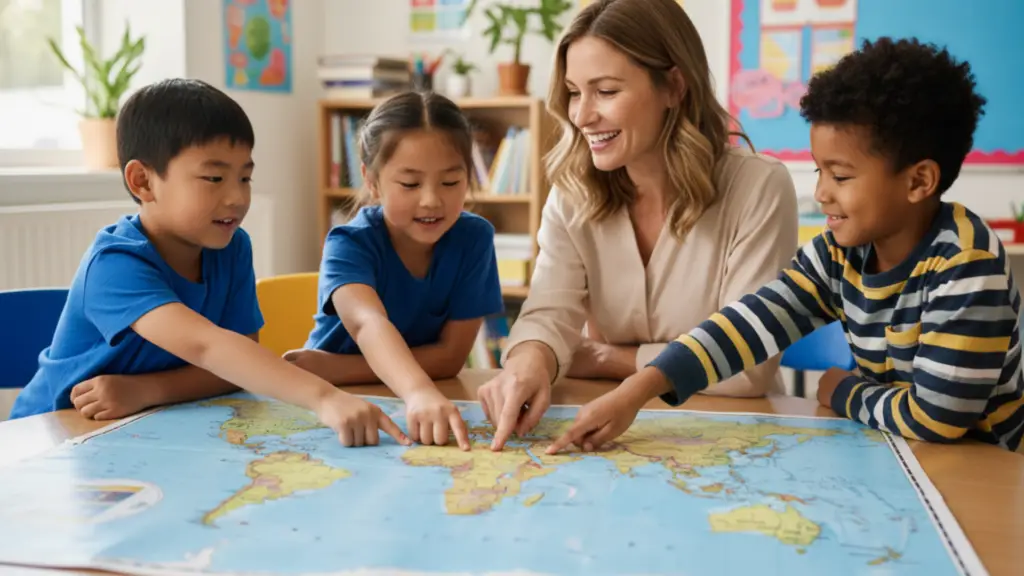
When you think about connecting classrooms globally, you might picture partnerships between countries on opposite sides of the world. But what about connecting with teachers closer to home—or at least in the same hemisphere?
Teachers in Australia, New Zealand, South Africa, and across the Southern Hemisphere have something special in common. They share similar school calendars, seasonal experiences, and often face comparable challenges. These connections create unique opportunities for meaningful classroom collaboration that feels natural and sustainable.
Let’s explore why connecting classrooms within and across the Southern Hemisphere can transform your teaching—and how Class2Class.org makes it easy to find the right partners for your students.
Why Regional Diversity Enriches Global Projects
You might wonder: if teachers share similar contexts, what makes these connections valuable?
The answer is simple. Diversity exists everywhere—even among neighboring countries or regions with similar climates and calendars.
Different Perspectives on Shared Challenges
Teachers across the Southern Hemisphere often work within similar time frames, but they approach education in different ways. A teacher in Cape Town might tackle environmental education differently than a teacher in Sydney, even though both cities face water scarcity issues. These different approaches create rich learning opportunities for students.
When your classroom connects with another classroom facing similar challenges but using different solutions, students learn critical thinking. They see that problems can have multiple answers. They understand that their way isn’t the only way—and sometimes, it’s not even the best way.
Cultural Contexts That Students Can Relate To
Connecting classrooms around the world works best when students can understand and relate to each other’s lives. Southern Hemisphere partnerships often have this advantage naturally built in.
Consider these examples:
- Students in Argentina and Australia both experience summer holidays in December and January. They can share how their families celebrate during these warm months.
- Classrooms in New Zealand and South Africa might explore indigenous knowledge systems and how traditional practices inform modern environmental care.
- Teachers in Chile and Indonesia could collaborate on projects about coastal ecosystems, comparing Pacific Ocean experiences from different perspectives.
These connections feel real to students because the contexts aren’t completely foreign. There’s enough similarity to create common ground, but enough difference to spark curiosity.
School Calendars That Actually Align
Here’s a practical benefit that teachers appreciate immediately: when school calendars align, collaboration becomes easier.
Northern Hemisphere schools typically run from September to June. Southern Hemisphere schools usually operate from January or February to November or December. This difference creates challenges when trying to coordinate projects with teachers from North America or Europe.
But when you connect with another teacher in the Southern Hemisphere, you’re both likely starting and ending your school year at similar times. You’re both preparing for summer break at the same time. You can plan projects that fit naturally into both school calendars without complicated adjustments.
This alignment doesn’t mean everything is identical. Some countries have different term structures or holiday patterns. But the overall flow matches better than trying to align with schools in opposite hemispheres.
Opportunities for Meaningful Classroom Connections
You don’t need perfect alignment to create successful classroom connections. In fact, some of the best learning happens when differences create interesting talking points.
Start Small and Build Over Time
Many teachers hesitate to start connecting classrooms because they think it requires a huge time commitment or perfect coordination. This isn’t true.
You can begin with simple exchanges:
- Letter or video introductions where students share information about their schools, communities, and daily lives
- Parallel projects where both classes study the same topic and then share their findings
- Cultural celebrations where students teach each other about local holidays, traditions, or special events
These small starting points help you and your partner teacher understand how well you work together. They let students get comfortable with the idea of having learning partners in another country. Then, if it feels right, you can expand into more complex collaborative projects.
The key is to start with what feels manageable for your schedule and teaching style.
Leverage Shared Interests, Not Just Geography
While geographic proximity can be helpful, the strongest classroom connections often come from shared interests and teaching goals.
Think about what matters most to you and your students:
- Are you passionate about environmental education? Connect with teachers working on conservation projects, whether they’re in Madagascar or New Zealand.
- Do your students love creative writing? Find partners who want to co-create stories or poetry exchanges.
- Are you teaching about sustainable development? Collaborate with classrooms exploring UN Sustainable Development Goals in their local contexts.
When both teachers care deeply about the topic, the energy flows naturally. Students sense this enthusiasm and become more engaged themselves.
Use Time Differences to Your Advantage
Even within the Southern Hemisphere, time zones vary. But instead of seeing this as a problem, you can use it creatively.
For asynchronous projects, time differences don’t matter much. Students can:
- Post updates to shared documents or platforms at different times
- Record video messages that the other class watches later
- Work on collaborative projects where one class picks up where the other left off
For synchronous connections, even small time overlaps can work. A 30-minute video call between classes doesn’t need to happen weekly. A few strategic live connections throughout a project can create memorable moments, while most work happens asynchronously.
Many successful global classroom projects use a hybrid approach: mostly asynchronous work with occasional live interactions.
Address Real-World Issues Together
The Southern Hemisphere faces distinctive challenges that make perfect topics for classroom collaboration:
- Climate change impacts on island nations and coastal communities
- Biodiversity conservation in unique ecosystems like the Amazon, Madagascar, or the Great Barrier Reef
- Water resource management in regions experiencing drought
- Indigenous knowledge preservation and its role in solving modern problems
When students work together on these issues, they develop global awareness while staying grounded in real contexts. They’re not just learning abstract concepts—they’re connecting with peers who live these realities.
This approach makes learning meaningful and helps students see themselves as part of a global community working toward solutions.
How Class2Class Supports Global Connections
Finding the right partner teacher can feel overwhelming. How do you know who shares your interests? How do you ensure they’re committed to the project? How do you manage the logistics?
This is where Class2Class.org makes connecting classrooms simple and sustainable.
A Global Platform Built for Teachers
Class2Class.org brings together teachers from around the world who want to create collaborative learning experiences for their students. The platform focuses on meaningful connections that support global understanding and align with the UN Sustainable Development Goals.
Unlike trying to find partners through social media or random internet searches, Class2Class.org connects you with teachers who are already interested in classroom collaboration. Everyone on the platform shares a common goal: creating authentic learning experiences through global classroom connections.
Discover Partners Who Match Your Teaching Style
Every teacher has a different approach to collaboration. Some prefer structured projects with clear timelines. Others like flexible, student-led initiatives. Some want to connect weekly, while others prefer monthly touchpoints.
Class2Class.org helps you find partners whose teaching style matches yours. You can explore different project ideas and see what other teachers are planning. This makes it easier to find collaborations that will work for your specific classroom situation.
The platform welcomes teachers from all regions, including strong representation from Australia, New Zealand, South Africa, and throughout the Southern Hemisphere. You can connect with neighbors or explore partnerships across continents—whatever serves your students best.
Support for Different School Calendars and Contexts
One of the biggest advantages of Class2Class.org is understanding that schools around the world operate differently. The platform supports diverse school calendars, term structures, and teaching contexts.
You’re not trying to force your schedule to match a Northern Hemisphere model. You can find partners who understand your timeline and can work within it. Or, if you want to challenge yourself with a different calendar, you can find those opportunities too.
This flexibility means you can create classroom connections that actually work for your students, rather than connections that create stress and extra work.
From First Contact to Ongoing Collaboration
Starting a new partnership always feels a bit uncertain. Will the other teacher follow through? Will the project work as planned? Will students engage?
Class2Class.org provides a space where teachers can communicate, plan, and share ideas throughout the collaboration process. You’re not alone figuring out how to make global classroom connections work. You’re part of a community of educators doing the same thing.
Many teachers start with one small project and then continue working with the same partner year after year. Others enjoy connecting with different classrooms each term to explore various topics and regions. The platform supports both approaches.
Making Global Connections Work for Your Classroom
Connecting classrooms shouldn’t feel like an extra burden on your already full schedule. When done well, it enriches your existing curriculum and makes teaching more engaging—for both you and your students.
Here are some practical tips to keep in mind:
Choose projects that align with what you’re already teaching. You don’t need to create entirely new units. Look for connections between your existing curriculum and potential global partnerships. Teaching about ecosystems? Connect with a classroom in a different ecosystem. Studying local history? Partner with students learning about their local history to compare and contrast.
Communicate clearly with your partner teacher from the start. Discuss your expectations, available time, and preferred communication methods. Being honest about your limitations helps create realistic, sustainable collaborations rather than ambitious projects that fizzle out.
Let students lead when possible. Once you’ve established the framework, give students ownership of the connection. They can suggest questions, create content, and drive the interaction. This builds their independence and makes the project more meaningful to them.
Celebrate small wins. Every successful video call, completed exchange, or shared project is worth acknowledging. These experiences shape how students see themselves as global citizens. They learn that their voice matters and that they can connect with peers across distances.
The most successful classroom connections are the ones that feel natural and sustainable. They enhance your teaching rather than complicating it.
Ready to Connect Your Classroom?
Teachers across the Southern Hemisphere are already creating meaningful classroom connections through Class2Class.org. They’re exploring shared challenges, celebrating cultural diversity, and building their students’ global awareness—all while working within their regular school calendars and teaching schedules.
You don’t need special training or extra resources to start. You just need curiosity and a willingness to try something new.
Join Class2Class.org today and discover teachers who want to collaborate with your classroom. Browse projects, connect with educators who share your interests, and take the first step toward giving your students a truly global learning experience.
Whether you’re in Melbourne, Auckland, Johannesburg, Santiago, or anywhere else in the Southern Hemisphere—or beyond—there’s a classroom waiting to connect with yours.