
What happens when a student in India shares ideas with a classmate in Romania? Or when teenagers from Russia, Malaysia, and Kenya discuss their future careers together?
These are not imaginary scenarios. They are real stories from real teachers who decided to open their classroom doors to the world.
If you have ever wondered whether connecting your classroom with students from other countries actually works, this article is for you. You will read three detailed success stories from teachers who used Class2Class.org to create global classroom experiences.
Each story is different. One focused on gender equality, another on leadership skills, and the third on career choices. But all three stories share something important: they show that connecting classrooms around the world does not require special resources or technical skills. It requires curiosity, planning, and the willingness to try something new.
Story 1: Women’s Equality Day—When Students Became Advocates for Change
Student Age Range: 10–15 years old
What the Project Was About
Teacher Jhansi from India had an idea. Instead of just teaching about equality, why not let students experience it through real conversations with peers from different cultures?
She set up a project for Women’s Equality Day and got classrooms from eight countries involved—Myanmar, Malaysia, India, Sri Lanka, Romania, Russia, and Argentina. Students researched women who inspired them, made posters, interviewed women in their communities, and wrote pledges about equality.
But here’s what made it special: they weren’t just doing assignments. They were sharing their work with students who grew up in completely different places, with different stories about what equality means.
What Students Created
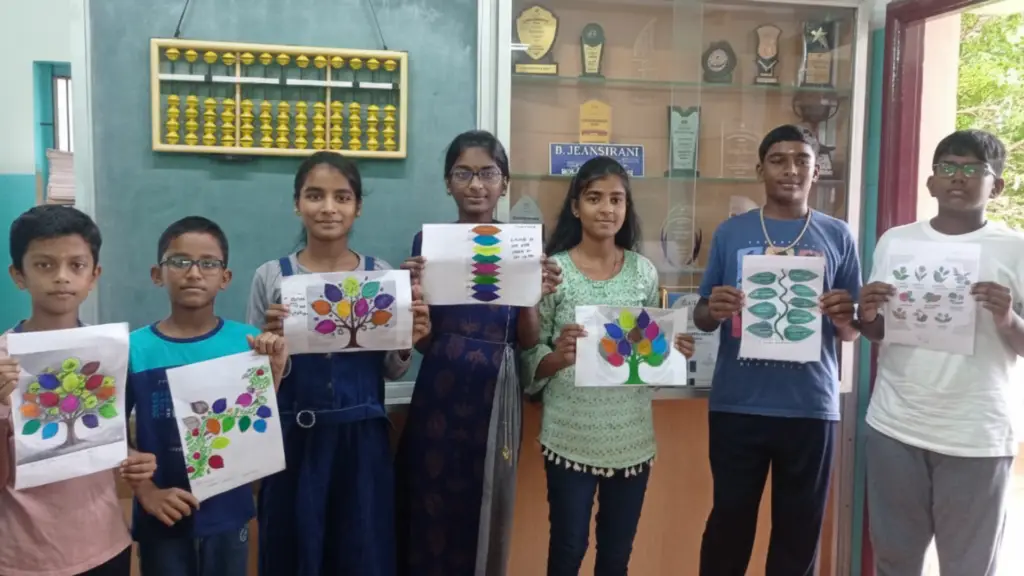
The students made posters showcasing women who inspire them, recorded interviews with local women leaders, wrote pledge leaves for a collective “Equality Tree,” and presented everything in a live Zoom session where all the schools came together.
What Actually Changed
One student, Raghul, said something that caught everyone off guard: “Before this project, I never listened to my sister at home. Now I want to help her in house chores and treat her equally.”
That’s not something you can force. It came from him actually thinking about what equality means—not just as a concept in a textbook, but as something that affects how he treats his sister.
Other students got better at research, became more confident presenting, and started understanding that equality looks different in different places. Some places are further ahead, some are still working on it, but the conversation matters everywhere.
As Jhansi put it: “This project not only taught knowledge but also touched their hearts, leaving a strong and lasting message about equality.”
Check this project visual recap here.

Story 2: The Leadership Blueprint—Finding Your Voice Across Continents
Student Age Range: 11–14 years old
What the Project Was About
What happens when you combine real-world problem-solving with lessons from global leaders? “The Leadership Blueprint: Skills for a Changing World” set out to answer that question by connecting classrooms across continents—linking students in India with peers in Malaysia, Russia, and Turkey.
The project was designed to help students develop global skills by learning about leadership—not just reading about famous leaders, but actually practicing leadership skills. Every day, students studied a different leader from around the world. Gandhi and his peaceful resistance. Dr. A.P.J. Abdul Kalam and his focus on dreams and innovation. Malala and her courage.
But they didn’t stop at learning about these figures—they worked on real problems like water conservation and pollution, making decisions as a group and leading initiatives in their own communities.
What Students Created
Students designed awareness posters about environmental issues, presented on leaders who inspired them, made group decisions about how to tackle problems, and participated in live sessions where they shared their leadership journeys with students from other countries.
What Actually Changed
Priya, who used to be hesitant about public speaking, shared: “Before this project, I was scared to speak in front of others. But now, I feel proud when I talk. I even shared my ideas in our online session!”
Another student, Sai Sanjay, realized: “I learned that even small voices can make a big change. When I spoke about saving water, others listened to me. That gave me confidence.”
Students who normally waited for instructions started making their own decisions. Quieter students raised their hands during group work. They learned that leadership isn’t about being the loudest voice—it’s about listening, respecting others, and having the courage to share your perspective.
Through this classroom networking experience, students didn’t just learn about leaders—they became leaders themselves.

Story 3: Conscious Choice of Profession—Discovering Futures Together
Student Age Range: 14–17 years old
What the Project Was About
Alexandra, a teacher in Russia, noticed something concerning: her high school students were struggling with career decisions. They had strong academic performance, but when it came to choosing what to do after graduation, many felt uncertain.
She created a project called “Conscious Choice of Profession” and connected her students with peers from Malaysia, Romania, the United States, India, Kenya, and Vietnam. Together, they conducted research on how students in different countries approach career planning, what influences their choices, and what support systems exist.
It turned into a fascinating comparison of education systems and how different cultures approach the question: “What do you want to be when you grow up?”
What Students Created
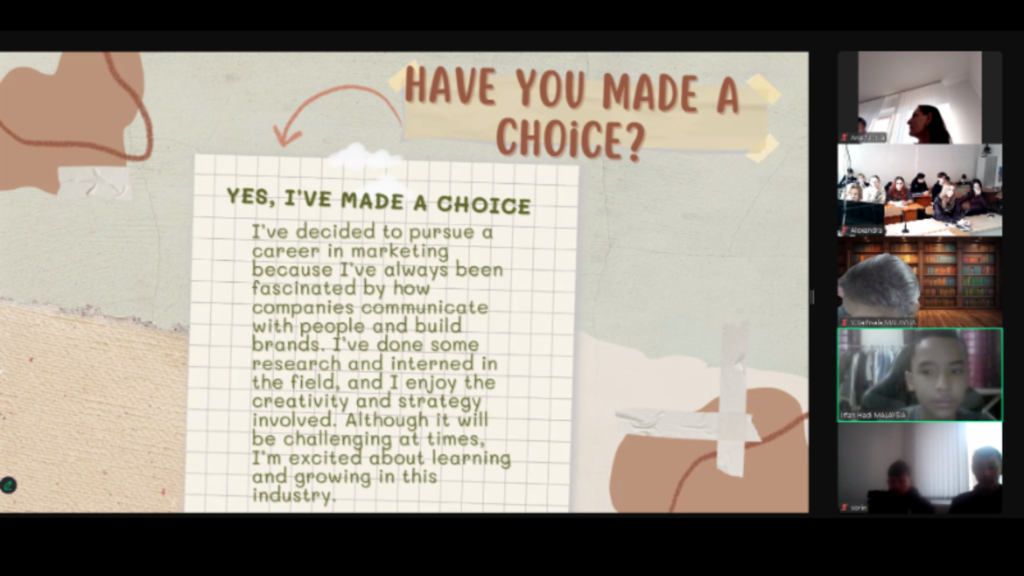
Students conducted research on career decision-making across countries, shared their own career aspirations through video presentations, analyzed the data they collected, and had cross-cultural discussions where they offered each other advice and support.
What Actually Changed
The research revealed something striking: 96% of international students already had clear career goals, but only half of Alexandra’s Russian students had decided on their path. Why?
It turns out that Russian students were focusing mainly on which subjects they excelled at and what jobs offered good salaries. Students from other countries were considering their hobbies, values, and personal strengths—what we often call “soft skills.”
Sogdiana reflected: “I liked the project ‘Conscious choice of profession.’ The atmosphere was very pleasant, even though I was a little worried when it was my turn. This project is very useful, as you can learn something new about professions; it can also help with choosing a career if the student has not fully decided on a future career in any industry yet.”
Maxim gained practical insight: “It is necessary to realize the approach to the choice of profession. If you have chosen a certain subject and you like it, you should choose the useful and necessary subjects at school the profession is related to. A very powerful project, thank you.”
The project didn’t just provide information—it created a space where students could discuss one of the biggest decisions they’ll make, with peers who genuinely understood their concerns.
Check this inspiring project recap video on this link.
How You Can Actually Do This
Reading these stories, you might be wondering: “This sounds great, but how do I even start?”
That’s a fair question. Here’s the thing—these teachers didn’t have some special setup or unlimited time. They used Class2Class.org, an edtech platform that makes international collaboration much more manageable than it might sound.
You have three clear pathways:
Option 1: Replicate these exact projects
All three projects described in this article are available on Class2Class.org. You can join these existing project templates and adapt them to fit your classroom needs. If you want to run a Women’s Equality Day project, a leadership development program, or a career exploration initiative, the structure and activities are already there. You can customize the timeline, adjust the activities to match your students’ age and English level, and invite other teachers to join you.
This is the easiest way to start. You do not need to design everything from scratch. You can see what worked for other teachers and build from there.
Option 2: Join an existing project from the community
Teachers on Class2Class.org are constantly creating new projects. You can browse the teacher platform to see what projects are currently open for collaboration. Maybe there is a project about environmental science, creative writing, or traditional festivals. You can join as a collaborating teacher, and your students can participate alongside classrooms from other countries.
This option requires even less preparation. Another teacher has already organized the project, set the timeline, and planned the activities. You simply need to register your interest, prepare your students, and participate in the scheduled sessions.
Option 3: Create your own project
If you have a specific topic you want to explore with your students, you can create a new project on the platform. Write a clear description of your goals, list the activities you plan to do, and specify what age group you are looking for. Other teachers from around the world can see your project and request to join.
This option gives you full control over the topic and structure, but it requires more planning. The benefit is that you create exactly what you need for your classroom.
No matter which option you choose, remember what made these three stories successful. The teachers focused on clear learning goals. They created activities that were engaging and age-appropriate. They prepared their students for online sessions by practicing communication skills beforehand. And they stayed flexible, adjusting their plans based on how students responded.
You do not need to be perfect. You need to be willing to start. The online learning community on Class2Class.org is there to support you. Other teachers will share advice, answer your questions, and collaborate with you as you navigate your first global classroom project.
The teachers behind the Women’s Equality Day project didn’t know it would change how a student treats his sister. Alexandra didn’t predict that her career project would help students across continents gain clarity about their futures. They simply took the first step.
Your students are likely ready for this. Perhaps even more ready than you might expect.
Join Class2Class.org today, host your own project, and connect your classroom with the world. Whether you replicate one of these projects or create something completely different, you’ll be joining a community of educators who discovered that learning becomes much more engaging when it crosses borders.