Project-based learning with international collaboration
To combine project-based learning with international collaboration, agree a curriculum question with a partner teacher. Each class investigates its context, exchanges evidence and contributes to a shared product. Teach the needed knowledge, plan feedback and check individual understanding alongside the joint work.
Last updated
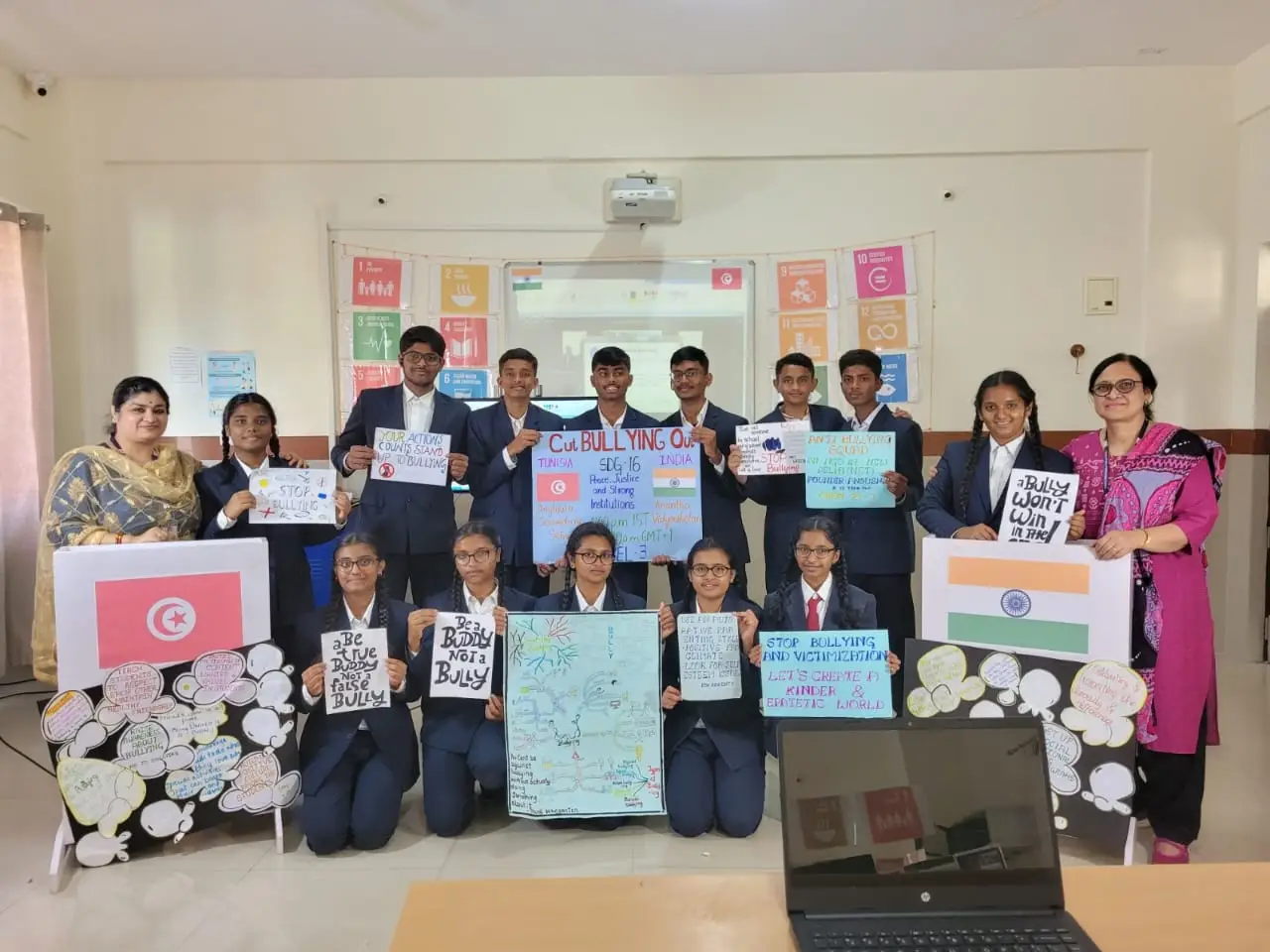
Project-based learning gives students a question to investigate and a product or action to develop. A partner class adds another context and an audience that can ask questions and contribute evidence. Plan both parts together: what students should learn and what they need from one another to complete the work.
What each approach contributes
In project-based learning, students investigate a meaningful question over time and use their learning to create a response. Larmer and Mergendoller's Seven Essentials for Project-Based Learning distinguishes inquiry, student choice, feedback, revision and a public product from an assignment that only asks students to compile information.
Fundación Chile's 2021 project-based learning guide by Sotomayor, Vaccaro and Téllez provides an introduction to planning projects and connecting learning across curriculum areas. Use the curriculum goal to decide what students need to investigate and how the product will show their understanding.
Use COIL to connect the shared work
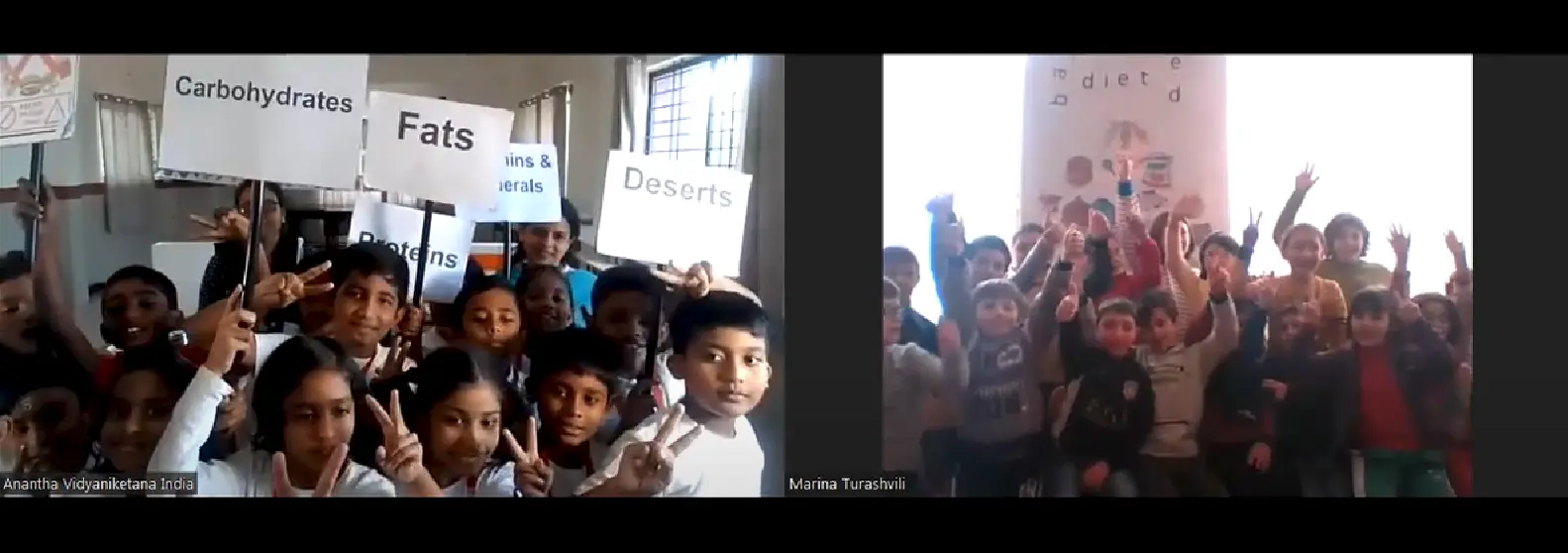
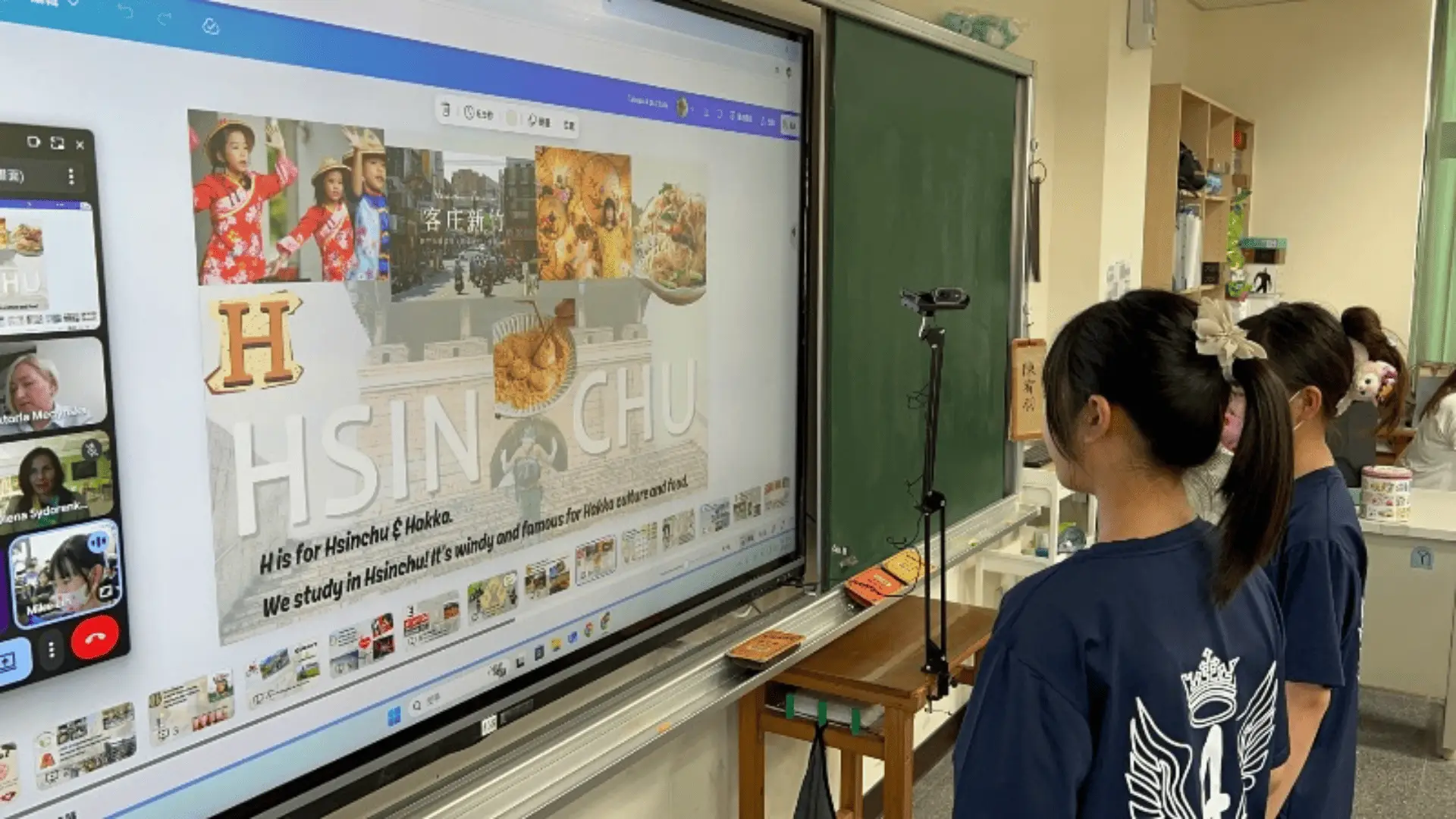
Collaborative Online International Learning, or COIL, connects classes through academic tasks planned by their educators. Rubin and Guth's 2022 guide describes joint online work across geographically or culturally distinct institutions. For a school project, teachers can agree a question, contributions, response dates and a product drawing on both contexts.
- Compare contexts: investigate how climate, food systems or digital access appear in each community.
- Use an audience: ask the partner class to question, respond to or build on a draft.
- Teach communication: practise explaining evidence, checking meaning and giving useful feedback across languages.
- Make global thinking visible: ask students to explain another perspective and consider a response to the shared issue.
Read the research with its context
Zhang and Ma's 2023 meta-analysis combined 66 experimental or quasi-experimental papers. It found a moderately positive overall effect of project-based learning on achievement, thinking skills and attitudes. Effects varied with subjects, settings, group and class sizes, and project duration. These findings support careful project design and assessment in the class you teach.
Hackett and colleagues' 2023 COIL study examined intercultural competence in higher education. Helm and O'Dowd also discuss virtual exchange in higher education. These sources offer ideas for structured interaction and reflection; they do not establish a specific learning gain for a K-12 Class2Class project. Use age-appropriate support and evidence from your own students.
The OECD global competence framework includes examining local, global and intercultural issues, understanding perspectives, interacting across cultures and acting for collective well-being. UNESCO's 2015 Global Citizenship Education guidance provides learning objectives by age. A shared project can give students opportunities to practise these aims; choose an objective and a way to observe it.
Plan a combined project
The Class2Class educational framework brings together PBL, design thinking and COIL. Use PBL to organise inquiry and a product, COIL to plan shared work with another class and design thinking when students need to understand a need, prototype a response and test it.
- Start with a meaningful challenge that students can investigate locally.
- Agree with the partner teacher how the other class will investigate the same question.
- Exchange evidence and make a presentation, campaign, report or creative product reflecting both contexts.
- Reflect on the subject knowledge, the partner perspective and how the collaboration worked.
Class2Class describes three approaches: Explore Cultures, Explore Global Challenges and Create Solutions. Choose an approach for your learning goal and agree the scope with the partner teacher. A shared cultural question can be a small starting task; a solution project may require more investigation and testing.
Choose what students will practise
Make the intended skills concrete and teach them during the task. Keep records that show how students use the knowledge and respond to others.
- Intercultural communication: ask questions, listen and check meaning.
- Critical thinking: compare evidence and explain why contexts may differ.
- Collaboration: agree responsibilities and response dates.
- Digital literacy: choose suitable tools and share sources clearly.
- Global awareness: connect a local issue with another context.
- Emotional awareness: describe a reaction and consider another person's perspective.
- Adaptability and leadership: revise a plan and help the group make a decision.
Take the first practical steps
Start with a question already connected to your curriculum and ask students what they would like a partner class to help them understand. Decide what evidence each class can gather and what a shared response should contain.
- Choose an approach and topic for the curriculum goal.
- Create a project outline and decide its visibility and invitation plan.
- Find and contact a partner teacher through Connect, using compatible interests, ages, languages and availability.
- Agree activities and dates together. The Project Assistant can suggest editable objectives, skills, activities and a timeline.
- Begin with a small exchange, collect students' work and use feedback to decide the next step.
Class2Class is free for teachers and students. Teacher messaging, project chat and the Board can help classes exchange images, videos, links and documents. Agree the tools and pace that suit both schools.
Sources
Class2Class.org. (2025). The Class2Class.org educational model. See the educational framework.
Hackett, S., Janssen, J., Beach, P. et al. (2023). The effectiveness of Collaborative Online International Learning (COIL) on intercultural competence development in higher education. International Journal of Educational Technology in Higher Education, 20, 5. https://doi.org/10.1186/s41239-022-00373-3
Helm, F. (2015). The practices and challenges of telecollaboration in higher education in Europe. Language Learning & Technology, 19(2), 197-217.
Krajcik, J., & Shin, N. (2014). Project-based learning. In R. K. Sawyer (Ed.), The Cambridge handbook of the learning sciences (2nd ed., pp. 275-297). Cambridge University Press.
Larmer, J., & Mergendoller, J. R. (2010). Seven essentials for project-based learning. Educational Leadership, 68(1), 34-37.
O'Dowd, R. (2018). From telecollaboration to virtual exchange: State-of-the-art and the role of UNICollaboration in moving forward. Journal of Virtual Exchange, 1, 1-23.
OECD. (2018). Preparing our youth for an inclusive and sustainable world: The OECD PISA global competence framework. OECD Publishing.
Rubin, J., & Guth, S. (Eds.). (2022). The guide to COIL virtual exchange: Implementing, growing, and sustaining collaborative online international learning. Stylus Publishing.
Sotomayor, C., Vaccaro, C., & Téllez, A. (2021). Aprendizaje basado en proyectos: Un enfoque pedagógico para potenciar los procesos de aprendizaje hoy. Fundación Chile.
Thomas, J. W. (2000). A review of research on project-based learning. Autodesk Foundation.
UNESCO. (2015). Global citizenship education: Topics and learning objectives. UNESCO Publishing.
Zhang, L., & Ma, Y. (2023). A study of the impact of project-based learning on student learning effects: A meta-analysis study. Frontiers in Psychology, 14, 1202728. https://doi.org/10.3389/fpsyg.2023.1202728
Frequently asked questions
Are PBL and COIL the same approach?
No. PBL organises inquiry around a question and a product or action. COIL organises shared online academic work between classes. Teachers can use both in one project.
What should the partner class contribute?
Choose something the project needs: local observations, another source, feedback on a draft or a perspective on the question. Ask students to explain how both contributions shape the shared response.
How can we check what students learned?
Use the product alongside each student's explanation, source notes or reflection. Compare their reasoning before and after feedback and teach any knowledge they still need.
Explore a project for your class
Choose a curriculum question and explore a Class2Class project idea. Adapt the investigation, shared response and learning checks with a partner teacher.