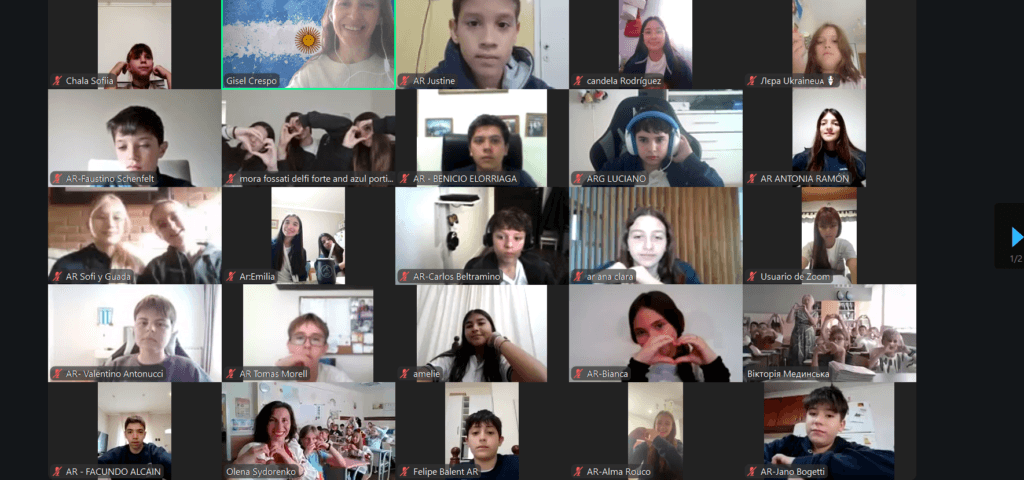
Your students ask where their classmates are from, and the answers rarely extend beyond your city limits. Meanwhile, global citizenship skills—cultural awareness, digital collaboration, perspective-taking—sit at the top of every 21st-century learning framework. The gap between what students need and what typical classrooms provide grows wider each year.
Bringing students from different countries together used to require expensive travel programs or complex institutional partnerships. Not anymore. Thousands of K-12 teachers now connect their classrooms across borders using simple video tools and structured collaboration frameworks. The results reshape how students see themselves and the world.
Why Connect Students Across Borders
The research case for international classroom connections writes itself. But theory matters less than what actually happens when a fifth-grader in Jakarta exchanges water quality data with a partner in Ohio, or when literature students in Seoul and São Paulo compare coming-of-age themes in their local novels.
Students develop authentic communication skills. Writing for a real peer in another country demands clarity that writing for a teacher’s grade never does. Students edit more carefully, ask better questions, and take ownership of their work when someone their age across an ocean depends on understanding it.
Cultural stereotypes collapse through direct experience. Students discover that teenagers in Morocco face homework stress, that Indian classrooms debate the same novels, that Indonesian students love the same music. The specifics matter less than the pattern: repeated exposure to peers as peers, not as cultural representatives.
Subject matter gains relevance. Math problems about currency conversion become real when your partner school uses rupees. Climate science transforms when students compare local weather patterns with a classroom 8,000 miles away. History discussions deepen when students hear how the same event appears in another country’s textbooks.
Practical Models for International Classroom Connection
The simplest approach pairs your class with one partner classroom for a defined project. Both teachers share the same learning objectives, divide students into mixed-nationality small groups, and structure collaboration through shared documents and scheduled video calls.
A middle school science teacher in Texas and her partner in South Korea ran a renewable energy project this way. Student groups researched solar, wind, and hydroelectric options, then created joint proposals for their hypothetical school’s energy transition. Groups met twice weekly via video, shared research in collaborative slides, and presented final recommendations to both classes. The project met state science standards while building collaboration skills neither teacher could develop alone.
The virtual student exchange model extends this across multiple weeks. Students work in sustained partnerships, building relationships alongside academic work. An elementary teacher in California paired with a classroom in Indonesia for a geography unit. Students became “country experts” for their partner’s location, interviewed each other about daily life, created video tours of their communities, and compiled shared digital travel guides.
Multi-classroom networks amplify impact. Instead of one partner, your class connects with three or four others worldwide. A high school English teacher coordinated a poetry project across classrooms in the USA, Philippines, India, and Colombia. Students shared original poems, provided peer feedback across borders, and compiled an international anthology. The diversity of voices and perspectives exceeded what any two-classroom partnership could generate.
Subject-Specific Project Ideas
Language arts projects thrive on cultural exchange. Students from different countries together can compare folklore traditions, analyze how translations change meaning, or study the same historical period through literature from multiple nations. Book club discussions gain depth when students bring different cultural contexts to the same text.
A fourth-grade teacher in Michigan and her partner in Nigeria ran a folktale project. Each class shared three traditional stories from their culture, students worked in international groups to identify common themes, then created new folktales blending elements from both traditions. The writing quality exceeded typical assignments because students wrote for an audience that genuinely wanted to understand their culture.
Mathematics becomes concrete through real-world comparison. Students can collect and analyze data from both locations—school lunch prices, transportation costs, sports statistics, weather patterns. They can solve problems that require understanding different measurement systems or currencies. A middle school class in India and one in the USA compared the cost of common items in both countries, calculated exchange rates, and discussed economic factors affecting prices. Students engaged deeply with percentage calculations and proportional reasoning because the numbers meant something.
Science projects benefit from distributed data collection. Climate studies gain power when students compare temperature, precipitation, or growing seasons across latitudes. Biology students can observe how the same species behaves in different environments. Environmental science classes can investigate local pollution, waste management, or conservation efforts, then compare solutions.
Social studies naturally suits international collaboration. Students can interview each other about government systems, compare how the same historical event appears in different textbooks, or investigate how geography shapes culture. A high school geography class in Indonesia partnered with one in Brazil to study urbanization. Student teams researched challenges in both cities—traffic, housing, environmental impact—and proposed solutions informed by both contexts.
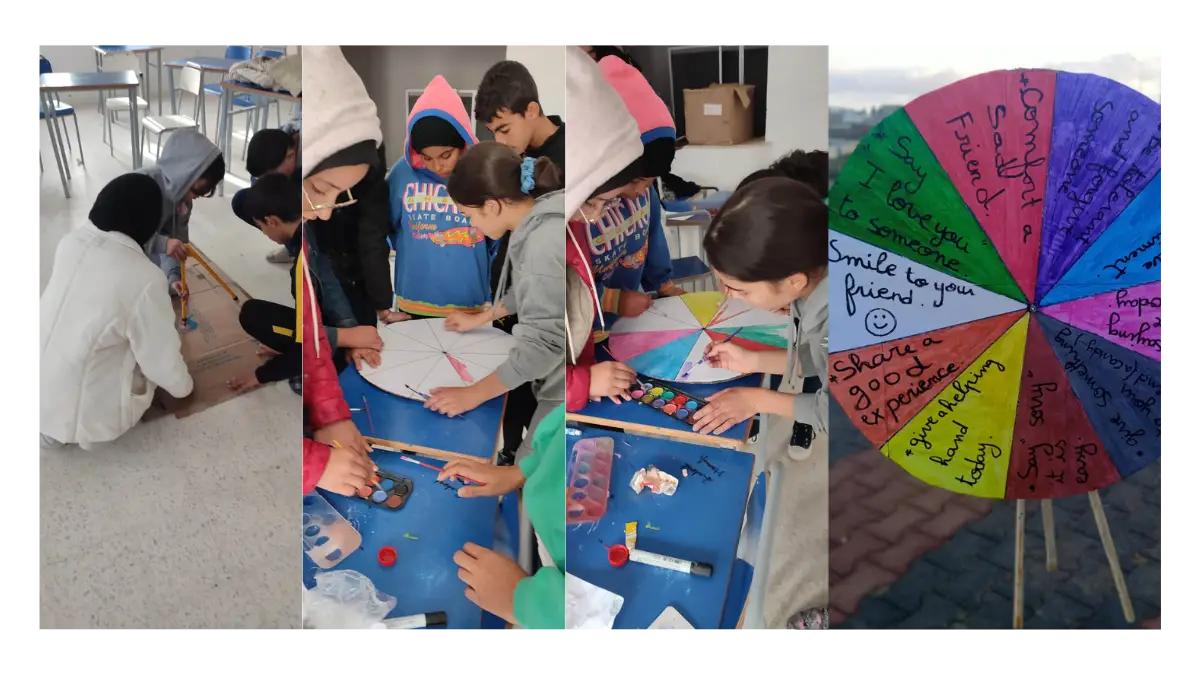
Art and music projects celebrate diversity while finding common ground. Students can share traditional art forms, collaborate on digital galleries, or create fusion pieces blending styles from both cultures. A middle school art teacher in South Korea and one in Mexico ran a mural project. Students designed sections incorporating visual symbols from both cultures, worked together digitally to create a unified composition, then each class painted their version.
Managing the Logistics
Time zones present the most obvious challenge when bringing students from different countries together. You don’t need to solve this perfectly. Many successful projects minimize synchronous time and structure most collaboration asynchronously.
A teacher in California (UTC-8) partnered with one in India (UTC+5:30). The 13.5-hour difference made live video nearly impossible during school hours. They scheduled one 30-minute video call at the project start (early morning for California, end of day for India) and one at the end. The rest happened through recorded video messages, shared documents, and discussion forums students checked daily. Students still built meaningful connections.
When time zones do align, you need less overlap than you think. Two 20-minute video calls across a four-week project provide enough face-to-face connection. Students can meet in small groups during those calls, making the time more valuable than whole-class presentations.
Language differences rarely block collaboration as much as teachers fear. Students with intermediate English can participate meaningfully, especially with visual supports and translation tools. A teacher in Japan partnered with one in the USA for a cultural exchange project. Japanese students had varying English levels, so groups used shared slides with images, short captions, and occasional translation tools. The constraint pushed both sides to communicate more clearly.
Structure prevents chaos. Clear roles, explicit deadlines, and simple tools keep projects moving. Successful teachers use shared documents for collaboration, set specific tasks for each week, and have students report progress regularly. A sixth-grade teacher pairs each student with a specific partner, assigns weekly discussion questions, and requires students to post responses by Wednesday each week. Partners reply by Friday. The rhythm becomes routine.
Technology needs stay simple. You need reliable video calling, shared documents, and a way for teachers to coordinate. Avoid complex platforms that require training. Most successful cross-cultural classroom projects use freely available tools teachers already know.
Assessment That Captures Real Learning
Traditional rubrics miss what matters most in international collaboration. Yes, assess the content—the science report, the historical analysis, the mathematical calculations. But also evaluate the collaboration skills that make these projects worthwhile.
Reflection prompts reveal learning that tests can’t measure. Ask students: What surprised you about your partner’s perspective? When did you have to explain something you take for granted? How did you solve a problem when you couldn’t meet face-to-face? These questions surface growth in cultural awareness, communication, and adaptability.
Process documentation shows collaborative skill development. Have students keep simple collaboration journals: What did your group accomplish this week? What challenge did you face? How did you address it? These brief entries reveal how students navigate cultural differences, manage time zones, and build relationships.
Peer feedback across borders provides authentic assessment. Students in partner classrooms can evaluate each other’s contributions, offer specific praise, and suggest improvements. This feedback matters more to students than teacher grades because it comes from someone who worked alongside them.
Portfolio pieces demonstrate both content mastery and global competence. A final project might include the academic product (research paper, presentation, creative work) plus evidence of collaboration (chat logs, video clips, joint planning documents) and individual reflection. This complete picture shows what students actually learned.
Overcoming Common Obstacles
Finding reliable partner teachers concerns everyone starting out. You need someone who will follow through, communicate clearly, and share your commitment to quality. Many teachers start by reaching out through professional networks, social media teacher groups, or existing partnerships at their school.
The smarter approach uses dedicated platforms designed for international classroom connection. These systems vet teachers, match classrooms by grade level and subject, and provide communication tools. You skip the uncertainty of cold outreach and start with teachers ready to collaborate.
Curriculum pressure feels real. Adding international projects to already-full schedules seems impossible. But these projects don’t sit on top of your curriculum—they enhance what you already teach. That science unit on ecosystems becomes richer when students compare ecosystems with a partner classroom. The writing unit on persuasive essays gains authenticity when students write for international peers.
A high school history teacher worried about covering required content while running an international project. She integrated it directly: students researched World War II’s impact on different countries with international partners. Each pair investigated one aspect—civilian experiences, economic effects, political changes—then shared findings. Students covered more content than in a traditional unit because peer teaching motivated research.
Technical problems happen. Video fails, internet drops, platforms crash. Build backup plans. Record video messages when live calls don’t work. Use offline-friendly documents. Have phone-friendly alternatives. Students learn resilience when they solve technical challenges collaboratively.
Unequal participation frustrates teachers in any group work, and international projects add complexity. Some students engage deeply while others contribute minimally. Address this through individual accountability within group work. Each student submits a personal reflection, completes specific tasks, or contributes designated sections. Group projects can have individual grades.
Building Sustainable Partnerships
One successful project opens doors to ongoing collaboration. Many teachers who bring students from different countries together once continue for years, building relationships that deepen each iteration.
Start small with a defined, short-term project—two to four weeks. This contained scope lets both teachers learn the process without overwhelming commitment. If it goes well, expand in the next round. A teacher in South Korea began with a three-week poetry exchange with a U.S. classroom. The next semester, they ran a six-week social studies project. Now in year three, their classes collaborate across two units annually.
Involve students in planning future collaborations. After completing a project, ask what they’d want to do next. Their ideas often exceed teacher imagination. Students who’ve experienced international collaboration understand its value and propose ambitious projects.
Document everything. Keep planning documents, project templates, assessment rubrics, and student work examples. Each project becomes easier because you’re refining rather than creating from scratch. Share these resources with colleagues. International collaboration spreads school-wide when teachers see practical models.
Connect projects to larger frameworks. Many international classroom collaborations align naturally with COIL projects for students, UN Sustainable Development Goals, or global citizenship curricula. This alignment helps justify the work to administrators and parents.
How Class2Class Helps
The Class2Class global collaboration platform removes the main barriers teachers face connecting classrooms internationally. The platform matches you with verified teachers worldwide who share your subject and grade level, provides simple project templates aligned to common learning frameworks, and includes communication tools designed for classroom use. Teachers in 140+ countries use it to bring students from different countries together without complexity or cost.
Getting Started
- Choose a specific learning objective you’re already teaching that could benefit from international perspective—a science unit, literature theme, historical period, or cultural topic. Don’t create new curriculum; enhance what exists.
- Define your project scope with clear start and end dates, simple deliverables, and minimal synchronous time requirements. Two to four weeks works well for first projects. Outline exactly what students will do each week.
- Find a partner teacher through a dedicated matching platform rather than searching randomly. Look for someone teaching similar content to similar-aged students, with compatible technology access and communication preferences.
- Plan together before involving students. Align on learning goals, project timeline, assessment methods, and communication protocols. Create a simple shared document outlining weekly tasks, deadlines, and responsibilities for both classrooms.
- Launch with clear student expectations about what they’ll do, who they’ll work with, how they’ll communicate, and what success looks like. Provide examples of strong collaboration and establish norms for respectful cross-cultural interaction.
Conclusion
Bringing students from different countries together transforms abstract global citizenship goals into concrete learning experiences. Your students develop real relationships with peers across borders, practice authentic communication skills, and gain perspectives that reshape how they see themselves and others. These outcomes matter more than test scores, though content learning deepens too when students engage with real audiences.
The logistics are simpler than they appear. You don’t need perfect time zone alignment, fluent multilingual students, or complex technology. You need a clear project, a committed partner teacher, and basic digital tools. Start with one small collaboration this semester. The impact on your students will convince you to continue.