5 sustainability projects for school that students can measure
Good sustainability projects for school start with one clear question, a task students can manage and a record you can interpret: a reuse station, an outdoor observation, a water-use walk, a food-waste audit or energy records. Match the method to your class and staff support before claiming an environmental result.
See the 5 project ideasLast updated
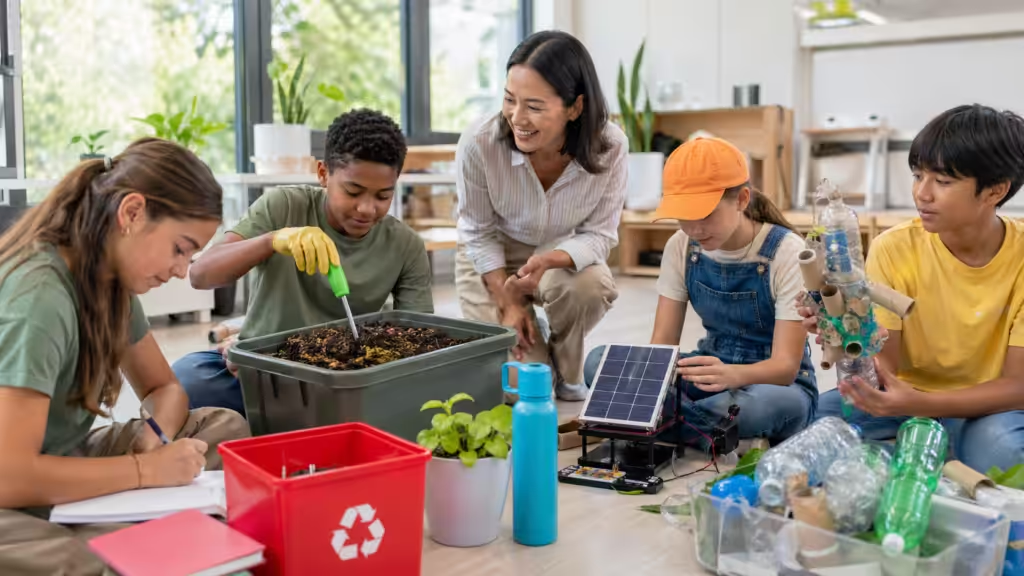
Each idea below names a question, what students do and what the evidence can and cannot show. Pick one that fits what you teach, agree roles with the staff involved and decide what the records will show before promising an environmental result.
Choose one of five sustainability project ideas
Swipe horizontally to see all columns
| Project and question | Ages and subjects | What students do | What the evidence shows |
|---|---|---|---|
| Reuse station: what can we use again? | 6-10; maths, language, art | Sort clean, teacher-selected supplies and tally what is reused | Items reused, not carbon or money saved |
| Outdoor observation: what changes in one place? | 6-10; science, geography, art | Draw the setting and one detail, then return and compare | Dated observations, not a species count |
| Water-use walk: where should staff look? | 11-14; science, maths, writing | Check fixtures on a staff-approved route and write a request to facilities | Conditions where you looked, not litres saved |
| Food-waste audit: what is left after one lunch? | 11-18; maths, science, social studies | Weigh food by category with cafeteria staff and count trays | Food left in one sample, not a proven project effect |
| Energy records: what might explain a change? | 15-18; maths, science, geography | Graph approved electricity records and list missing context | Use over a stated period, not verified savings |
Allow roughly 20-30 minutes of preparation and one lesson, plus a later check. Permissions, staff time, data access and audit equipment come on top; without them, use teacher-supplied records or start with the reuse station. Ages are estimates, and these are adaptations of published methods, not reports of tested results.
What most often limits sustainability projects at your school?
Votes are anonymous.
Environmental project ideas by age group
Ages 6-10: make reuse and observation concrete
Ask: "Which of these classroom materials could have another useful job?" Students sort, label and count clean, safe materials, then record which items are actually used again, keeping "collected" separate from "reused". This adapts EPA advice on reusing school supplies.
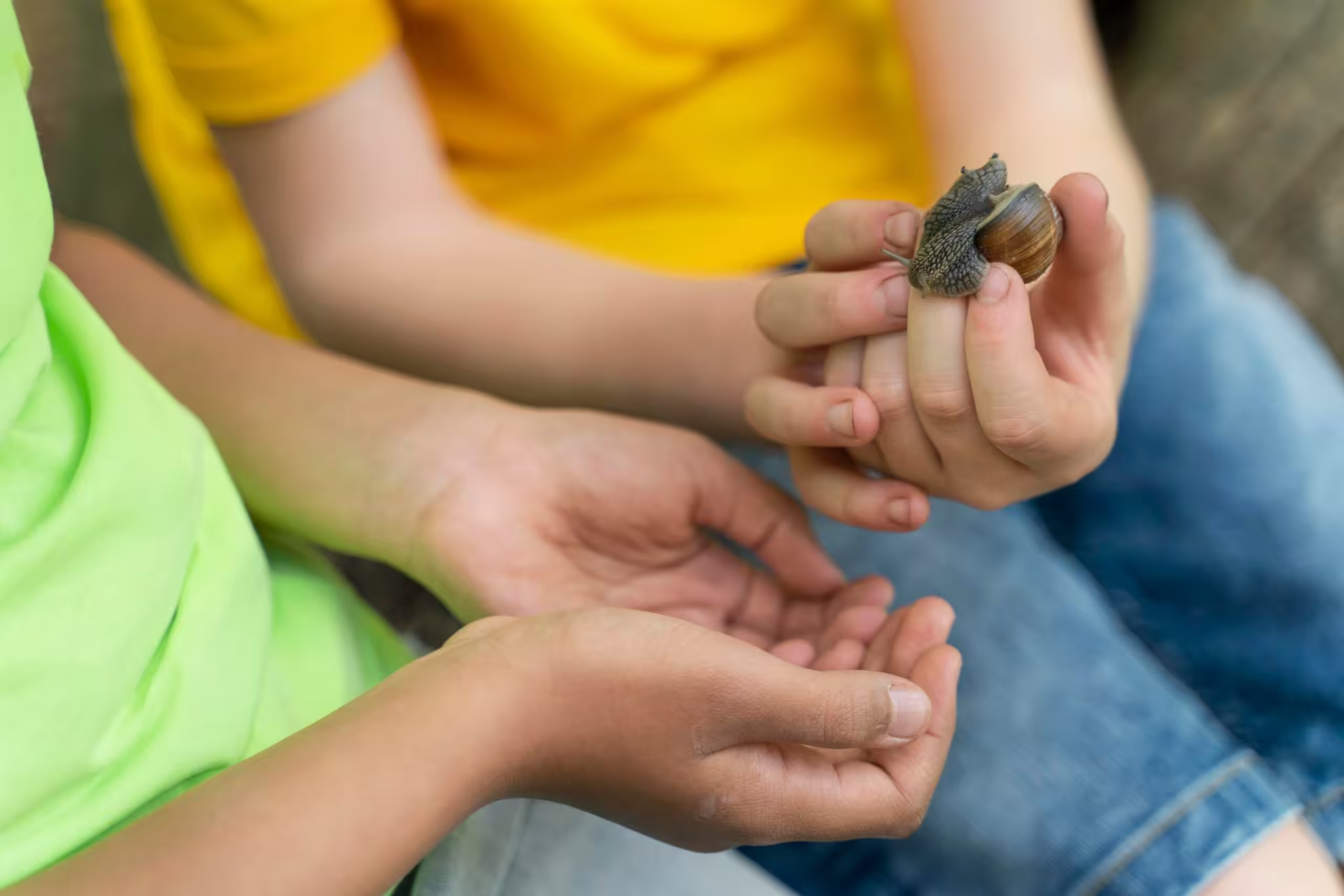
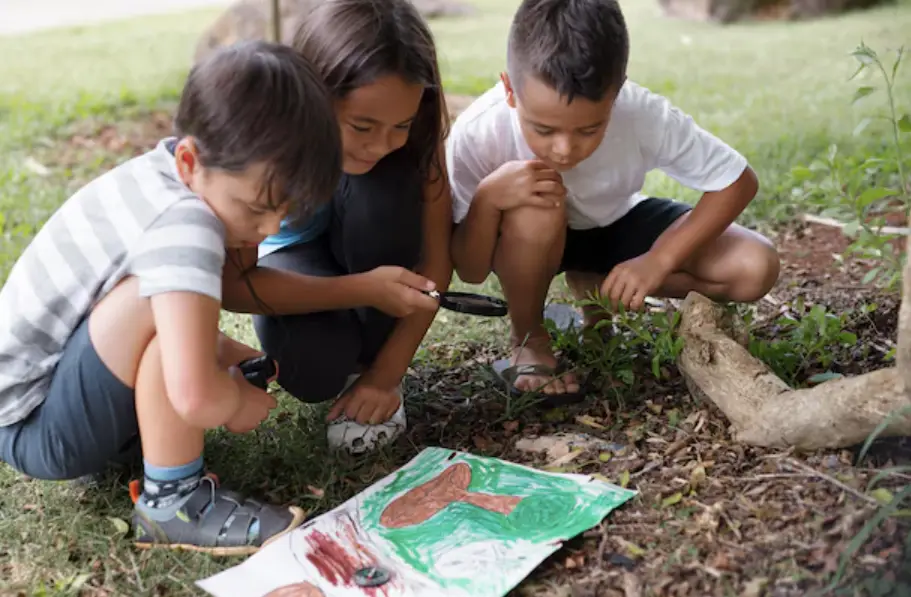
Outdoors, use the approach in GLOBE's All Year Long teacher notes: record the wider setting and one close detail, then return to compare. Students can draw, dictate or write; note the date and viewing position. Leave living things undisturbed and record uncertain identifications as unknown.
Ages 11-14: turn observations into a request for staff
Adapt the leak-search idea in the EPA Fix a Leak Week teacher guide, which was written for homes. On a route agreed with facilities staff, students record each accessible fixture, the time and whether they see a drip, keeping "not checked" separate from "no drip observed". They then write a short request for staff to investigate; repairs and restricted areas stay with adults. To explore water with a class abroad, see the Water Warriors project idea.
Ages 15-18: question the assumptions in school records
Ask facilities staff for an approved electricity extract with account details removed. The ENERGY STAR student toolkit examines energy performance from school records; in this smaller version, students graph kilowatt-hours (kWh) with each period's dates. kWh per day helps when periods differ in length, but it does not adjust for weather or occupancy. Students list missing context, such as holidays or building changes, and propose the next question. Operational changes stay with staff, and no student needs plant-room access.
A detailed example: a school food-waste audit
The EPA, USDA and University of Arkansas school audit guide supplies the measurement starting point below. It is a 2017 US school-cafeteria protocol, not evidence that this activity will reduce waste in every school. This adaptation keeps its basic collection method and adds explicit sampling and interpretation limits. Use your school's current supervision, hygiene and food-handling arrangements.
1. Agree the question, sample and adult responsibilities
Use a question such as: "What food and drink remains on participating trays after this lunch period?" Agree the scope with cafeteria, teaching and cleaning staff: which meal, collection point, categories and lunch period are included. Identify who supervises, weighs, clears spills and disposes of material. Plan traffic flow so the activity does not obstruct lunch or prevent students from eating.
Staff should decide the hygiene procedure, including handwashing, suitable gloves, cleaning and allergy precautions. Adults manage heavy containers and liquids. Offer recording or analysis roles away from food handling. Do not ask students to retrieve items from mixed rubbish or redistribute collected food; this audit is not a food-donation procedure.
Keep the exercise about the meal system. Do not rank pupils by leftovers, photograph identifiable lunches or ask for family spending or health information. If staff choose to ask about uneaten food, make responses optional and record themes without names. Amount left over is not a judgement about a child's appetite, nutrition or household.
2. Prepare the collection and record sheet
- Use clearly labelled containers for the agreed food categories. Keep packaging and other non-food waste out of food totals. Record drinks separately. Count unopened packaged items separately rather than including their packaging in food mass.
- Use a suitable scale and record its unit. Weigh each empty container with any liner to establish its tare mass. Keep that tare with the correct container record.
- Prepare fields for date, lunch period, menu, category, container, gross mass, tare mass and net food mass. Record the number of participating trays and any missed trays or collection gaps.
- Brief each role before lunch. Arrange safe capacity limits, spill cleanup and staff-led emptying; do not wait until liquid containers are too heavy to manage.
3. Weigh only what the sample includes
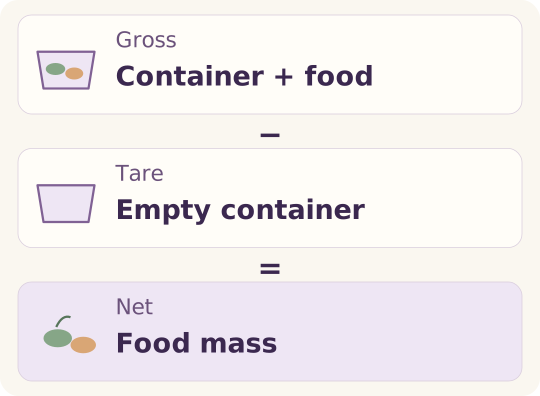
Keep the categories consistent as trays arrive. For each full or partly full container, record gross mass and subtract its tare: net food mass = gross mass - tare mass. If a container is emptied more than once, record every batch and total the net masses. Convert to one unit before adding results. Do not subtract tare twice if the scale already displays a correctly tared net reading.
Count each participating tray once, including trays with no leftovers. Total school attendance is not the denominator for a sample that included only some lunches. For a simple comparison, calculate grams of collected unpackaged food and drink per participating tray: total net mass in grams / number of participating trays. Report the tray count, included categories and separate unopened-item count beside that value. If no trays were counted, report the mass and the missing denominator without calculating a rate.
Swipe horizontally to see all columns
| Record | Why it belongs in the report |
|---|---|
| Menu, date and lunch period | Shows which conditions the observation covers |
| Food categories and net mass in g or kg | Separates the food from containers and non-food material |
| Participating trays and missed collection | Shows the actual sample and its gaps |
| Food mass per participating tray | Makes the denominator visible; it is not a percentage of the meal wasted |
| What changed between audits | Helps readers judge whether two observations are comparable |
4. Choose a change, then repeat under comparable conditions
Discuss the findings with cafeteria staff and choose one feasible response they can approve. Record what changed and when. For a follow-up, use the same or a similar menu and repeat the categories, collection window, weighing method and tray count. Record differences in portions, attendance, timetable or collection coverage instead of hiding them.
A lower result on the second day describes a difference between those observations. It does not isolate the effect of the response, especially if the menu or sample changed. Keep the conclusion proportionate, and do not convert the results into money, meals recovered or carbon savings without the separate data and method those claims require.
Connect the project to subjects and assess learning
- Mathematics: check units, calculations, denominators and whether a comparison is fair.
- Science and geography: describe a repeatable method and separate an observation from an explanation.
- Language and social studies: write a proposal that uses evidence, considers who would carry out the change and acknowledges practical barriers.
- Art and design: make labels or a visual report whose main message remains accurate when someone reads it quickly.
Keep two kinds of evidence. The project record describes materials, observations or environmental conditions. An individual student response shows what that learner can explain: "What did we measure? What can we conclude? What remains uncertain?" A polished group poster or lower waste total does not, by itself, demonstrate every student's learning.
Use a short checklist for each student: a clear question, an accurate record, an explanation supported by that record and one relevant limitation. Keep usual accessibility support and allow appropriate written, spoken or visual responses. For more ways to observe collaborative work, see the guide to making 21st-century skills visible.
Compare with another class when the method is ready
If a partner class is involved, agree the question, units, categories and reporting period before exchanging results. Share aggregated records and method notes. A school with different menus, facilities or schedules may need a different response; compare the reasoning and constraints instead of ranking schools by one number.
Ready-made projects to run with a partner class
An event such as International Mother Earth Day can be a planning anchor. It does not supply permissions, a partner or a validated measurement protocol. Keep the activity manageable within your teaching plan and agree any public sharing of student work through the school's usual process.
Sources and scope
The linked methods inform these proposed adaptations. They are not evaluations of Class2Class projects, and their US grade labels or standards do not automatically apply in another country. The food guide's historical equipment prices, policy details and intervention percentages are not used here.
EPA, USDA and University of Arkansas (2017). Guide to Conducting Student Food Waste Audits: A Resource for Schools. Planning and collection method, printed pages 3-11 and the weight-log appendix. Read the audit guide.
US EPA. What You Can Do, section for students and schools; Fix a Leak Week Teacher's Guide, visual leak-search activity. Read the reuse guidance and the water teacher guide.
The GLOBE Program / UCAR (2018). All Year Long, teacher notes and observation procedure. ENERGY STAR. Energy Efficiency Student Toolkit, school records and context for energy use. Read the GLOBE teacher notes and the energy toolkit.
UNESCO (2017). Education for Sustainable Development Goals: Learning Objectives. Used as planning context. Read the publisher overview.
Frequently asked questions
Which project can start without audit equipment?
Start with a reuse station. Use clean materials chosen by the teacher and a tally sheet to count items actually reused. For an outdoor task, keep an observation journal in an accessible, school-approved place.
Can we compare food-waste totals from different lunch days?
Yes. Keep the menu, collection method and food categories as similar as possible. Record how many trays you counted and compare grams of food waste per tray, as well as the totals. Note any differences between the days. A lower result alone does not show that the project caused the change.
Do students need to handle food waste or share information about their families?
No. Students can record results, calculate or make charts from class data without handling food. Use class totals instead of names or private family details, and let staff manage food handling under the school's agreed procedures.
How can I check what students learned?
Ask each student to explain what they measured, what the results show and what they would check next. Keep their usual support and collect a short response from everyone. Use these answers alongside the shared work; an environmental result alone does not show what every student learned.
Choose your next classroom project
Browse classroom projects connected to your sustainability question. Use your question and evidence plan to shape an exchange with another class.