Classroom application of SDGs: 4 practical strategies
Bring the Sustainable Development Goals into lessons you already teach. Use four classroom strategies, shared project ideas and practical planning advice.
Last updated
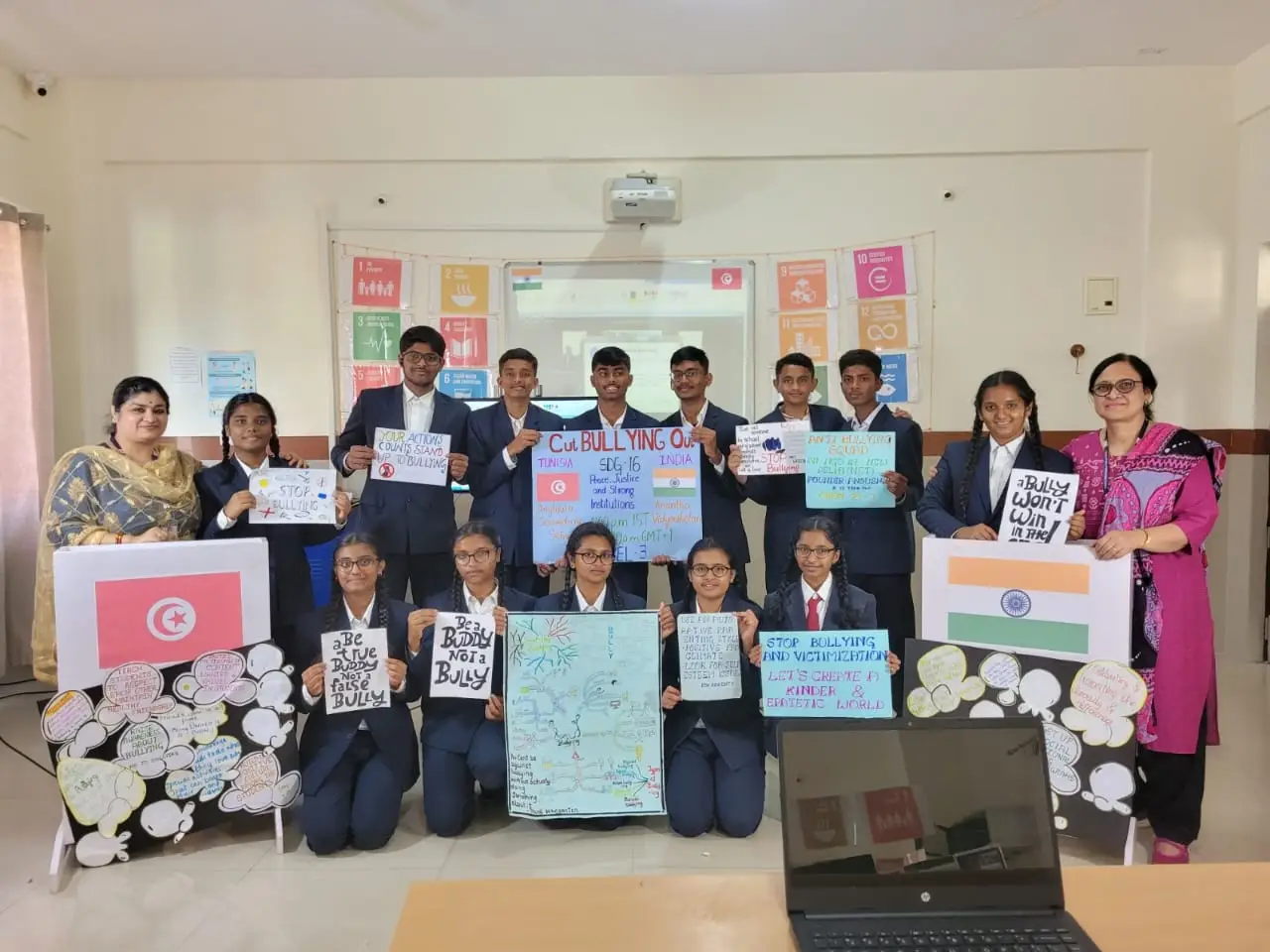
The classroom application of SDGs starts with a question students can investigate through a subject you already teach. Choose one Sustainable Development Goal, connect it to a local issue and give students a useful task. They can compare evidence, suggest a response or exchange findings with a partner class.
The UN adopted the 17 Sustainable Development Goals in 2015 as part of the 2030 Agenda. They cover poverty, hunger, climate, education and global partnerships. SDG 4: Quality Education includes Target 4.7, which calls for the knowledge and skills needed for sustainable development.
Four ways to use SDGs in your classroom
Start with the goals that fit your curriculum and students. These four approaches can be adapted across subjects and age groups.
1. Extend a unit you already teach
Map the goals to topics already in your curriculum. A K-2 unit on nutrition and hygiene can connect to SDG 3: Good Health and Well-Being. Students could explore why access to clean water and soap differs between communities, using suitable examples and sources.
A middle school mathematics class could use UNESCO data to build data literacy. Its 2026 report estimates that 273 million children and young people were out of school in 2024. Ask students what the number describes, what year it refers to and what information they would need before comparing countries.
For SDG 2: Zero Hunger, a middle school class could use a food-distribution simulation to explore inequality. Explain that the model simplifies real life, then discuss what it can and cannot show.
2. Build a project around a real question
Choose a relevant goal, define the learning objectives and plan an authentic task. Students can research, work together and present their findings to an audience beyond their own class. Make the intended learning clear before choosing the final product.
For example, a fourth-grade class could code robots to model how animals move through a habitat for SDG 15: Life on Land. Ask students to explain the habitat conditions and the limits of their model. A 2025 study of 46 eighth-grade students at the Indonesian School of Kuala Lumpur examined critical thinking about food additives. It recommended PBL and STEM approaches; it did not test whether those approaches improved results.
3. Connect subjects around one issue
Science lessons can connect to climate action (SDG 13), water systems (SDG 6) or biodiversity (SDG 15). Social studies can examine policy responses. Language lessons can explore texts about poverty, the environment and justice. Art and drama can help students communicate an issue or consider another perspective.
Older students could plan an anti-plastic campaign linked to SDG 15: Life on Land. They might compare local waste information, check the claims in their message and choose an audience.
A 2024 qualitative study at a Philippine laboratory school explored SDG activities in English classes through interviews and focus groups. Participants described actions such as separating waste and discussing conservation with parents. These are reported experiences, rather than measured proof that the activities caused gains in critical thinking.
4. Compare findings with a partner class
SDG 17: Partnerships for the Goals gives the exchange a clear purpose. For example, classes in Brazil and Denmark could investigate SDG 7: Affordable and Clean Energy. Both classes would compare local energy sources, explain what sustainability means in their context and use the other class's findings in their response.
Networks such as iEARN and Class2Class support international classroom connections. On Class2Class, teachers can explore projects and contact partners for a shared task. Read the SDG teacher guide for the wider framework, or our skills guide to plan what students will practise.
Plan around common challenges
A 2025 study interviewed 30 geography teachers: 15 in North Rhine-Westphalia, Germany, and 15 in Iran. Teachers described curriculum, time and knowledge barriers. These findings reflect those interview groups, rather than a survey of all teachers. The planning ideas below can help you consider your own situation.
Time and curriculum: map an SDG to a unit you already teach. An ecosystems lesson can explore biodiversity without adding a separate unit. Earth Day or World Water Day can provide a date for sharing the work, if it fits the school calendar.
Teacher confidence: choose a topic you can explore with suitable sources, then discuss questions with a colleague or partner teacher. UNESCO's ESD-Net 2030 supports exchange around education for sustainable development. Peer networks, including iEARN and Class2Class, can also help teachers learn from one another.
Student relevance: begin with an issue students can understand in daily life. Younger learners might explore health and well-being; older learners could investigate inequality or justice. Use a simulation, role play or community investigation with a clear question. The SDG teacher guide can help you choose a goal.
Choose a manageable global project
An international exchange can help students compare how the same issue affects different communities. Class2Class supports teacher-led partnerships: both teachers agree the question, contributions and pace.
Start with an exchange: both classes share a local perspective on the same SDG question and reply to each other. This gives the partner class a role in the learning without requiring a large final product.
Build a shared investigation: students research the question, exchange evidence and create an output that uses both classes' findings. For a longer design task, they can explore needs, define the problem, suggest ideas, prototype and test a response. Agree the scope and time with the partner teacher.
COIL, project-based learning and Design Thinking can inform the plan. Teachers set the learning goals and support the collaboration while students investigate the question. For example, classes in Kenya and Canada could compare local SDG 6: Clean Water evidence, then explain how the findings differ and what they learned from one another.
What the evidence can tell us
PISA 2018 included a cognitive assessment of global competence in 27 countries and economies. It examined how students understand global and intercultural issues. The overall PISA participation figure does not describe this separate test, and the results do not establish a universal pass rate for SDG teaching.
OECD analysis found positive associations between global and intercultural learning activities and students' attitudes and dispositions. An association does not show that an SDG lesson caused the result, or predict what will happen in a particular class. Use students' work and reflections to check learning in your own project.
UNESCO's ESD for 2030 programme supports education that develops knowledge, skills, values and attitudes for sustainable development. The Berlin Declaration on ESD was adopted in 2021. This provides a wider policy context for classroom work, rather than proof of one teaching method's effect.
The UN's 2024 SDG 4 report describes a 2023 survey in which three-quarters of countries reported plans to revise sustainability-related curricula within the following three years. This is a dated policy finding, not a new three-year deadline or a requirement to replace your curriculum.
Check learning through the work
A mixed-studies review examined 56 environmental-education studies across different ages and settings. It described links to civic engagement and community activity, especially where learning was active and connected to local concerns. The studies used different methods; this is not a guarantee that every SDG activity will produce the same outcome.
The Philippine English-class study records participants' accounts of initiative, reflection and conservation activities. It can suggest questions to ask students about their learning. It does not establish a causal effect or show that the same activity will work in every context.
Plan what you want to observe: how students use evidence, explain another perspective, work together and reflect on their choices. Our 21st-century skills guide can help you discuss these goals with a partner teacher.
Frequently asked questions
Do I need to teach all 17 SDGs at once?
No. Choose one goal that fits a unit you already teach. Give students a question and a task they can complete, then decide what to explore next.
Can we start without an international partner?
Yes. Students can investigate a local question first. A partner class can later help them compare contexts or develop the work together.
Is Class2Class free for an SDG project?
Yes. Class2Class is free for teachers and students. Explore projects and contact a teacher to discuss a shared question.
Choose one goal for your next unit
Explore a project that connects to what students are learning. Start with one SDG question, then agree a useful task and a manageable exchange with a partner teacher.