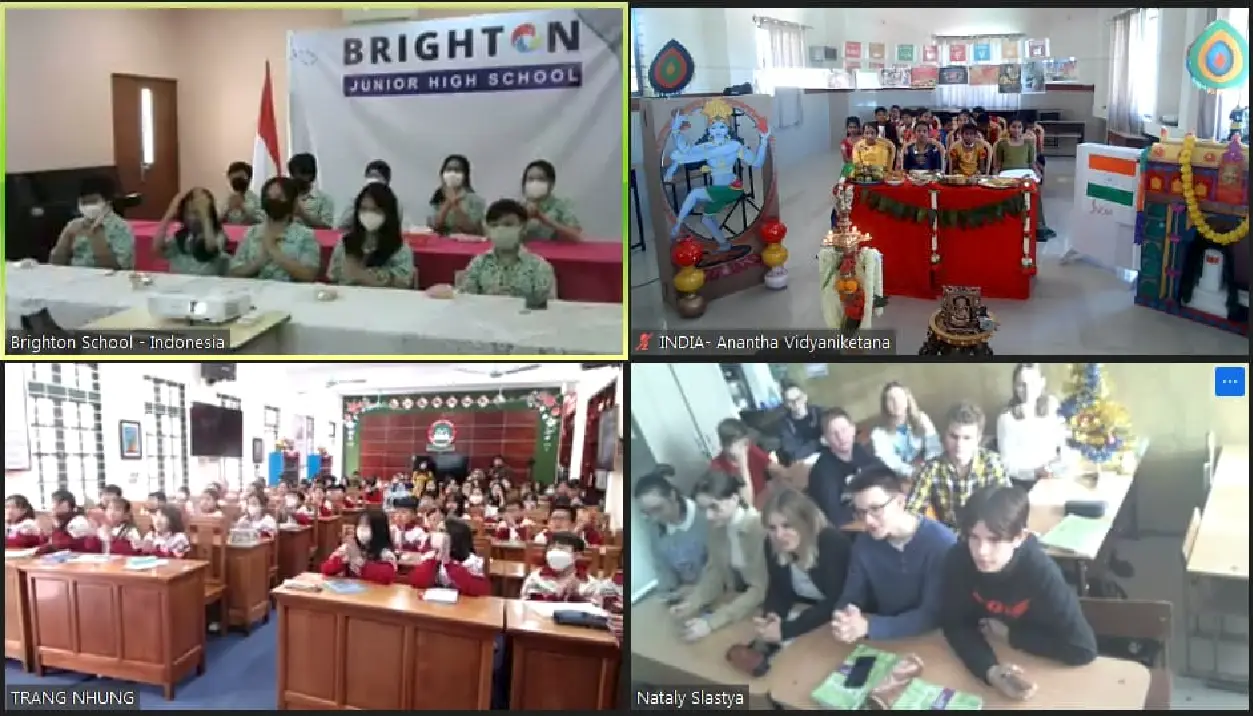
My School, Your School: share everyday school life
My School, Your School is a four-week project idea for ages 6-8, 9-12 and 13-15, using English. Students exchange games, stories and art to explore school life with a partner class.
Last updated
Let students show what a school day feels like
A favourite game at break time, a classroom routine or a drawing of a learning space can give students plenty to talk about. My School, Your School starts with these familiar details and invites a partner class to share its own.
The project brings together English practice, curiosity about different ways of learning and careful listening. Students use games, stories and art to explain their experiences, ask questions and notice what they share with their partners.

Choose a small window into each school
Agree one focus with your partner teacher, such as a school-day timeline or a game students can explain to another class. Keep the first exchange short: a labelled drawing and three sentences can provide enough detail for a thoughtful reply.
Decide what each class will send, how students will respond and when the reply is due. Use the schools' agreed sharing arrangements. Drawings of routines or classroom objects let students contribute without sharing personal information or photographs of classmates.
Build the exchange over four weeks
This suggested sequence adapts the project idea. Adjust the tasks and pace with your partner teacher.
- Week 1 - Introduce one routine: draw or describe a moment from the school day. Add a question you would like the partner class to answer.
- Week 2 - Share and explore: exchange a short story, a picture or the instructions for a favourite game. Give partners time to ask about anything unfamiliar.
- Week 3 - Compare carefully: identify a similarity and a difference, then ask a follow-up question. Describe what this class shared rather than making claims about an entire country.
- Week 4 - Make a joint record: combine selected contributions into a small school-life gallery. Include a sentence from each group explaining something its partners helped it understand.
Younger students can draw and dictate a caption. Older students can explain why a routine matters or compare different experiences within their own class. Offer useful English phrases, such as "In our class..." and "Could you explain...?", and time to rehearse a reply.
Look for a response to the other class
Use the shared work and follow-up questions to discuss what students noticed and how well they explained their own experiences.
- Can a partner understand the routine, story or game from the explanation?
- Does the reply refer to a specific detail the other class shared?
- Can students explain something they reconsidered after listening to their partners?
Connect school life with the right to education
International Day of Education on January 24 offers a moment to share the gallery and discuss why learning matters. The exchange can also take place whenever it fits both schools' calendars.
Sources
- Class2Class. My School, Your School.
- UNESCO. International Day of Education.
- Class2Class. Teacher collaboration tools: coordinate an international project.
Start with one routine and one question
Explore My School, Your School above, then agree the first contribution with your partner teacher. A small, clear exchange gives students something concrete to notice, answer and build on together.