3 STEAM Projects to Build With a Class Abroad
COIL (Collaborative Online International Learning) links your class with a class abroad for a shared project. Three STEAM COIL project ideas: elementary classes design a healthy eating plate, middle schoolers build an ocean cleanup device, and high schoolers map community diversity.
Last updated
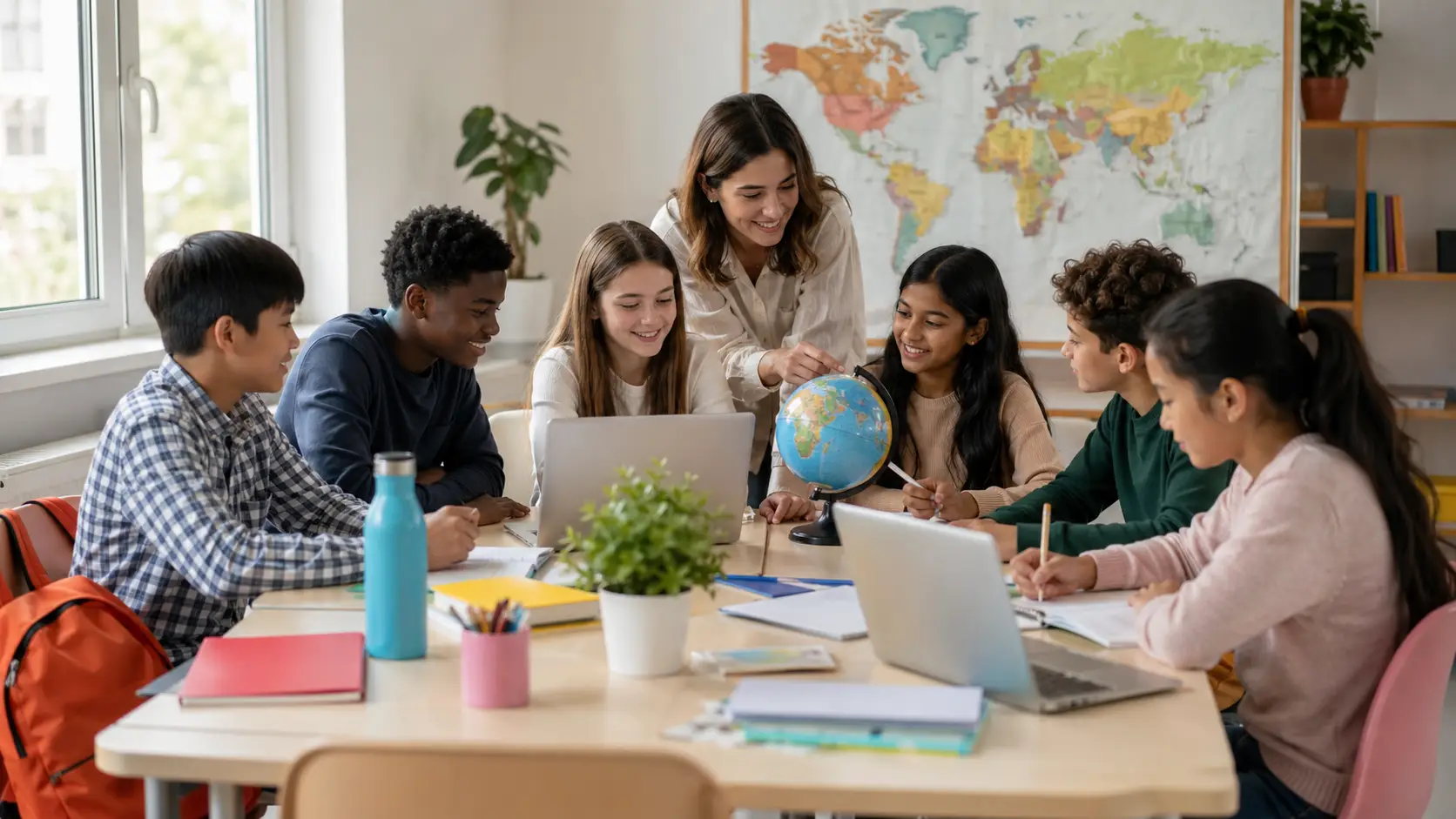
These COIL projects for schools pair your class with a class in another country: both classes do the same hands-on STEAM task, then compare and present what they found.
STEAM COIL project examples at a glance
Swipe horizontally to see all columns
| Project idea | Level | Students build |
|---|---|---|
| Healthy Eating Plate | Elementary | A paper-plate model of a balanced meal |
| Ocean Cleanup Device | Middle school | A simple device that collects plastic from water |
| Community Diversity Map | High school | A digital map of cultural groups in their community |
Three STEAM COIL project ideas by grade
Healthy Eating Plate (elementary)
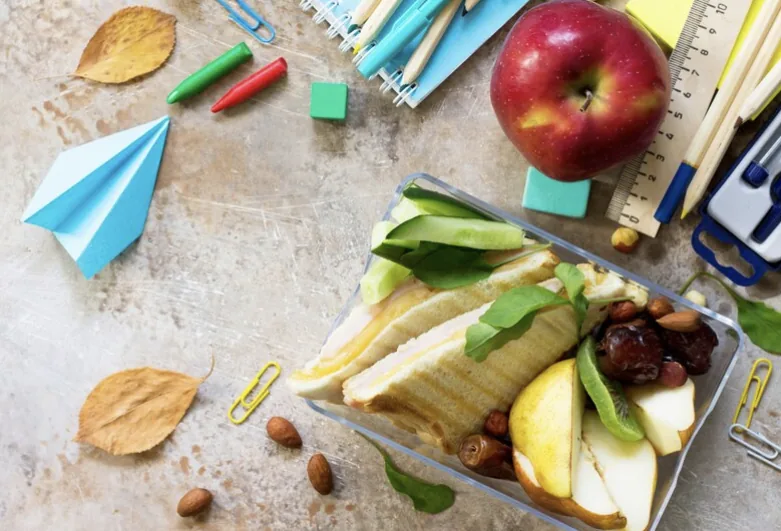
Goal: promote well-being by understanding balanced nutrition and creating a healthy eating plate.
- Science: learn the basic food groups and why balanced nutrition matters.
- Technology: use tablets or computers to research healthy foods and nutrition guidelines.
- Engineering: build a model eating plate from paper plates, markers, coloured paper and glue.
- Arts: design and decorate the plate so each food group is easy to see.
- Mathematics: measure and divide portions to show a balanced meal.
With your partner class: students share their plate models, talk about how eating differs between their countries and reflect on how food traditions affect health around the world. To start from a ready project, adapt Around the World in School Lunches (ages 6 to 15, four weeks).
Project idea to adapt
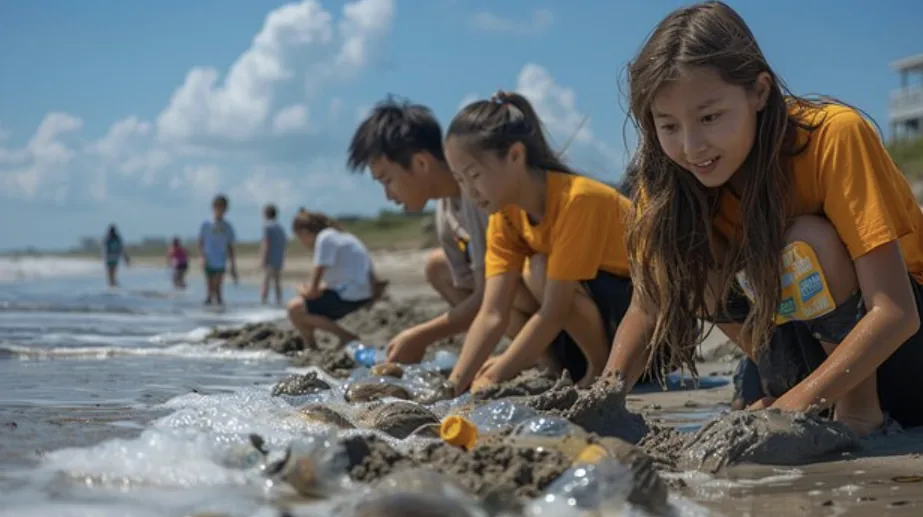
Ocean Cleanup Device (middle school)
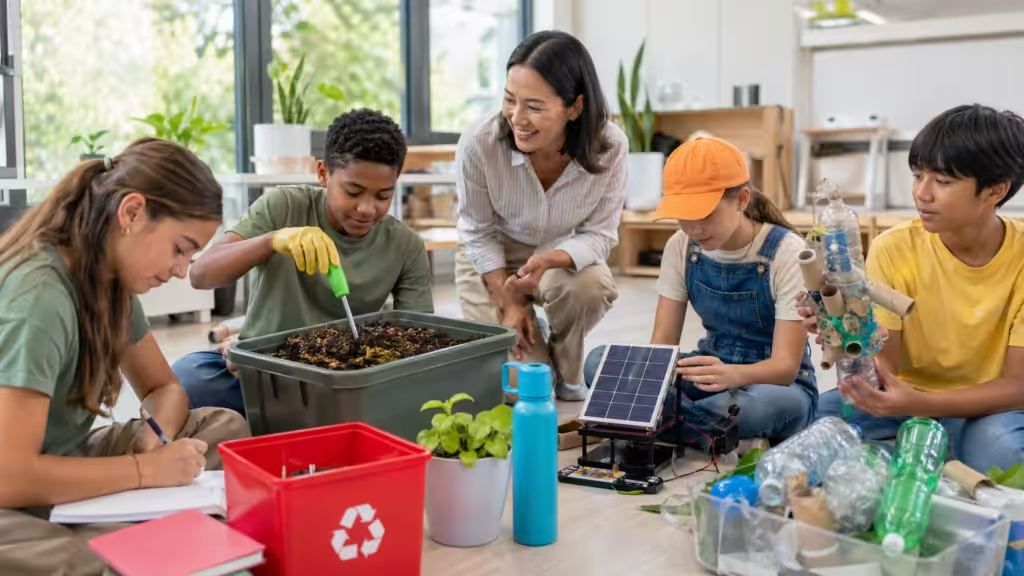
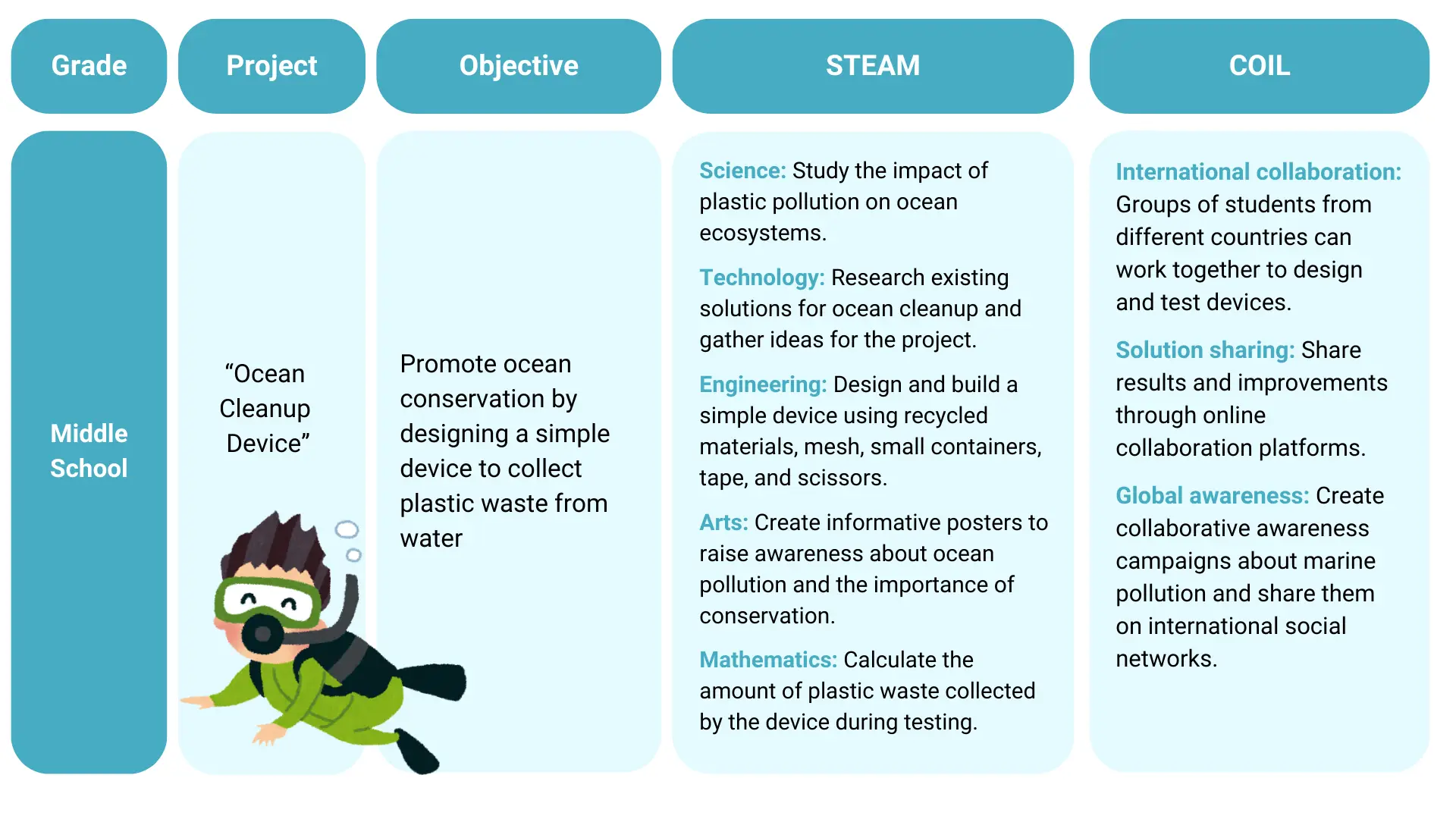
Goal: promote ocean conservation by designing a simple device that collects plastic waste from water. This is the most direct science and sustainability link of the three, matching UN Sustainable Development Goal 14 on conserving the oceans.
- Science: study how plastic pollution affects ocean ecosystems.
- Technology: research existing ocean-cleanup solutions and gather ideas.
- Engineering: design and build the device from recycled materials, mesh, small containers, tape and scissors. Test it in a tub of water with clean plastic pieces.
- Arts: create posters about ocean pollution and why conservation matters.
- Mathematics: calculate how much plastic the device collects in each test.
With your partner class: mixed teams design and test devices, share results and improvements online, and run a joint marine-pollution awareness campaign through the schools' own channels. For students aged 13 and up, adapt Blue Horizons: Designing Innovative Strategies for Ocean Conservation; for younger classes, Ocean Olympiad (ages 6 to 15) is the closer fit.
Project ideas to adapt
Community Diversity Map (high school)
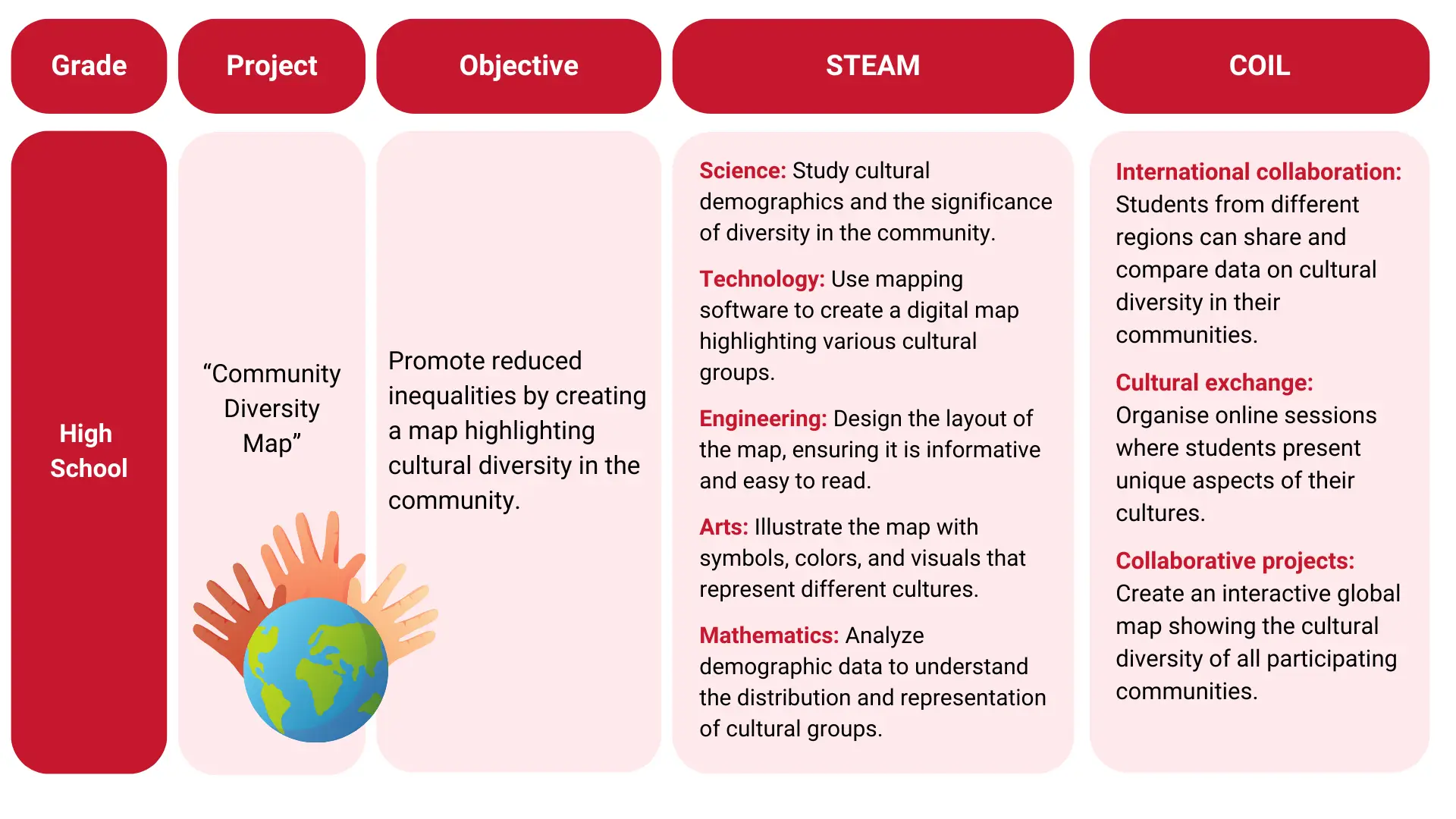
Goal: promote reduced inequalities, the focus of UN Sustainable Development Goal 10, by mapping the cultural diversity of each class’s community.
- Science (social science): study cultural demographics and why diversity matters in a community.
- Technology: use mapping software to build a digital map of cultural groups.
- Engineering: design the map layout so it is informative and easy to read.
- Arts: illustrate the map with symbols, colours and visuals that represent different cultures.
- Mathematics: analyse demographic data to see how cultural groups are distributed and represented.
With your partner class: compare data from both communities, hold online sessions where students present parts of their cultures, and combine the maps into one interactive global map. Use public census or city data rather than asking students to disclose their own background. To start from a ready project, adapt Celebrating Cultural Diversity: A Journey of Discovery (ages 13 and up, four weeks).
Project idea to adapt

Which STEAM COIL idea fits your class this term?
Pick the one closest to your students. Votes are anonymous.
How to run a STEAM COIL project in four weeks
The Class2Class projects linked above are planned for four weeks. One rhythm fits all three ideas:
- Explore (week 1): meet the partner class, agree on one shared question and gather local information.
- Build (week 2): each class makes its model, device or map, combining at least two STEAM strands.
- Share and improve (week 3): exchange results, give feedback across classes and improve the design.
- Reflect (week 4): present a joint product and discuss what the partner class’s results changed in your thinking.
For comparison, the SUNY COIL Center, which pioneered COIL in higher education, recommends at least five weeks for a university COIL module. Across time zones, most of the exchange can happen through shared posts and recorded presentations, with one live call if timetables overlap.
Find a COIL partner class
COIL works when two teachers plan the project together. On Class2Class you can open any project idea above and choose Use this idea to adapt it; signing up is free. Look for a partner class of a similar age with dates that work for both schools. Agree when each class will share its work and respond. Use a live call if it helps students compare their work.
For COIL ideas outside STEAM, see 4 COIL project ideas to start in January. For what COIL projects are and why they work, read COIL projects for students.
Frequently asked questions
What is a COIL project?
COIL stands for Collaborative Online International Learning. The SUNY COIL Center describes it as an approach that brings students and teachers together across cultures to learn and collaborate as part of their class: teachers partner to design the experience and students partner to complete the activities. A COIL project is one such shared project.
Are there COIL projects for K-12 classes?
Yes. COIL was developed in higher education, and schools use the same model when two teachers plan a project together. The three ideas on this page are set for elementary, middle and high school, and the Class2Class projects they link to list age groups from 6 to 18 and older.