What is Effectiveness?
Effectiveness asks whether the Class2Class model works in real classrooms, under the conditions teachers and students actually face.
Schools have different schedules, curricula, levels of technology, teaching practices and available time. A model can be educationally well designed and still fail if teachers cannot realistically use it.
Unlike Efficacy (which tests if a tool works in a controlled lab), effectiveness evaluates if the tool succeeds in the actual classroom with real teachers, students, time limits, and budget constraints. ICEI 5E Standards & Definitions
For Class2Class, this means designing international collaboration so that it can become part of an ordinary school experience rather than requiring exceptional conditions to work.
We focus on three things: practical fit, usability and scalability. These seven design choices are how we pursue them.
-
Designed around real classroom constraints
Projects need to fit within the time, structure and responsibilities teachers already have. The model is designed to complement classroom teaching rather than create a parallel programme teachers have to manage.
-
Different ways to participate
Classrooms do not all work in the same way. Class2Class supports different project approaches so teachers can choose a level of structure and participation that fits their context.
-
International collaboration does not depend on being live
Time zones, connectivity and school schedules should not determine whether two classrooms can collaborate. Projects can combine synchronous and asynchronous interaction, so collaboration continues without both classrooms being online at the same time.
-
Technology should not become the barrier
The educational experience should remain possible when students have limited individual access to technology. Teacher-led and classroom-based participation let the teacher facilitate the experience without every student operating the platform individually.
-
Evaluation that teachers can realistically complete
Evaluation is intentionally lightweight. Reflection, teacher input and supporting evidence capture useful information without turning a project into an additional reporting burden, and supporting materials stay optional so evaluation never depends on producing or uploading a particular artefact.
-
Connected to what schools already teach
Class2Class competencies and learning outcomes are connected to established educational frameworks, so teachers can relate projects to existing learning objectives rather than treating international collaboration as an additional subject.
-
Designed to work beyond a pilot
Effectiveness also asks whether the model can work across different schools, countries and educational contexts, not only with a small group of highly engaged teachers. That means continuously looking at where teachers struggle, where projects fail to progress, what needs additional support, and which parts of the experience have to become simpler.
Why it matters
A strong educational model has little value if teachers cannot realistically use it.
Schools operate under very different conditions. Teachers have limited time, different curricula and schedules, varying access to technology, and different levels of support. Effectiveness asks whether Class2Class can work within those realities rather than requiring schools to adapt around the platform.
For Class2Class, this challenge is particularly important because every project involves at least two classrooms. Different school calendars, time zones, languages, connectivity and teaching practices all meet inside the same collaboration. Every friction we introduce can affect both sides of the partnership.
That is why flexibility is not simply a product preference. A Class2Class project needs to remain possible when classrooms cannot meet live, when students do not have individual devices, when teachers have limited preparation time, or when the two schools approach the project differently.
Effectiveness is ultimately what turns an educational model into something teachers can actually use: not only whether the experience is well designed, but whether it can work across the different classrooms, schools and countries it was designed to connect.
How we work on Effectiveness
We design Class2Class around the conditions in which international classroom collaboration actually happens. That means fitting into teachers’ existing work, keeping the experience simple, allowing different ways to participate, and making collaboration possible across different school schedules, technologies and educational contexts.
Our approach focuses on three areas: practical fit, usability and scalability.
Designing for practical fit
A Class2Class experience should fit into teaching rather than require teachers to build a separate programme around it.
- Project Approaches give teachers flexible ways to structure international collaboration around their learning objectives, available time and classroom context.
- Changemaker Missions provide a more guided route. They run monthly and are supported by the Class2Class team, giving teachers a ready-to-use collaborative experience around a shared challenge.
- Learning outcomes and competencies connect each experience to the Class2Class educational model, giving the collaboration a defined educational purpose.
- International collaboration can combine synchronous and asynchronous interaction, reducing dependence on matching timetables and time zones.
- Teacher-led participation allows classrooms to take part without requiring every student to independently operate the platform.
The objective is not for every classroom to participate in the same way. Teachers can shape collaboration through Project Approaches or join a guided Changemaker Mission, while both remain connected to the same educational model.
Keeping the experience usable
International collaboration can become complicated quickly. Class2Class is designed to keep the experience simple for teachers and students, reducing the amount of setup, instruction and administration required to participate.
- Project spaces are intentionally simple, giving teachers and students a clear place to understand what they need to do and move through the experience.
- Instructions are kept short and focused, so participants can concentrate on the activity rather than learning how to use the platform.
- Projects are designed to be easy to carry out, with clear steps that can work across different classroom contexts and levels of digital experience.
- Project evaluation happens at closure rather than through a continuous reporting process.
- The evaluation instrument is intentionally short and focused on what is useful.
- Supporting materials are optional rather than a condition for completing an evaluation.
- Reflection and teacher input are designed to capture useful evidence without turning participation into an additional reporting exercise.
The goal is for the technology and process to stay in the background so teachers can focus on facilitating the learning experience and connecting their classroom with others.
Designing for scale
Class2Class is designed so international collaboration can extend beyond individual classrooms and work across different schools, countries and educational contexts.
Project Approaches provide flexibility, allowing teachers to shape collaboration around their own context. Changemaker Missions provide structure, creating recurring and guided experiences that Class2Class can coordinate across multiple classrooms.
The model also reduces dependencies that can make international collaboration difficult to replicate: classrooms can collaborate asynchronously, participation can be teacher-led, and project experiences do not require identical schedules, technology or classroom conditions.
Together, these choices allow Class2Class to balance flexibility and repeatability: adapting to the realities of individual classrooms while maintaining a common educational model that can be used across different contexts.
Where our evidence stops
This is the thinnest evidence base of the five dimensions, and what we can show is correspondingly modest. In the January 2026 report, the International Centre for EdTech Impact reviewed the platform and walked the teacher experience step by step, documented with screenshots. That is a third party describing what the product actually does. The educational model, the competency architecture and the evaluation flow exist as documents open to inspection rather than as internal convention, and the model's own cover page marks it as preliminary work pending validation by our Learning team, a marking we leave visible.
One project cycle has closed with the evaluation completed end to end, which establishes that the flow is completable in practice. One cycle is not a feasibility study, and we do not present it as one.
So here is what this page does not claim.
- That any usability or feasibility study has been conducted, by us or by a third party. None exists.
- That teacher testimonials are research. They are testimonials, and where we publish them we label them as such.
- That the model is proven to scale or replicate. That question is entirely untouched.
- That the third-party pedagogical review has happened. It is a service we have not yet commissioned.
- That we hold internal user research demonstrating the product is useful and effective for teachers. Our current feedback instrument does not ask that question.
- A specific figure for how long the evaluation takes a teacher. Our internal documents give inconsistent numbers, so we are measuring it before we publish one.
What we are building next
- Running the framework's free Effectiveness self-assessment and treating the result as a gap map rather than a score.
- Rebuilding teacher feedback to ask about usability, workload and practical fit. Today's survey asks how likely a teacher is to recommend us, which is a measure of satisfaction, not of fit.
- Instrumenting the reflection step so completion rate and duration are measured. Together, those measures can help us understand the workload for teachers.
- Assembling the alignment dossier a third-party pedagogical review would read, plus a proper internal user-research pack and a co-creation record.
Effectiveness from different perspectives
Effectiveness looks different depending on your role. For teachers, it means fitting international collaboration into everyday teaching. For students, it means being able to participate without unnecessary complexity. For partners, it means having a model that can adapt to different schools and educational contexts.
Fits the way you actually teach
Class2Class is designed to make international collaboration easier to integrate into your existing teaching.
- Project Approaches let you shape collaboration around your learning objectives, available time and classroom context.
- Changemaker Missions offer a ready-to-use, guided experience supported by the Class2Class team each month.
- Synchronous and asynchronous collaboration give you flexibility when schedules and time zones do not align.
- Simple project spaces and focused instructions reduce the amount of setup required.
- Learning outcomes and competencies help connect the experience to your existing educational objectives.
- Evaluation is kept short and focused at the end of the experience.
What this means: you can focus on facilitating the learning and the connection between classrooms rather than managing a complex process.
Easy to understand, easy to participate
International collaboration should feel like part of the learning experience, not another platform you have to figure out.
- Project spaces make it clear what your class is working on and what comes next.
- Instructions are kept short and focused on the activity.
- Your classroom can collaborate asynchronously when meeting live is not possible.
- Participation can be organised through your teacher, so the experience does not depend on every student managing the platform independently.
- Classrooms can participate even when their schedules, technology and ways of working are different.
What this means: you can focus on collaborating, exchanging perspectives and working on the challenge with other students.
Designed to work across different contexts
Schools do not operate under identical conditions. Class2Class is designed with that variation in mind.
- Project Approaches provide flexibility for different educational objectives and classroom contexts.
- Changemaker Missions provide recurring, guided experiences that can bring multiple classrooms around a shared challenge.
- Synchronous and asynchronous participation help accommodate different schedules and time zones.
- Teacher-led participation reduces dependence on individual student access to technology.
- Simple project structures make experiences easier to communicate and implement across participating schools.
- A common educational model keeps different implementations connected to the same learning purpose.
What this means: programmes can adapt to local classroom realities while remaining part of a shared Class2Class educational experience.
Connecting learning to the Sustainable Development Goals
The Sustainable Development Goals give classrooms around the world a shared language for the challenges they work on. Effectiveness answers to one of them, and it answers on the delivery side rather than the subject side.
-
 Goal 4Quality Education
Goal 4: Quality Education
Target 4.c calls for increasing the supply of qualified teachers, including through international cooperation for teacher training. Target 4.a concerns education facilities and safe, inclusive and effective learning environments. We connect our design aims to these targets; this is an interpretation of alignment, not a measured contribution to them.
That is where Effectiveness lands. A tool only a well-resourced school can run narrows who gets the education, whatever its content is, and a tool that adds hours to a teacher's week is a tool most teachers will drop. The short instrument, the optional supporting material, the offline and teacher-only routes and the three project approaches all exist so that the condition of a classroom does not decide whether the learning is available to it.
Why the list is short here
Efficacy asks whether the learning happened. Effectiveness asks whether an ordinary school can get to it. Neither is about the subject of a project, so neither can honestly claim the Goals a project happens to cover. Equity, Ethics and Environment carry those.
Project topics are a different question. Browse the SDG calendar to see which Goals classrooms are working on now.
Related resources
The practical material a teacher would need to answer this question for their own school.
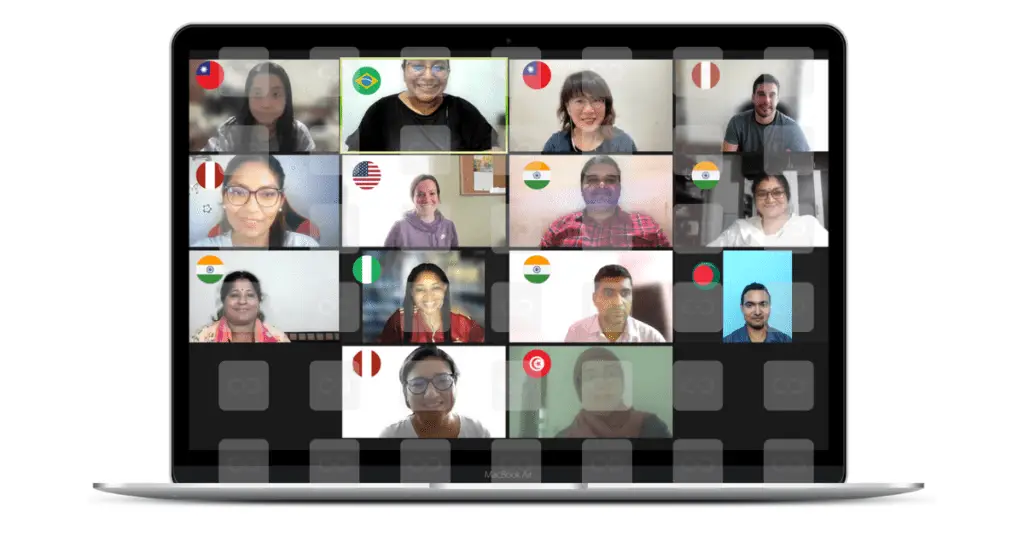 Start here
First Steps with Class2Class
What setting up actually involves, from an account to a partner classroom.
 Teacher guide
Your First Project in Four Steps
The shortest complete path from deciding to run one to running it.
 Teacher guide
A Project in Two Weeks
What fits in a fortnight, for a term that is already full.
 Teacher guide
Coordinating with a Partner Teacher
How the two halves of a partnership stay in step without extra meetings.
 Teacher guide
Working Across Time Zones
Four ways to run a project when the two classes are never awake together.
 Teacher guide
Using Project Templates
Starting from something already built instead of from a blank page.
Effectiveness is one of five.
Each dimension catches a different way a well-meaning product can fail. They are read together, not in isolation.