
What is Efficacy?
Efficacy asks a fundamental question: does a Class2Class experience produce the learning it was designed to support?
Efficacy evaluates whether a tool actually delivers the learning outcome it promises, under rigorous research conditions. ICEI 5E Standards & Definitions
Every Class2Class project starts with an educational intention. Students might be expected to strengthen collaboration, critical thinking, communication, global awareness, or other competencies through the experience.
Efficacy is about making that intention explicit and creating a clear connection between what students do, what we expect them to learn, and how we determine whether that learning has taken place.
Within the 5E framework, this means combining two things: a strong educational rationale for why an experience should produce a particular outcome, and evidence that helps us understand whether that outcome is actually occurring.
How we design for efficacy
-
Start with learning outcomes
Projects begin with defined learning intentions. Before the experience starts, we identify the competencies and outcomes the project is designed to support, which creates a clear connection between project activities and intended learning.
-
Design activities around those outcomes
Learning outcomes should shape what students actually do. Projects use collaborative and project-based experiences to give students opportunities to practise competencies such as communication, collaboration, critical thinking, creativity, problem-solving, and global awareness.
-
Match learning to the students
The same experience should not look identical for every classroom. Project design takes students’ age and learning context into account, so activities and expectations can be appropriate for the learners participating.
-
Connect projects to the broader learning journey
A project is not intended to be an isolated experience. The competencies students practise through different projects contribute to their broader development as learners and changemakers, and as students take part in more experiences, Class2Class aims to make that development increasingly visible.
-
Build evidence around what we claim
Educational intentions are not enough on their own. We use research, evaluation, feedback and external review to examine whether the experiences we design are producing the outcomes we expect, and we distinguish between what our educational model is designed to achieve and what the available evidence allows us to demonstrate.
Why it matters
A successful learning experience should do more than engage students. Participation, satisfaction, and positive feedback can tell us that an experience was valuable to those involved, but they do not tell us on their own whether meaningful learning took place.
Class2Class projects are designed to help students develop competencies through collaboration with classrooms in other countries. That makes it important to understand whether the experiences we create actually contribute to the learning outcomes we intend.
Efficacy gives us a way to connect what we design, what students experience, and what they learn. It helps us examine whether our educational assumptions hold in practice and identify where the model needs to improve.
This is particularly important for international collaboration. We believe that learning with peers from different countries can create opportunities to develop competencies and perspectives that are difficult to reproduce within a single classroom. Efficacy requires us to go beyond that belief and progressively build evidence to understand what students learn, how they learn it, and what role cross-classroom collaboration plays in that development.
Our goal is not only to demonstrate what works, but to understand what works, for whom, and under what conditions, so we can continue improving the Class2Class experience.
How we work on Efficacy
Our approach to Efficacy starts before measurement. We first need a clear explanation of what Class2Class is intended to change, why our educational model should produce those changes, and how the platform puts that model into practice. Only then can we collect evidence to test whether those outcomes actually happen.
Working with the International Centre for EdTech Impact, an independent research organisation in Egersund, Norway, we developed a Logic Model, Theory of Change and Theory of Action to establish that foundation. Together, they connect the design of Class2Class with the educational outcomes we intend to measure. They are set out in Evidence Ready: Class2Class, delivered in January 2026, which we share with schools, partners and researchers who ask.
Define what should change
The Logic Model maps the pathway from what Class2Class provides to the impact we ultimately want to create.
Inputs → Activities → Outputs → Outcomes → Impact
It connects the platform, pedagogical frameworks, teachers and partnerships with international collaborative projects, student participation, learning artefacts and ultimately the competencies and changes those experiences are intended to support.
This gives us a defined outcome pathway rather than starting with activity and deciding afterwards what it might mean. ICEI describes the model as a coherent pathway from inputs to long-term impact, grounded in educational research and global learning frameworks.
Explain why it should work
The Theory of Change explains the reasoning behind that pathway.
It connects structured international collaboration, teacher support and Class2Class platform features with expected changes in student engagement, agency and global competencies, and eventually with students becoming capable of acting as global changemakers.
In other words, it makes our assumptions about learning explicit and gives us something that can later be tested.
Put the theory into practice
The Theory of Action translates that reasoning into the actual Class2Class experience.
It describes how the platform enables access to international collaboration, supports teachers with pedagogical approaches such as Project-Based Learning, Design Thinking and COIL, structures student-centred collaborative projects, and embeds reflection and feedback into the experience.
This is the bridge between the educational theory and the product: the features and the learning experience should exist because they contribute to the pathway we have defined.
Collect evidence against the model
Once the pathway is defined, we can ask whether it is actually happening.
Our evaluation architecture is being built to connect project learning outcomes with the competencies they are intended to develop, and to capture evidence through project activities, reflections and learning artefacts.
This is also where we need to be careful with the claim: having a strong Theory of Change is not evidence that the predicted outcomes occurred. It establishes what should be measured and why.
ICEI’s research agenda therefore moves progressively from implementation research to learning-outcome studies, cultural adaptation, longitudinal impact and eventually system-level evidence.
Strengthen the evidence over time
Efficacy is not something we consider finished.
The ICEI research agenda provides a pathway for progressively testing the model: first understanding implementation across contexts, then measuring changes in student engagement and global competencies, followed by cross-cultural and longitudinal research.
Our current evidence therefore has a boundary. We have established the research-informed logic behind Class2Class and are building the measurement architecture needed to test it. Stronger causal claims require stronger studies.
Where our evidence stops
The evaluation instrument has completed one full cycle. Across one closed project cycle it produced 25 structured reflections and 75 outcome judgements, and roughly one judgement in five fell below the top value, which tells us the scale registers a difference rather than saturating. That is evidence about the measure, not about learning gains.
So here is what this page does not claim.
- That ICEI verified, proved or validated Class2Class. They reviewed the model and qualified it. Those are different acts.
- That the evidence is anything stronger than what ICEI called it: preliminary, and uneven across contexts.
- That the literature review was systematic. The report titles it a rapid review, and we use their word.
- That any control-group study or randomised trial exists, is under way, or is scheduled. None does, and none is.
- That the instrument cycle above evidences learning. It evidences that the measure can register a difference, which is the precondition for evidence rather than evidence itself.
What would close that gap is an outcome measure per competency: unit, scale, scoring rule, and who scores it. Without one there is no dependent variable for any study, which is why a comparison-group study is a new and separate commission rather than a next step.
Efficacy from different perspectives
Efficacy affects everyone involved in a Class2Class project differently. For teachers, it helps connect project activities to intended learning. For students, it makes the purpose of the experience clearer. For partners, it provides a framework for understanding what Class2Class is designed to achieve and how we intend to evidence it.
Know what the project is designed to develop
Class2Class projects are designed around defined learning outcomes and competencies, so the educational purpose is clear before the project begins.
- See which competencies and learning outcomes a project is designed to develop.
- Understand the level of thinking expected through learning outcomes mapped to Bloom’s Taxonomy.
- Work with project experiences adapted to the age and developmental stage of your students.
- Use reflection and evaluation to understand what the class demonstrated through the project.
- Connect classroom activities to a broader educational model rather than treating international collaboration as an isolated activity.
Understand what you are learning through the experience
A Class2Class project is more than completing an activity with another classroom. Each project is intended to give you opportunities to practise competencies through collaboration, reflection and action.
- Know which competencies your project is designed to help you practise.
- Learn through working with students in another context, not only by reading about it.
- Reflect on what your group experienced and produced.
- Connect what you did in the project with the skills and competencies you are developing.
- Contribute to the evidence of what your class learned without being individually ranked or scored by Class2Class.
Understand the logic behind the impact
Partners should be able to see how a Class2Class initiative connects activities with intended educational outcomes, and to tell that logic apart from evidence that those outcomes have already occurred.
- Our Logic Model defines the pathway from activities to outputs, outcomes and intended impact.
- Our Theory of Change explains why we expect that pathway to produce educational change.
- Our Theory of Action connects that theory to how Class2Class projects and platform experiences are designed.
- Our measurement approach is being developed to test those assumptions against classroom evidence.
- The independent ICEI review provides the research-informed foundation for this work.
- Stronger claims require stronger evidence, and we distinguish between what the model predicts and what research has demonstrated.
Connecting learning to the Sustainable Development Goals
The Sustainable Development Goals give classrooms around the world a shared language for the challenges they work on. Efficacy answers to one of them, and only one.
-
 Goal 4Quality Education
Goal 4: Quality Education
Target 4.1 is about learning outcomes rather than attendance: whether children finish school having actually learned something. Target 4.7 names what that learning should include, from global citizenship to sustainable development. Between them, those two targets are what our claim answers to.
Class2Class says that a project with a classroom in another country develops competencies a domestic project would not, and Efficacy is where that has to hold up. Naming the outcome set in advance, tagging outcomes to a cognitive level, and asking an independent centre to examine the reasoning all exist so that Target 4.1 is something a school can check rather than something we assume.
Why only one Goal here
Class2Class projects touch many Goals, and the other four dimensions of this framework say which. Efficacy is not about the topic of a project. It is about whether the learning happened, so the education Goal is the only one it can honestly answer to. Claiming a longer list here would be the exact move this dimension exists to catch.
Project topics are a different question. Browse the SDG calendar to see which Goals classrooms are working on now.
Related resources
The published material behind the reasoning on this page.
Educational Framework
The published statement of what a Class2Class project is meant to develop. Efficacy is the question of whether it does.
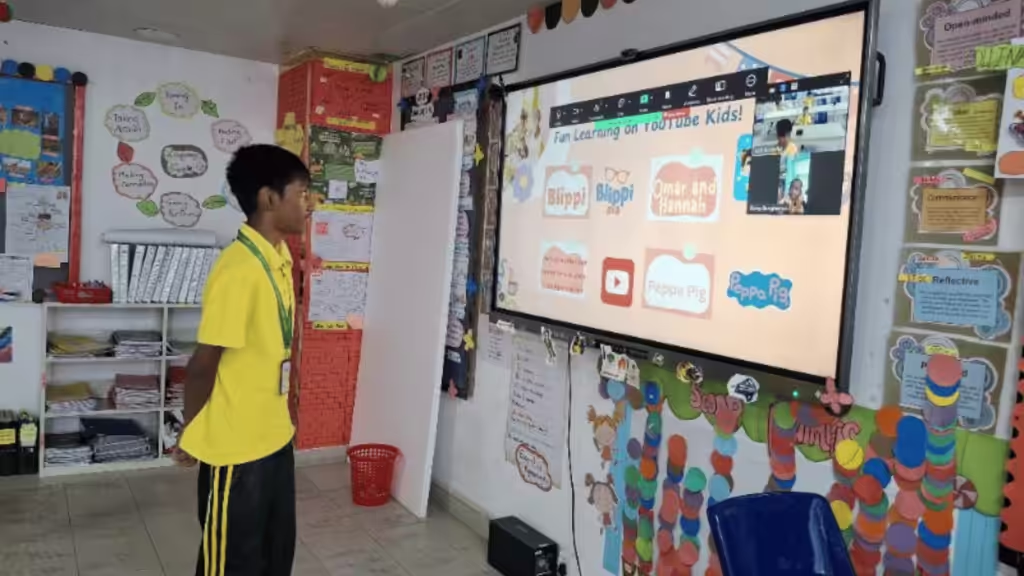 Guide
Guide
Our Educational Model
The competencies, the Changemaker Journey and how a project is meant to move a student through them.
 Article
The 8 C2C Competencies
The outcome set itself, in plain language: what each competency is and why it is on the list.
 Teacher guide
Assessing Work Across Borders
How to judge what a group produced with a partner classroom, when the two halves worked under different conditions.
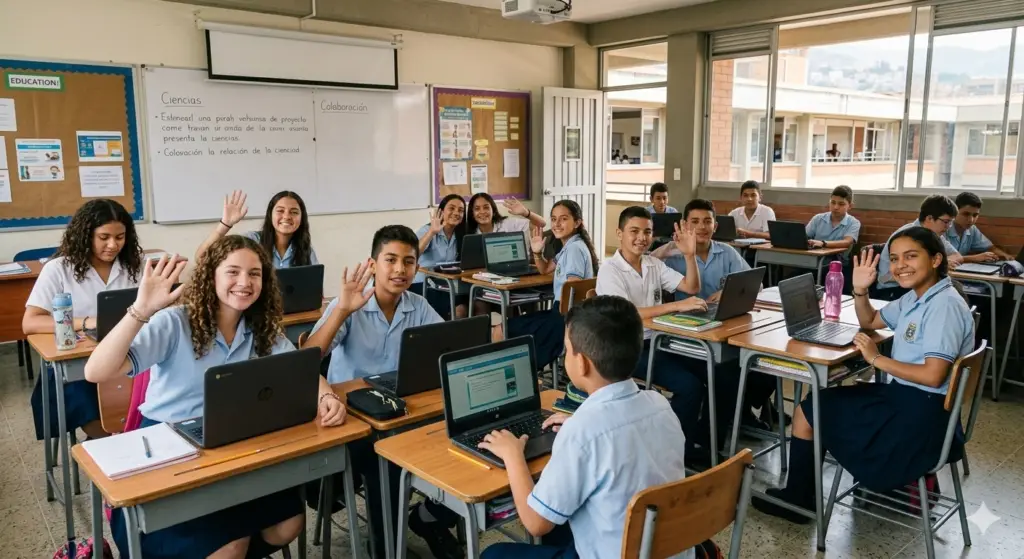 Article
21st Century Skills
What the skills are, and how a global project is supposed to develop them rather than just mention them.
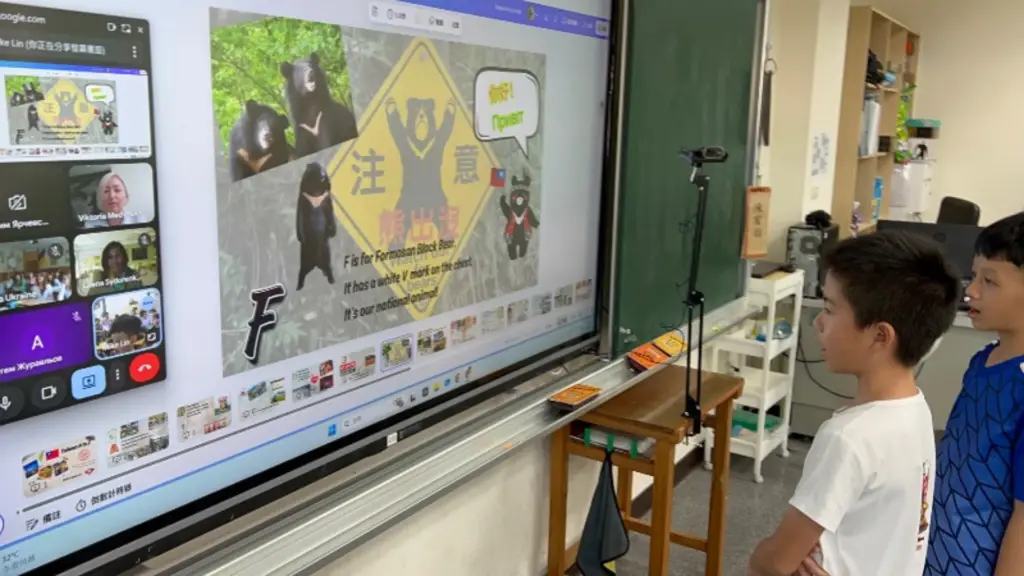 Article
Project-Based Learning Across Borders
The pedagogy the model is built on, and why the international half is doing work a domestic project cannot.
Efficacy is one of five.
Each dimension catches a different way a well-meaning product can fail. They are read together, not in isolation.