History Activities: 7 Practical Ideas for Your Classroom
Good history activities ask students to work like historians: look closely at a source, put events in order, ask questions and compare different accounts. Choose one short activity below, such as a source detective task or a living timeline, and run it with materials you already have.
See the activitiesLast updated
History activities at a glance
Each activity works on its own. Ages and times are suggestions, so adjust them for your class. Select an activity to jump to its steps.
Swipe horizontally to see all columns
| Activity | Suggested ages | Time |
|---|---|---|
| Source detective | 8–18 | 30–40 minutes |
| Living timeline | 7–14 | 20–30 minutes |
| History hot seat (game) | 9–16 | 20–30 minutes |
| Two accounts, one event | 12–18 | 45 minutes |
| Family history interview | 8–18 | One week, plus one lesson |
| Then and now (partner class) | 8–13 | 2–3 weeks, one lesson a week |
| One event, two memories (partner class) | 13–18 | 3–4 weeks, one lesson a week |
Five history activities you can run this week
1. Source detective
Give each group one primary source: an old photo, a map, a newspaper page, a letter or an everyday object. Students fill in three columns: what they observe, what they think it means, and what questions they still have. This follows the observe, reflect, question approach that the Library of Congress uses with teachers.
- Ages and time: 8–18, 30–40 minutes.
- Materials: one source per group (printed, projected or a real object) and a three-column sheet.
- Students practise: looking closely, making inferences and asking questions.
- What to check: can students separate what they see from what they guess?
2. Living timeline
Write 8–12 events from your current topic on cards, one event per card. Leave out the dates for younger students. Give one card to each student or pair, and the class stands in order across the room. Then ask: which event caused or changed another one?
- Ages and time: 7–14, 20–30 minutes.
- Materials: event cards and a line of tape or string on the floor.
- Students practise: putting events in order and explaining cause and consequence.
- What to check: can students explain why they stand where they do, not only recall a date?
3. History hot seat (a quick game)
One student sits in the “hot seat” as a person from the period you are studying, such as a factory worker, a traveller or a scientist. Classmates ask questions, and the student answers in role using what the class has learned. Swap every few minutes. It is one of the simplest history games for students, and it needs no extra materials.
Include ordinary people as well as famous ones. Do not ask students to play victims or perpetrators of violence.
- Ages and time: 9–16, 20–30 minutes.
- Materials: a chair, and question cards if students need help to start.
- Students practise: asking good questions and using evidence when they speak.
- What to check: ask the class to point out any answer that has no evidence behind it.
4. Two accounts, one event
Give students two short accounts of the same event from different viewpoints, such as two newspaper reports, two letters or two textbook passages. For each account, students answer four questions: Who wrote it? When? Why? What does it leave out? Then they mark where the accounts agree and where they differ.
- Ages and time: 12–18, 45 minutes.
- Materials: two short texts (one page each) and a comparison grid.
- Students practise: checking who made a source and why, and comparing sources.
- What to check: can students give one reason the accounts differ, using words from the texts?
5. Family history interview
Students interview an older family member or neighbour about one topic: school, work, food, games or a change in the local area. Write five open questions together in class. Students ask permission first, explain how they will use the answers, and let the person skip any question. Back in class, each student shares one story and adds it to a class timeline.
Not every student can or wants to interview family. Offer another adult, such as a school staff member or a community volunteer, as an equal alternative.
- Ages and time: 8–18, one week for the interview plus one lesson.
- Materials: a question sheet and a notebook, or a phone for audio notes if the person agrees.
- Students practise: asking questions, listening and taking notes.
- What to check: do the notes keep the speaker’s words separate from the student’s summary?
History activities with a partner class abroad
A class in another country can show your students that people remember the same past in different ways. Both activities below work with shared slides, short videos or letters, so a live video call is optional and time zones do not have to stop you.
6. Then and now: a local history exchange
Each class collects three to five pairs of photos of its town or school, then and now: an old street, a market, a school building. Students write a short caption for each pair and share the set with the partner class. The partner class asks two questions about each change, and both classes look for changes they have in common.
- Ages and time: 8–13, 2–3 weeks with one lesson a week.
- Materials: old and new photos (from a local library, families or a town website, used with permission) and a shared slide deck.
- Students practise: describing change and continuity, writing clear captions and asking questions.
- What to check: can students describe one change in each town and suggest a reason for it?
7. One event, two memories
Choose an event or theme that both countries remember, such as the end of a war, independence, a migration, or the founding of a city or school. Each class finds out how it is remembered locally: a monument, a public holiday, a textbook paragraph, a street name or a family memory. In a joint session, students present what they found and compare.
Agree the topic with your partner teacher first, and choose one that both classes can discuss calmly. The guidance in the next section helps.
- Ages and time: 13–18, 3–4 weeks with one lesson a week.
- Materials: local sources, a shared slide deck, and a joint call or recorded presentations.
- Students practise: comparing perspectives, presenting evidence and respectful discussion.
- What to check: can students explain one similarity, one difference and one reason people remember the event differently?
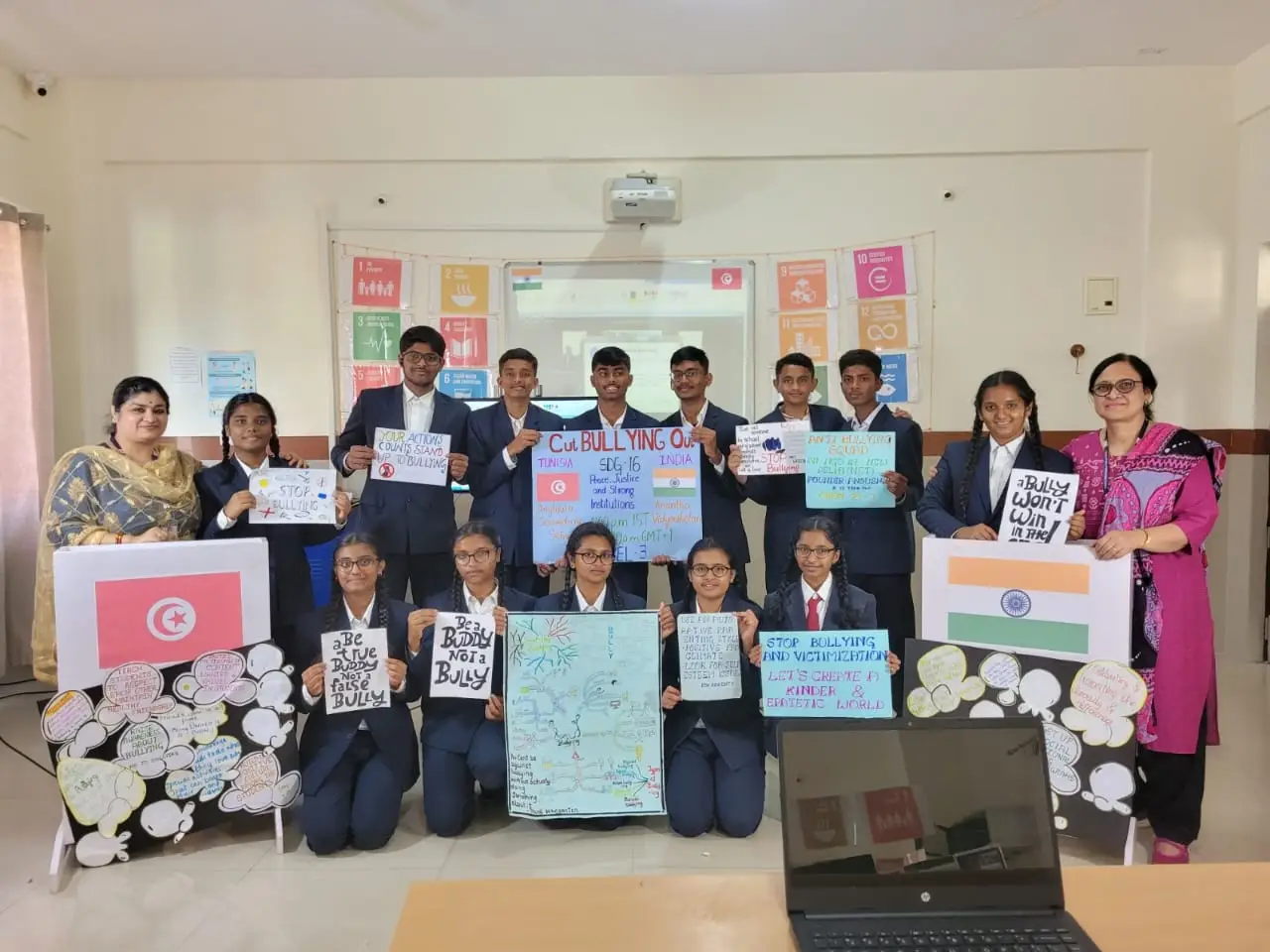
For a ready-made structure, see the Class2Class project idea Celebrating Cultural Diversity: A Journey of Discovery. It lists ages 13–15, 16–18 and 18+ and runs for four weeks. Students explore traditions and customs with a partner class, and you can adapt it with a history focus.
Project to adapt with a partner class

Which history activity will you try first?
Pick the one that fits your class this week. Votes are anonymous.
Teaching contested or painful history with care
Some history is still painful or disputed in your class, your community or between partner classes. You do not need to avoid it, but plan with care.
- Know your class. Some students or families may have a personal link to the events.
- Agree ground rules together: listen, question ideas rather than people, and use evidence.
- Show more than one perspective, and say clearly where each source comes from.
- More than one perspective does not make every claim equal. Treat well-documented facts as facts, and discuss how and why people interpret them differently.
- Give students a way to step out, without penalty, if a topic upsets them.
- With a partner class, agree the topic and sources with the other teacher first, and follow your school’s guidance.
The Council of Europe training pack on teaching controversial issues has practical activities for creating a safe space for open, respectful discussion.
Turn an activity into a history lesson plan
Most of these activities fit into one 45–60 minute lesson with a simple structure:
- Hook (5 minutes): show one image, object or question.
- Activity (20–30 minutes): run one of the activities above.
- Discussion (10 minutes): compare answers and ask what evidence supports them.
- Exit ticket (5 minutes): each student writes one thing they learned and one question they still have.
The exit tickets show you what to teach next.
Why these activities build historical thinking
History is more than remembering dates. One well-known approach teaches four reading habits: sourcing (who made this and why?), contextualizing (what was happening at the time?), corroborating (do other sources agree?) and close reading. The Digital Inquiry Group’s Reading Like a Historian lessons are built around these habits.
Comparing accounts from different places also practises what European history educators call multiperspectivity: looking at the same events, people and societies from different perspectives. A partner class abroad gives students real people to compare with. These are skills students build over time, not results of a single lesson.
Frequently asked questions
How can I make history lessons fun without losing accuracy?
Use games and role-play to start curiosity, then go back to the evidence. After a hot seat or timeline game, ask students which answers came from sources and which were guesses, and correct mistakes together before the lesson ends.
What history activities work for young children?
Children aged 6–8 usually do well with concrete, local history: then-and-now photos of their school, a family object to describe, or a timeline of their own life. Keep tasks short, use pictures and leave out frightening detail.
What should I do if a family story differs from the textbook?
Treat it as a useful source, not a mistake to correct in front of the class. Ask what the story shows about how that family remembers the event, then compare it with other sources. Students learn that memories and records can differ, and why.
How can my class do a history project with a class in another country?
Find a partner teacher, agree one shared theme and start small, for example with the then-and-now photo exchange. Class2Class is free for teachers and students. On Discover you can see project ideas and open projects, and connect with teachers in other countries.
Explore history with a partner class
Start with one activity this week. When your class is ready to compare perspectives with students in another country, browse Class2Class project ideas by age group and topic.