Collaborative learning: how teachers can guide student groups
Guide collaborative learning by defining the shared task, teaching group routines and checking each student's contribution. Choose groups for the learning goal, use questions and scheduled check-ins, and assess individual understanding alongside the group product. Start with one manageable task.
Last updated
Students need help to turn a group assignment into shared thinking. Your role begins with a clear task and continues through questions, participation checks and feedback. Use the routines below to plan that support and adjust it as students become more confident.
Define the task and rotate roles
Show what a successful contribution looks like. In a Civil War project, each student could research a battle, then help create a timeline comparing strategies used by both sides. Ask every member to explain findings; a two-minute contribution is one possible format.
- Materials Manager: prepares and gathers supplies.
- Timekeeper: checks progress against agreed deadlines.
- Recorder: documents findings and decisions.
- Presenter: shares the group's response.
For a grade 5 ecosystem study, rotate these roles each week or after a task. Give everyone practice with several responsibilities. End work sessions with a short journal: "Today I contributed by...", "My group made progress on...", and "Tomorrow we need to..." A three-minute reflection is one possible routine.
Choose groups for the learning goal
For a short activity, random pairs may be useful. For a longer task, consider the knowledge, support and interests students bring. In grade 4 fractions, a mixed group can compare ways to explain an answer; give every student time to reason and ask questions.
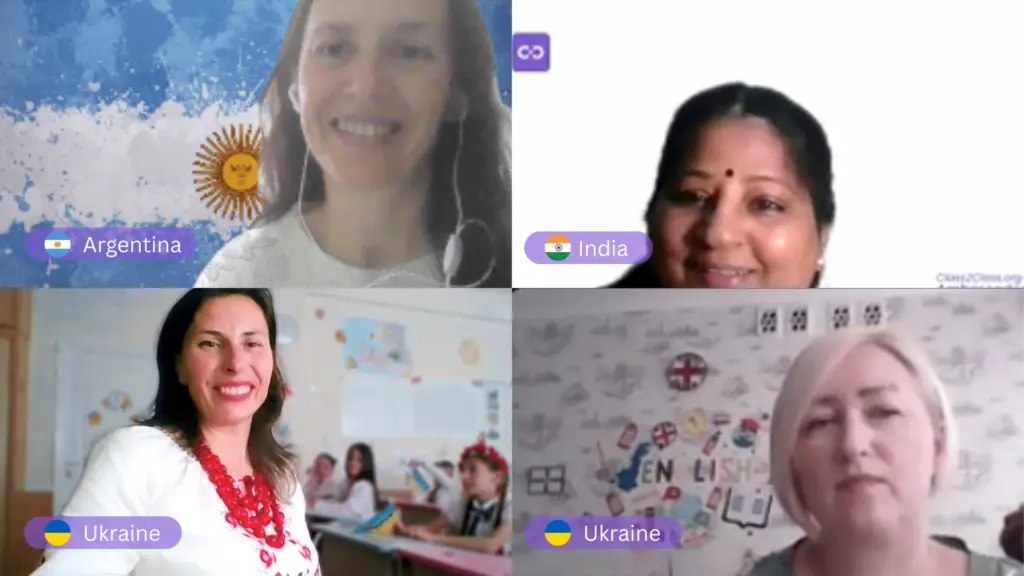
For a history project, let students choose a 20th-century era that interests them, then form groups around the questions they want to investigate. For an international water-quality project, partner classes in Indonesia and South Korea could compare their measurements and methods. Agree comparable procedures and teach the knowledge needed to interpret the results.
Three or four students can be a starting group size. Adjust it for the task, access needs and participation you observe. Assign a shared decision or explanation so students need to connect their contributions.
Use questions and scheduled check-ins
Give students space to investigate and offer explanation or support when needed. During a science experiment, ask: "What variables might affect this outcome?" and "How does your process compare with the protocol?" Use their answers to decide the next teaching step.
Schedule moments when groups show progress. For example, after 15 minutes each group could share one finding. Red, yellow and green cards can signal immediate help, a question or steady progress. Explain the signals and check that every group can ask for support.
Teach a simple disagreement routine: name the problem, suggest possible solutions and try an agreed response. Students can brainstorm three options before choosing one. Make teacher help available when the group needs it. In an international exchange, agree response dates, tools and how to ask for clarification or give feedback.
Watch participation and respond to barriers
Observe the group's decisions and each student's participation. A chart with names can record who asks questions, builds on ideas, shares resources and helps the group stay on task. Use a few notes or tally marks to guide feedback.
Talk privately with a student who contributes little. Ask whether the task is clear, the content needs more explanation or there is space for their ideas. For a quick speaker, suggest: "Let others speak first, then build on one of their ideas." Practise this as a shared communication skill.
At the midpoint, ask students how the group shares contributions, listens before deciding and handles disagreement. Use the same clear criteria for everyone. Discuss the feedback and agree one change for the next session.
Help students connect ideas and evidence
Give groups questions that support analysis: "What evidence supports this conclusion?", "How might another person view this?", and "What patterns connect these examples?" In a literature discussion, students could try three prompts and record which helped them develop an explanation.
Project Zero's Circle of Viewpoints offers a routine for exploring several perspectives on a topic. Use the original guidance and ask students to explain the evidence behind an interpretation. For a sustainability task, compare how the issue appears in two places and why different conditions may lead to different responses.
Choose a product that connects contributions: a podcast where speakers respond to one another, a museum display with related exhibits or a proposal drawing on several perspectives. Ask the group to explain how the parts fit together.
Assess understanding, product and collaboration
Collect individual explanations alongside the group product and process. One possible weighting is 50% individual work, 30% group product and 20% collaboration. Adapt the balance to your curriculum and explain the criteria before students begin.
- Content: accuracy, depth of explanation and the choices used to create the product.
- Collaboration: communication, shared responsibility, handling disagreement and use of different ideas.
- Individual understanding: journal entries, exit responses, source notes or a personal explanation.
Ask students to review their own and their peers' contributions using the same criteria. Compare those responses with your observations and talk through differences. Over several projects, a portfolio can hold reflections, peer feedback, self-review and appropriate records of group work. Students can use it to explain how their collaboration has changed.
In an international project, include the communication work you taught: adapting an explanation for a partner, asking about a different perspective and using feedback in the shared response. The project assessment guide offers further ways to combine process evidence, a group product and individual understanding.
Start with one supported task
- Choose one upcoming unit and a manageable shared task.
- Teach the communication, disagreement and feedback routines students will use.
- Prepare observation notes, success criteria and a way to check individual understanding.
- For an international exchange, contact a partner teacher and agree a simple first task.
- Afterwards, review student feedback and your notes. Adjust one element next time.
Class2Class is free for teachers and students. Use Connect to find and contact teachers with shared subject, age, language, SDG interests and availability. Agree the task and pace together. Project chat, teacher messaging and the Board can help you share contributions while you guide your class.
Frequently asked questions
When should I step in?
Use students' answers and group behaviour to decide. Explain missing knowledge, help with a barrier or disagreement, and ask a question when students can investigate the next step themselves.
How do I make individual contributions visible?
Combine group observations with each student's journal, explanation or exit response. Rotate useful roles and ask everyone to explain how their work connects to the group's response.
How can I start an international task?
Agree a small shared question and response dates with a partner teacher. Use recorded or written contributions if schedules differ, then review what each class learned before extending the project.
Explore a project for your class
Choose one group routine to try in your next lesson. If a partner class fits the goal, explore a Class2Class project idea and adapt it together.