Collaborative learning in international schools: a guide
Collaborative learning in international schools needs a shared task, useful roles and ways for every student to contribute. Plan language support, individual evidence and reflection alongside the group product. Build on classroom practice before extending the work to a partner school.
Last updated
Make room for different contributions
Students may bring different languages, experiences and ways of approaching a task to the same classroom. Collaboration gives them an opportunity to use those perspectives together when the task requires listening, comparison and a shared decision.
Plan for the students in front of you. A nationality does not tell you what a student knows, how they prefer to work or which language support they need. Invite students to share relevant experiences without making anyone a spokesperson for a culture.
Design a task that needs shared thinking
A poster can become one student's work while the others wait. Give each student a useful contribution and add a decision that requires the group to compare those contributions.
For a Grade 9 geography task, students could investigate tropical, temperate and arid climates, then explain how the evidence changes their response to one shared question. Allocate research interests and resources rather than assigning expertise by home country.
For a younger class, combine written analysis and visual interpretation in a book report. Invite students to try both roles, with support, so the confident writer or artist does not always do the same part.
Give the work a useful audience
A Grade 6 class studying water access could compare local evidence with a partner class and share questions about possible responses. Ask both classes what information would help them; do not assume the partner community needs your solution.
The COIL guide shows how teachers can plan a question and contribution from each class. Give students time to respond to what their partners actually say.
Pause for reflection during the task
Use a short reflection after a work session, such as five minutes of writing or a spoken response. Ask: What did you learn from a partner? What surprised you? Where did you disagree, and what did the group do next?
Read the responses while students can still change the work. Discuss an assumption, clarify a misunderstanding or adjust the task when a student needs another way to contribute.
Support language diversity
Students may understand the topic while needing more time or another format to explain it in the classroom language. Plan language support alongside the subject task.
Offer more than one way to contribute
Use drawings, diagrams, models or short recordings alongside writing. For a Grade 4 timeline, students could combine short labels with images and a spoken explanation. Teach the language needed to discuss each other's work.
Choose manageable groups and rotate roles
Start with a pair when that gives a student more thinking and speaking time. For a larger task, a group of three or four is one option. Rotate research, organisation, design and presentation responsibilities, and check that each student has appropriate support.
Use home languages thoughtfully
For a Grade 8 literature task, students could choose a poem in a language they know and work with classmates on a translation. Compare the versions and discuss meanings that are difficult to carry across. Students can choose another text or role if they prefer not to share a home language.
Assess the group process and each student's learning
Agree what the group product should show and how you will see each student's understanding. Use the school's assessment policy to decide any weighting, and explain the criteria before work begins.
- Group evidence: the shared presentation, report or product, with reasons for the choices made.
- Individual evidence: a reflection, explanation of the subject content or brief check of understanding.
- Peer feedback: specific comments about contributions, listening, deadlines and support, reviewed by the teacher.
- Process notes: what the group completed, who contributed and what help it needs.
For younger students, try sentence starters: "Today we worked on...", "I contributed by...", "We are proud of..." and "We need help with...". The assessment guide explains how to connect criteria, feedback and different forms of evidence.
Extend the work to a partner school
Another classroom can add evidence or questions your students cannot gather locally. A Grade 10 environmental-science group might compare resource use in Dubai, Jakarta and Sao Paulo, for example. Treat these as contexts to investigate rather than fixed national perspectives.
Start with exchanges students can complete at different times: teacher-shared documents, recordings or questions. A Grade 7 migration inquiry could compare publicly available regional sources across partner classes; students should not have to disclose their own migration or family history.
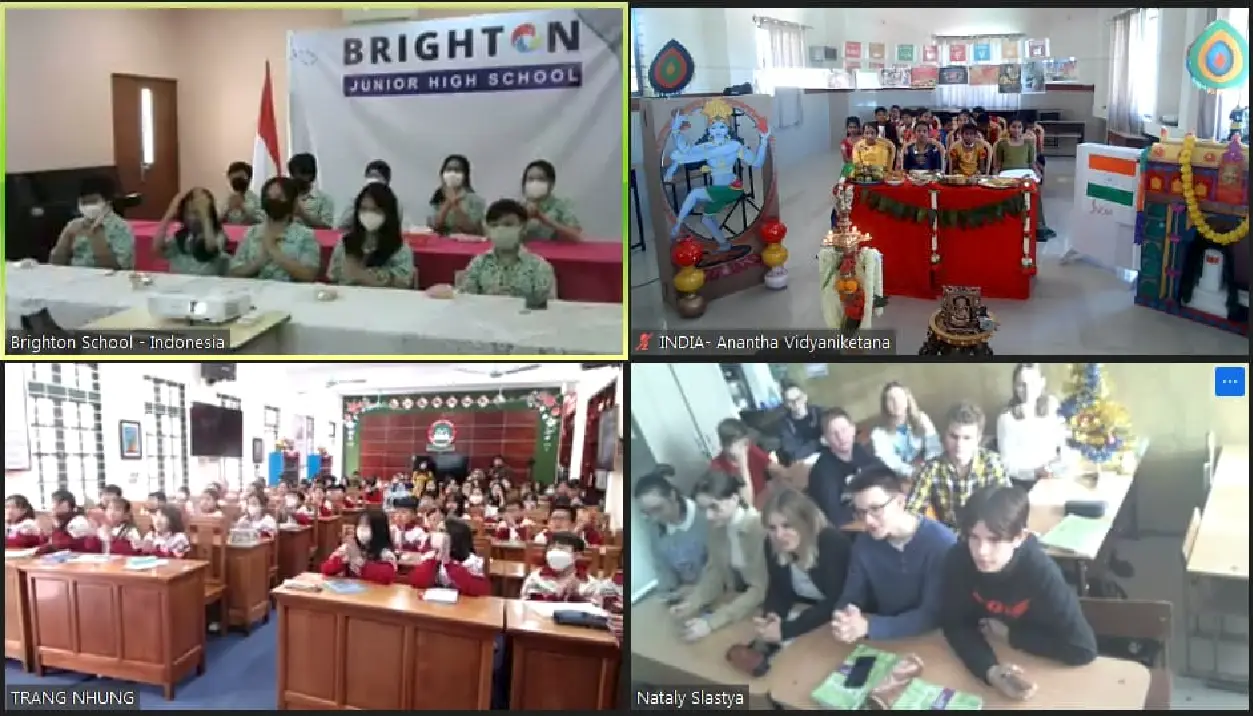
Use a live call when it serves a clear purpose, such as asking questions or presenting a draft. For a six-week project, three 30-minute calls could be a starting proposal. Agree a schedule that both schools can actually support.
Five ideas to adapt across schools
- Literature circles: Grade 5 classes read a shared text and explain different interpretations using evidence from it.
- Mathematics: Grade 3 classes exchange local word problems, such as market calculations or journey times, and solve each other's questions.
- Science: Grade 8 classes compare observations of biodiversity or other suitable local data, using an agreed method. Water pH or air-quality work needs suitable equipment and school supervision.
- Art: Grade 6 classes contribute to a shared digital artwork, explaining the choices and responding to each other's ideas.
- Social entrepreneurship: Grade 11 students investigate local challenges and compare where proposed responses could work.
These are suggested designs. Choose the subject, age level and scope that fit both classes. The cross-cultural project guide offers a practical way to start.
Keep the coordination simple
When time zones leave little overlap in school hours, exchange work at different times. Set a response date and leave clear questions for the partner class. Do not assume that reversing morning and afternoon will produce a safe, workable timetable for both schools.
Use a small set of school-approved tools. Check bandwidth, access and how teachers will share student work. The teacher coordination guide provides a shared-plan approach for goals, dates and updates.
Build collaboration skills gradually
- Kindergarten to Grade 2: try a short task, perhaps 10-15 minutes, practising turns and listening. One child chooses coloured blocks and a partner arranges a pattern; then swap.
- Grades 3-5: teach brainstorming, shared decisions and respectful disagreement. A jigsaw task can give each student a part to investigate and explain to the group.
- Grades 6-8: agree how the group will decide, ask for help and handle disagreement. Discuss individual preferences without assigning them to a nationality or culture.
- Grades 9-12: invite students to plan roles and timelines for a more complex problem. Adjust your guidance to their experience and keep check-in points.
Respond when participation becomes uneven
- Some contributions are missing: check the task and support first, then ask each student to explain their contribution and subject understanding.
- One voice dominates: give thinking time and invite a first idea from each student before a second round. Allow a written contribution; do not force the quietest student to present.
- Schedules clash: agree a recorded or written contribution and a realistic response date. Keep important work within accessible school routines.
- A misunderstanding arises: ask students what they meant, listen to the other person and return to the group's agreed expectations.
Start with one class task
Choose a familiar curriculum topic and practise the collaboration routine with your class. Note what students need before adding a partner school. When you connect with another teacher, co-design the question, language support, contributions and reflection points.
Class2Class is free for teachers and students, according to its current FAQ. Teachers find and contact each other, then agree the project. The platform supports coordination; the teaching and logistical decisions remain with the teachers.
Sources
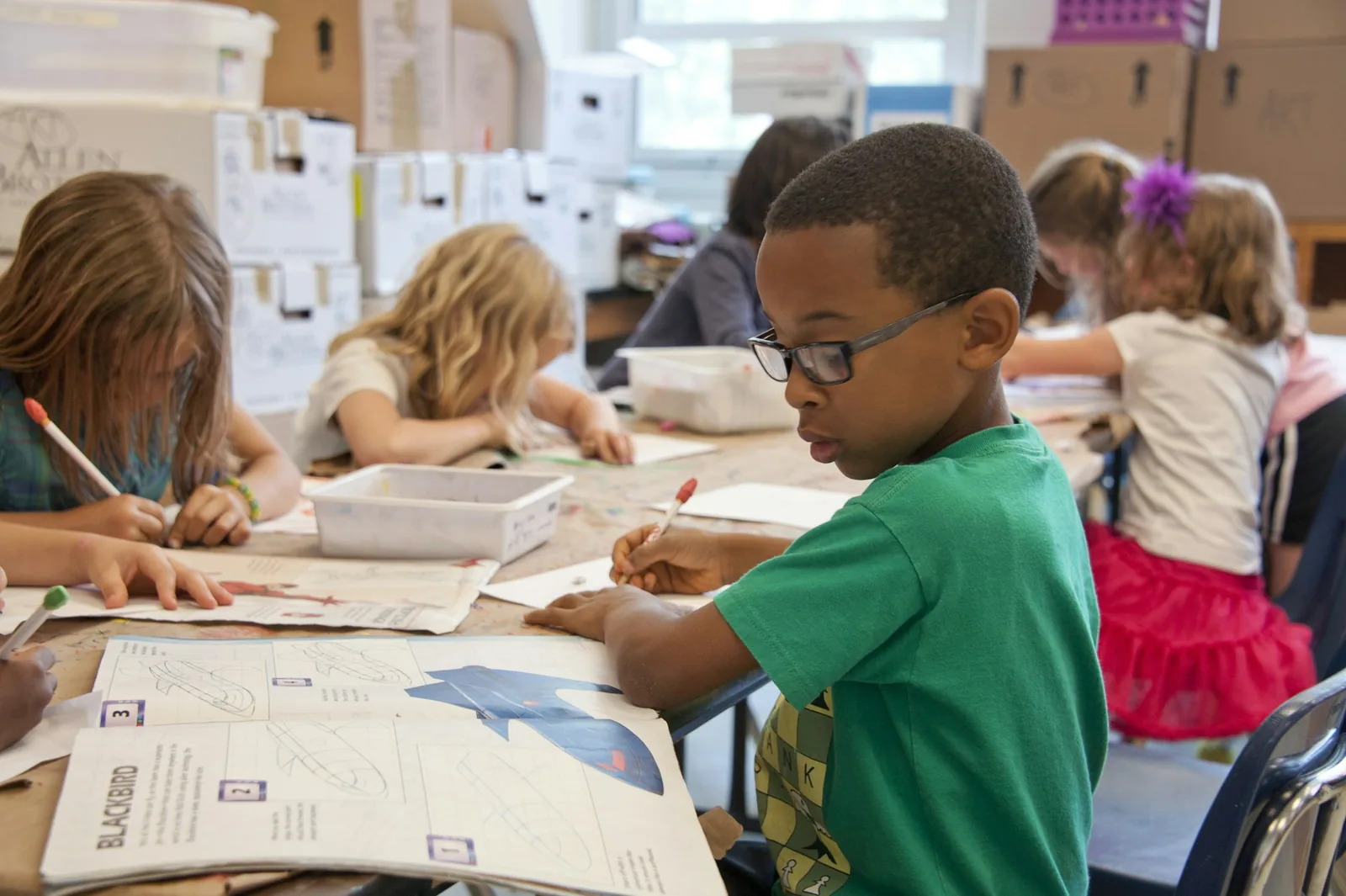
Photograph: CDC / Unsplash.
Choose one routine to practise next
Start with a task that needs comparison and a shared decision. Decide how each student can contribute, then explore a project idea that gives the class a useful audience.