Global collaborative learning: design a shared classroom task
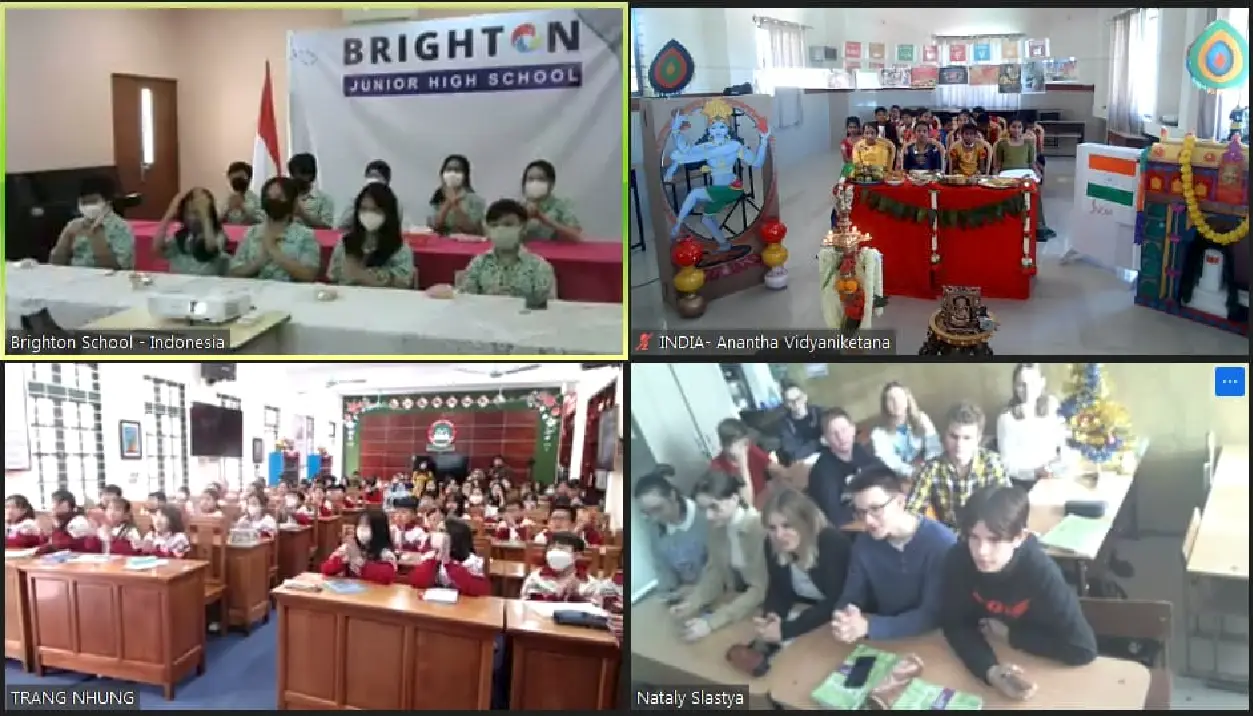
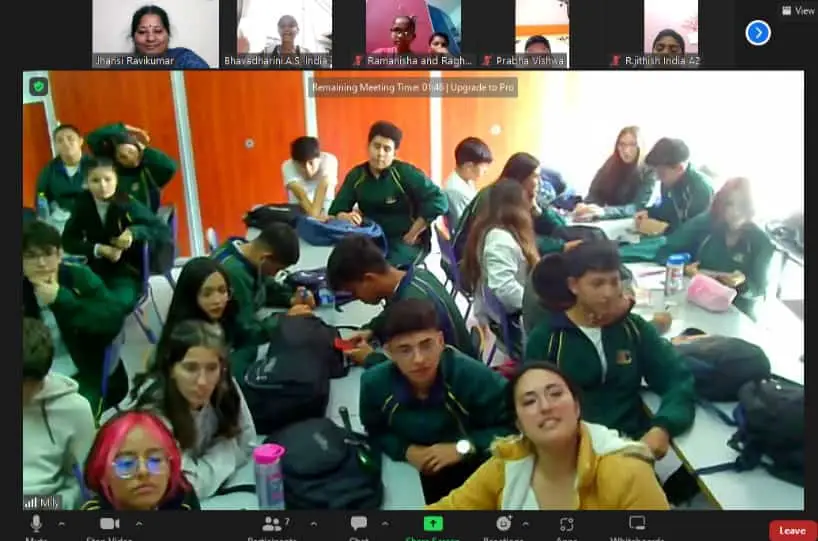
Global collaborative learning connects classes around a shared question. Students investigate locally, exchange findings and use both perspectives in a joint result. With your partner teacher, plan the contributions, response time, shared product and reflection.
Last updated
Plan global collaborative learning around a shared result
Think about a topic you are teaching in the next few weeks. Now imagine a classroom in another country asking the same question your students will explore. What could the partner class notice that your students cannot see from where they are?
A presentation, campaign, prototype or report can bring the classes' findings together. Design the task so each class needs to consider the other's work before completing the result. An introductory call or pen-pal exchange can be a useful beginning; leave room for questions, comparison and revision.
SUNY's What is COIL? describes teachers designing an experience together and students completing shared activities. Its guidance comes from higher education; the sequence below is a suggested school-task adaptation. For the wider approach, see global collaboration in education and the Class2Class COIL guide.
Five phases for a shared classroom task
Use these phases as a planning sequence, then agree the pace with your partner teacher. The shared result should fit both classes' curriculum and available time. Check the chosen project's actual activities rather than assuming every platform idea follows this exact sequence.
1. Agree a shared question
Both classrooms begin with the same question tied to a real-world issue. For example: "How does water scarcity affect our community?" or "What does a sustainable school look like where we live?" The question should allow different local answers while being specific enough to guide investigation.
2. Investigate locally
Each group researches the question within its own context. Students might interview community members, collect data, take photographs or analyse local conditions. Science, geography, language arts or social studies provides the tools for the investigation. Teachers agree what can be gathered and shared.
3. Exchange and compare
The classrooms share their findings, compare similarities and differences, and ask questions. For example, partner classes may find different water challenges in their communities. Ask students to explain what the other class helped them notice and what they need to investigate further.
4. Create a shared result
Together, the groups produce something: a joint presentation, a comparative infographic, a video documentary or a proposal for their school communities. The product should use both perspectives. Give students a reason to coordinate and revise the work, so the result is more than two separate reports placed side by side.
5. Share and reflect
Present the final product to the partner class, the school community or another suitable audience, following the schools' sharing arrangements. Ask students what they contributed, what they learned from the other class and what they would change. The audience gives the work a purpose; reflection helps you notice the learning.
A classroom example: the water-conservation session
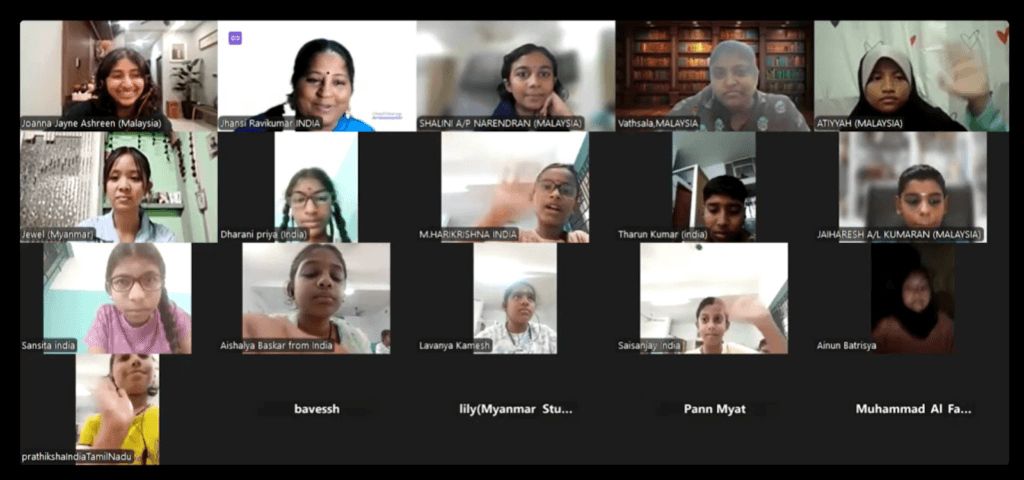
The published Global Water Conservation Challenge story describes teacher Jhansi Ravikumar in India working with Vathsala Nayer Vailathan in Malaysia and Zin Zin Thin in Myanmar. Their shared goal was to explore water use, pollution and conservation for World Water Day.
The story reports participants aged 10 to 25. During the online session, students introduced their schools, shared slides about water and pollution, took part in a 20-question quiz and discussed their learning. The activities connected a common topic with contributions from the participating classes.
You could extend a similar exchange into a shared comparison of water use, with evidence and one proposed action from each class. That is a suggested follow-on task, rather than an outcome reported in this story.
Use a topic already in your curriculum
A biology unit on ecosystems can become a comparative study with a classroom in a different climate zone. A language arts module on storytelling can become a bilingual anthology co-written across countries. A civics lesson on community participation can become a joint proposal for local action, informed by how another community handles the same challenge.
If the task involves proposing a solution, students can use a Design Thinking process: listen to the partner class, define a shared problem, develop ideas and revise a response for each local setting. Choose this approach when it serves the subject question; a comparison or shared explanation may be enough for another task.
For a timely topic, the SDG Calendar offers awareness days and related project ideas. Use a day when it fits the curriculum and both school calendars.
Adapt the language and technology to both classes
You do not need a computer lab for every student to take part. If pupils have limited internet access, a teacher can share class findings through one connected phone or computer. Plan offline research, drawings or written work, then agree how the teacher will share it and bring the partner class's response back to the lesson.
English is not required. A class in Colombia might work with one in Mexico or Spain; a class in France might work with one in Quebec, Senegal or Côte d'Ivoire. Agree a language both classes can use and the support students need. These are possible pairings, not claims about available partner classrooms.
Notice what students do with the partner class's ideas
A partner audience gives students a reason to explain their findings clearly. Look for questions they ask, evidence they compare and changes they make after a response. A shared product is useful evidence, alongside the conversation and reflections that led to it.
Comparison can help students connect curriculum content with another local context. Ask them to identify a similarity, explain a difference and show where an idea from the other class changed their work. This gives you something concrete to discuss with your partner teacher.
UNESCO's Global Citizenship Education: Taking it Local explains how global citizenship connects with local values such as solidarity, diversity and shared humanity. In a classroom task, listening to another perspective and responding respectfully are practices you can observe, rather than assume.
For background, Guth and Helm's edited collection Telecollaboration 2.0 brings together frameworks and classroom cases on language and intercultural learning. Rubin's 2017 article describes COIL's development and institutional examples in higher education. Use these as background for planning, and judge your class's learning through its work.
Use Class2Class to connect the shared work
Class2Class offers project ideas you can inspect and adapt. Teachers find and connect with each other through Connect, then agree the task, age groups, language and timing. The official FAQ explains the current process; the platform is free for teachers and students.
Sources
- SUNY COIL Center. What is COIL?
- Guth, S., and Helm, F. (Eds.) (2010). Telecollaboration 2.0: Language, Literacies and Intercultural Learning in the 21st Century. Peter Lang.
- Rubin, J. (2017). Embedding Collaborative Online International Learning (COIL) at Higher Education Institutions: An Evolutionary Overview with Exemplars. Internationalisation of Higher Education, 2, 27-44.
- UNESCO (2018). Global Citizenship Education: Taking it Local. Official publication overview.
- Class2Class. Global Collaboration in Action: Global Water Conservation Challenge.
- Class2Class. Questions from schools, DPOs and partners.
Frequently asked questions
Do partner classes need to meet live?
No. Classes can exchange findings and respond during their own lessons. If a live meeting is useful, the teachers choose the video tool and a time both schools can manage.
How do I make the result collaborative?
Give each class a contribution the other needs to use. Include time to compare evidence, ask questions and revise a shared result. Ask students to explain what their partners added to the work.
Choose a task for both classes to shape
Explore project ideas for a topic you already teach. With your partner teacher, choose one question and one result that needs both classes' contributions, then agree how students will exchange, respond and reflect.