
We’re thrilled to announce an exciting new feature on Class2Class.org that will make your international collaboration projects even easier! The Project Ideas Library.
Introducing: The Project Ideas Library
A collection of ready-to-use project templates designed to help you quickly start meaningful collaborations with teachers worldwide.
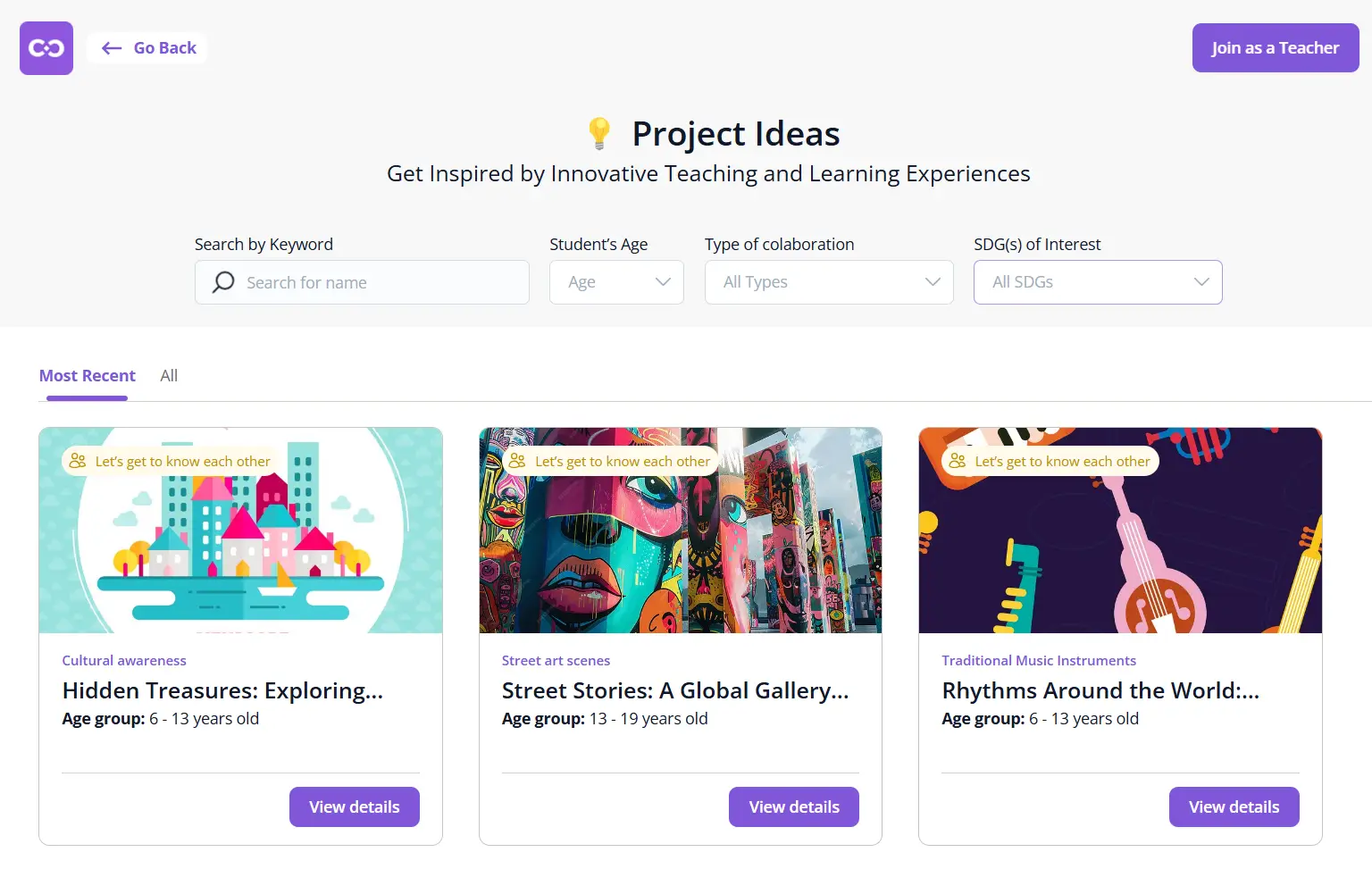
Find the perfect project idea filtered by:
📚 Grade level and age group 🌍 SDGs focus areas 💡 Skills to develop 🤝 Collaboration type ⏱️ Project timeline and clear learning objectives
Designed for Maximum Impact with Minimum Effort
Every template includes:
- Pre-designed learning objectives
- Detailed project timeline and learning objectives
- Step-by-step implementation guide
- Ready-to-use materials
It’s as easy as:
- Filter projects based on your needs
- Select your favorite project idea
- Click on “Create Project” and start collaborating!
Want to see all our project ideas? Visit our complete collection and transform your global classroom with just a few clicks!
How teachers are using the Project Ideas Library this semester
Most teachers don’t open the Project Ideas Library to browse — they open it under deadline. A unit on water finishes Friday, and they need an authentic next step that involves more than another textbook chapter. The library exists to make that 15-minute search feel productive instead of overwhelming. Filter by your grade band and a single SDG, sort by project length, and you’ll usually have three or four credible candidates within the first scroll.
The most common use pattern we see: teachers pick a project, copy the timeline into their LMS, then post a “looking for partners” note in the Class2Class community. Within 48–72 hours they’ve usually matched with a classroom abroad and the project is on the calendar. Compared to building a global collaboration from scratch, the library compresses the planning step from weeks to a single afternoon.
Browse the library by SDG focus
Every project template in the library is mapped to one or more UN Sustainable Development Goals. If your school’s curriculum calendar is organized around SDG units — many international and IB schools use this structure — the SDG filter does most of the work for you:
- SDG 4 — Quality Education: Cross-cultural literacy buddies, study-skill exchanges, multilingual storytelling. See our SDG 4 classroom guide .
- SDG 6 — Clean Water: Local water-quality testing exchanges, watershed mapping, water-use surveys.
- SDG 13 — Climate Action: Climate diaries, carbon footprint comparisons, and the podcast format covered in our SDG 13 climate action guide .
- SDG 16 — Peace and Justice: Conflict-resolution role-plays, peace memorials, and ideas built around the International Day of Living Together in Peace .
- SDG 17 — Partnerships: Joint pen-pal project plans, collaborative documentary creation, and cross-classroom resource sharing.
Project examples: from one-day icebreaker to multi-week unit
Not every collaboration needs to be a semester-long commitment. The library spans the full range so you can match the project to your time budget:
- 1 class period — Cultural Bingo: Students complete a bingo card by interviewing partner classmates about traditions, food, and daily routines.
- 1 week — Postcard Exchange: Each class writes 5 postcards describing their neighborhood, mails them async, and presents what they learned.
- 3–4 weeks — Local Issue Deep-Dive: Pairs of students from each classroom investigate the same topic (e.g. recycling, school food, transit) and produce a side-by-side comparison report.
- Full semester — Joint Documentary: Two classrooms co-produce a short documentary with shared research, joint script revisions, and a final virtual premiere.
The Project Ideas Library is updated continuously. New templates are added by C2C educator partners every month, drawn from the most successful collaborations in the community. If you’re new to international classroom projects, we recommend starting with a 1-week format — the lift is small, and the moment your students realize they’re talking to peers across an ocean is what hooks them on the longer formats.