International Day for Tolerance: classroom activities for November 16
The International Day for Tolerance is on November 16 every year. The UN General Assembly proclaimed it in 1996, a year after UNESCO’s Member States adopted the Declaration of Principles on Tolerance. Teachers can use it for a short lesson on respect and stereotypes, or a four-week project with a partner class.
Last updated

Practise respect when we disagree
What does respect look like when we disagree? Start with a question students can answer from their own experience, then explore how we live with people who believe, speak or live differently from us.
Tolerance is respect, acceptance and appreciation of the rich diversity of our world’s cultures, our forms of expression and ways of being human.
UNESCO Declaration of Principles on Tolerance, 1995
Choose a classroom activity
Each activity fits one lesson. Agree two or three discussion rules first, such as: listen to the end, ask before you judge, and talk about ideas, not people. Personal sharing is always optional, and no student should be asked to speak for their culture, religion or group.
Make a same-and-different web
Ages 6–12. About 30 minutes. Materials: paper and coloured pencils. Each student draws themselves in the middle of a page and adds four things about them, such as a favourite food, a game, a language they know or a place they like. In pairs, students find two things they share and one thing that is different. Then they tell the class one new thing they learned about their partner.
Check that students ask questions and describe a difference without calling it strange or wrong. Students choose what goes on their web. Use picture prompts for younger classes; older students can compare their webs with a partner class.
Spot the stereotype
Ages 10–15. About 35 minutes. Materials: three or four teacher-chosen examples, such as book pictures, adverts or headlines, that show a group of people in a simple or one-sided way. Groups describe what each example shows, what it leaves out and how they would change it to be fairer.
End with two questions UNESCO suggests we ask ourselves: Do I stereotype people? Do I reject those who are different from me? Students can answer privately in writing. Choose examples that do not target anyone in the room, and pause to talk if a hurtful comment comes up. Check that students can explain why a generalisation is unfair and suggest a fairer description.
Plan a respectful interview
Ages 13–18. About 40 minutes. Materials: paper or a shared document. Students choose an everyday topic, such as school, food, celebrations or what respect looks like at home. They write five open questions to learn how someone else sees it. Partners check each question: is it open, is it respectful and does it assume anything?
Students can use the questions with a partner class or record a short audio episode, which is a good start for the Tolerance Talks project below. Being interviewed or recorded is optional and needs permission under your school’s rules, and students do not have to share their own beliefs. Check the quality of the questions and how well students listen to the answers.
Explore two tolerance projects
Compare ages and activities


Embracing Diversity: a school community project
In this four-week project, students aged 6-8, 9-12 and 13-15 identify problems of intolerance in their school community, then use design thinking to develop and try out solutions that build understanding, respect and acceptance. Classes collaborate in English, with icebreakers, a reading list, a song on tolerance and paper prototypes to support the work. With a partner class, students could compare how intolerance shows up in each school and plan a welcome campaign, a peer buddy scheme or a school event.
Tolerance Talks: a teen podcast project
Students aged 13-15, 16-18 and 18+ work in international teams to explore tolerance, diversity and inclusion through design thinking and podcasting. Over four weeks, they choose an issue, interview people and produce episodes that raise awareness and suggest solutions. The project uses English for collaboration. Before recording, agree with your partner teacher who may be interviewed, how recordings are stored and where episodes are shared.
What students can practise
These are intended learning goals for the activities and projects, not measured results.
- Empathy and intercultural understanding: listen to another view and describe it fairly before responding.
- Critical thinking and problem-solving: find a cause of intolerance in school life and test one fair solution.
- Communication: ask open questions, listen actively and explain an idea clearly to a partner class.
- Collaboration and creativity: share roles in an international team and turn ideas into a campaign, prototype or podcast episode.
- Global citizenship: connect a local question with SDG 16 and the idea of peaceful, inclusive communities.
Why November 16 matters
On November 16, 1995, UNESCO’s Member States adopted the Declaration of Principles on Tolerance, in the United Nations Year for Tolerance. In 1996, the UN General Assembly adopted resolution 51/95, which proclaimed November 16 the International Day for Tolerance. Read more on UNESCO’s page for the day and the UN observance page.
The Declaration describes tolerance as “harmony in difference”, not indifference, and says that “education is the most effective means of preventing intolerance.” UNESCO adds that intolerance is often rooted in ignorance and fear, and that children should be encouraged at home and at school to be open-minded and curious.
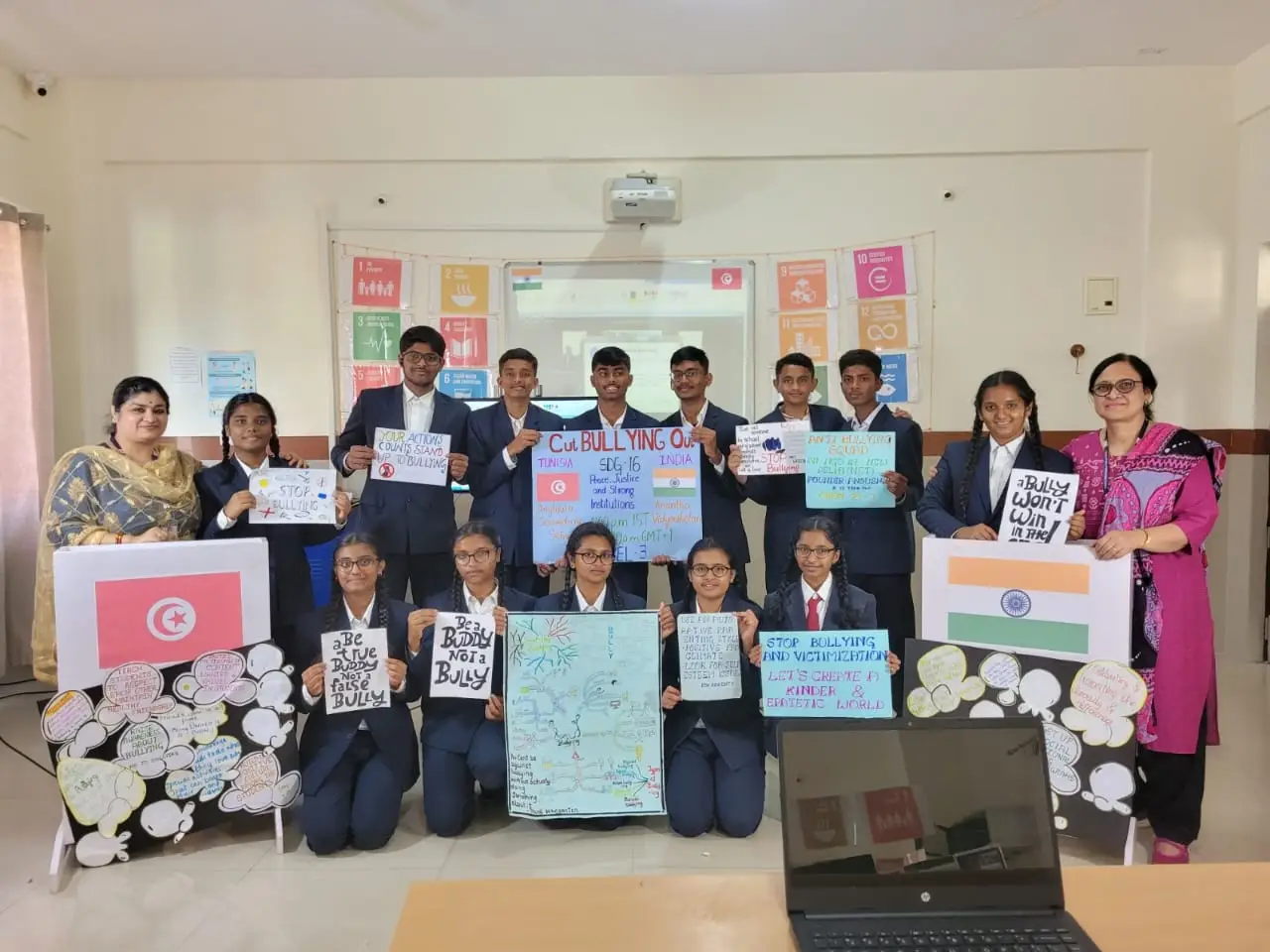
The day connects with SDG 16: Peace, Justice and Strong Institutions, which aims for peaceful and inclusive societies. Both projects above are linked to SDG 16. Use the SDG calendar to find another day that fits your class.
Frequently asked questions
When is the International Day for Tolerance?
It is on November 16 every year. The UN General Assembly proclaimed the day in 1996, one year after UNESCO’s Member States adopted the Declaration of Principles on Tolerance.
Can I mark the day in one lesson?
Yes. Choose one of the three activities above and finish with a short written or spoken reflection. If you want to continue, the two projects are four-week options with a partner class.
How can I talk about tolerance without putting students on the spot?
Agree discussion rules first, keep personal sharing optional and never ask a student to speak for their culture, religion or group. Use teacher-chosen examples, and pause the activity if a hurtful comment comes up, following your school’s usual procedures.
Are Class2Class projects free?
Yes. Class2Class is free for teachers and students, and there is no paid tier for them. Explore a project idea, then agree the plan with a partner teacher.
Explore classroom projects
Explore Class2Class project ideas and choose one to adapt with a partner class.