Your second international classroom project: three improvements
For your second international classroom project, build on one lesson from the first. Give students clear responsibilities, choose a product and its audience, and plan reflection and sharing before the work begins. You can improve one part without expanding the whole project.
Last updated
Build on what worked last time
You did your first international project. Your students met a partner class, you worked through the time-zone differences, and something travelled between two countries that would not have travelled otherwise. Now you are imagining project number two, and there is one small worry: will this just repeat what we already did? This article walks through three improvements you can plan after your first cycle: give students clear roles, choose a useful product, and make time for reflection and sharing. Start with the change that matters most for your class.
If you have not yet looked back on project number one, the reflection checklist after your first international project is a useful place to start. Use what you learned to decide what to change next.
Give students clear roles
One useful change for a second project is to make responsibilities clear before the work starts. A short role card helps students see how their contribution connects to the team and the partner class.
What goes on a role card
A role card can combine two kinds of responsibility. A functional role might be researcher, translator, editor, presenter, time-keeper or designer. A collaboration role might be the link to the partner class, the decision-recorder or the question-asker. Give each role one deliverable, a date and a clear expectation from the partner class.
In K-pop in the Classroom, teacher Nassim Mia in Bangladesh connected classes around music students already enjoyed. In the first week, students formed teams, chose a song and began research. Teachers helped them organize their findings and prepare performances and presentations. For your own project, a role card can make those different contributions clear.
How roles support student agency
Role design connects to two of the eight competencies in the Class2Class educational framework: Collaboration & Teamwork and Adaptability & Leadership. OECD's Student Agency for 2030 describes agency as setting goals, reflecting and acting responsibly. A clear role can give students a manageable responsibility while you support their decisions and notice how they work together.
A practical takeaway for project two
Here's a practical takeaway you can put into action this term: build a short role card that captures three things - one functional role, one collaboration role and one concrete deliverable with a clear standard for 'done'. Write the cards before the project launches, and discuss them with students so the responsibilities make sense.
During the project, review roles when the work calls for it: a student may need a different responsibility, a team may need to rebalance, or a deliverable may change as the inquiry develops. Keep the responsibilities clear and give quieter students a manageable way to contribute.
Choose a product students can use
A presentation can be a useful final product. For your second project, consider what students will be able to return to after the exchange: a record of their thinking, a shared resource or a response to a real question.
What counts as an artefact
An artefact might be a debate position paper, multilingual campaign, co-authored guide, piece of student research, prototype or community proposal. Choose a form that serves your learning goal and the people who will use it.
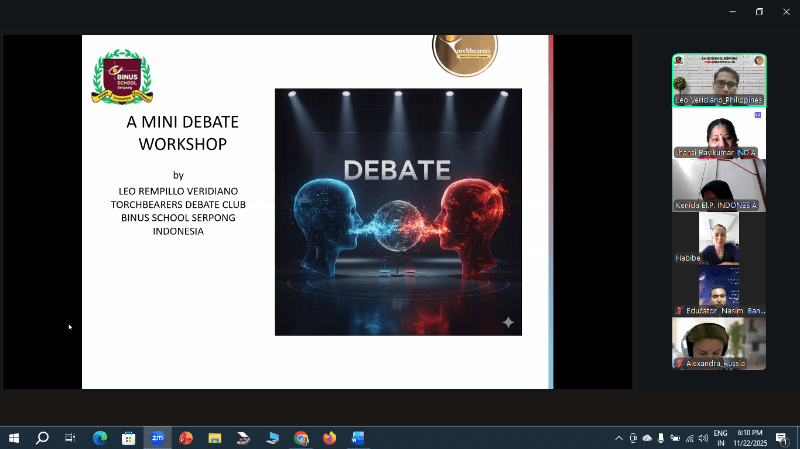
In Should Rivers Be Connected?, students researched the question and recorded two-minute speeches. A separate live workshop gave them practice in building arguments and responding to other viewpoints. Those are different products and activities you can plan around a shared question.
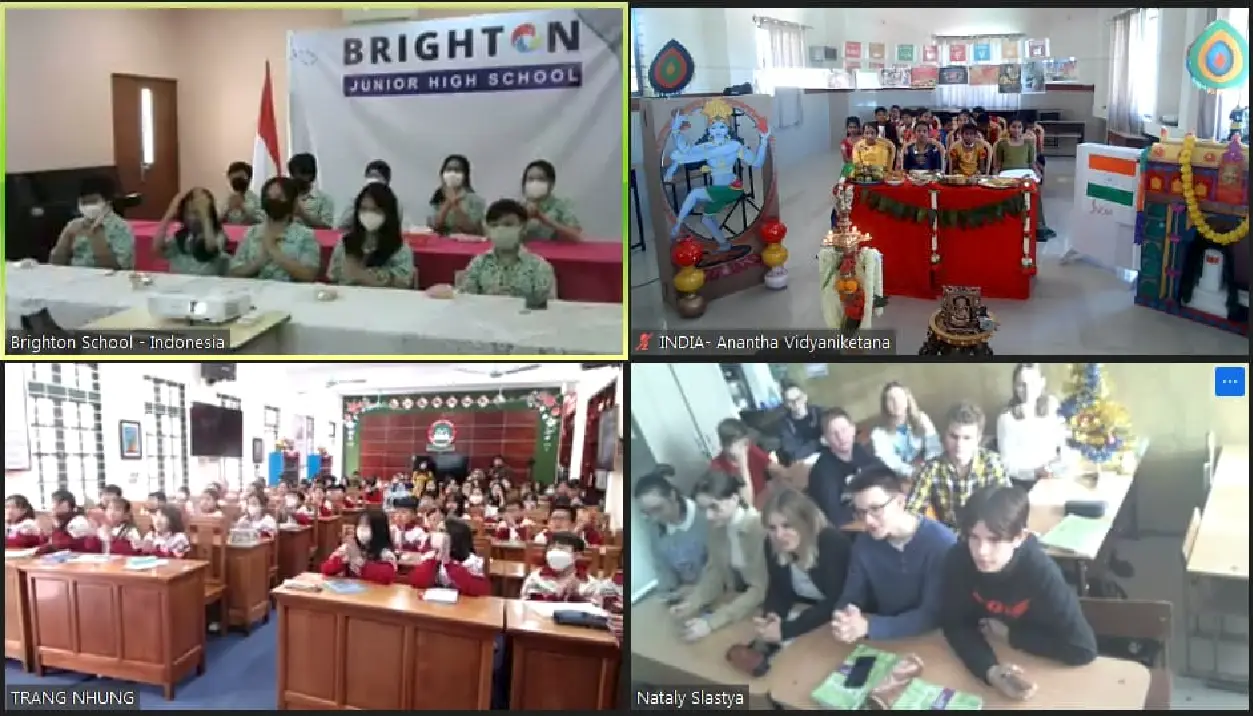
In the Global Water Conservation Challenge, teacher Jhansi Ravikumar connected her class in India with classes in Malaysia and Myanmar. Students presented slides about water and joined an interactive quiz. You could build on that format by asking partner classes to make a shared guide using both perspectives.
The Class2Class educational framework brings COIL, project-based learning and Design Thinking together. Design Thinking can help students move from describing a problem to proposing and testing a response. Give the product a purpose that fits that learning task.
In Celebrate Women in STEM Across Borders, students researched a scientist, created digital posters and presented them to partner classes in a live session. The posters give a concrete example of a product made for a peer audience. You can decide whether a later sharing activity would help your own project.
Name the audience before the project starts
A practical takeaway: before launching project number two, write one sentence that describes the artefact and the audience it is for. Teachers do not always get to choose their collaborations - often you say yes to an opportunity that arises. Within that reality, naming an audience helps students decide what to include and how to explain it. The audience might be the partner class, your school community or another group with a real interest in the topic.
Make time for reflection and sharing
When the term is busy, project definition and execution can absorb most of the available time. Build reflection and sharing into the plan for your second project so students have time to review the work and explain what they learned.
Reflection: look at the work together
Students choose the artefacts that show what they learned and how they worked as a team. Ask what each person contributed, where a partner's input changed the work and what the group would do differently next time. Use your learning objectives to guide the discussion and your assessment decisions.
Sharing with an audience
You can extend the sharing beyond the two partner classes: a parent newsletter, a school assembly, a community organisation or a school in a third country. Choose an audience that fits the work. Agree the sharing arrangements with your partner teacher, follow your school's permissions and use the Class2Class Ethical Guidelines when preparing students' work for a wider audience.
PBLWorks includes reflection and a public product among its Gold Standard project design elements. Use those ideas to plan a purposeful close that suits your students and your school context.
Keep the next project manageable
If the first project was a window into another classroom, the second can be a debate or a co-authored guide. Give it a clear purpose that suits your students and partner class.
A small change can be enough: keep one partner, change one variable. Same partner, new topic. Same topic, new artefact. Same artefact, new audience. One change at a time can make the second project feel different while building on what students already know how to do.
Sources
- Class2Class - After an international project: a reflection checklist
- Class2Class - K-pop in the Classroom
- Class2Class - Should Rivers Be Connected?
- Class2Class - Global Water Conservation Challenge
- Class2Class - Celebrate Women in STEM Across Borders
- Class2Class - Educational Framework
- Class2Class - Designing Global Projects
- Class2Class - Ethical Guidelines
- Class2Class - Collaboration FAQ
Further background
- Brown, T. (2008). Design Thinking. Harvard Business Review.
- PBLWorks. Gold Standard: Project Design Elements.
- OECD. (2019). Student Agency for 2030: concept note.
Choose one improvement for your next project
Choose one curriculum topic, one learning goal and the improvement you want to try: a clearer role, a useful product or a planned reflection. If you use the Project Creation Assistant, review and edit its suggestions with your own teaching judgement. Explore an idea that fits those choices, then adapt it with your partner teacher.