PBL project examples: real project-based learning from global classrooms
A good PBL project starts with a real question, gives students time to investigate and ends with something they make and share with a real audience. The examples below show the driving question, what students made and how a partner class in another country made the work matter.
See the examplesLast updated
Project-based learning (PBL) is easier to plan when you can see what a finished project looks like. Below you will find documented projects from Class2Class classrooms and ready-made project ideas you can run with a partner class. Use the table to find an example for your age group, then read how it worked.
Swipe horizontally to see all columns
| Example | Ages | Driving question | What students made |
|---|---|---|---|
| Water Warriors | 6-15 | How can we solve a water problem in our community? | Solutions and awareness campaigns |
| Women's Equality Day | 10-15 | What does equality look like where we live? | Interviews, posters and an "Equality Tree" |
| Climate Chats | Grade 7 | How is climate change affecting communities like ours? | A podcast and a website |
| Should rivers be connected? | 10-25 | Should rivers be connected to share water between regions? | Two-minute video speeches and a live debate |
| Cut Bullying Out | Not stated | How can we make our schools safer from bullying? | A game, bracelets, a complaint box and an anti-bullying squad |
| Inclusion project | 15-17 | How can our school work better for every student? | A song, pictograms and adapted desks |
| Ready-made projects for teenagers | 13-18+ | What shared problem can we research and solve? | Evidence-based solutions or a virtual photo exhibition |
PBL project examples for primary school
Water Warriors: solve a water problem in your community
Driving question: How can we solve a water problem in our community? In this ready-made project, classes investigate a local water challenge, compare it with their partner class and share solutions and awareness campaigns. Students practise research, science vocabulary and persuasive communication.
Referenced projects
Women's Equality Day: interview women who inspire
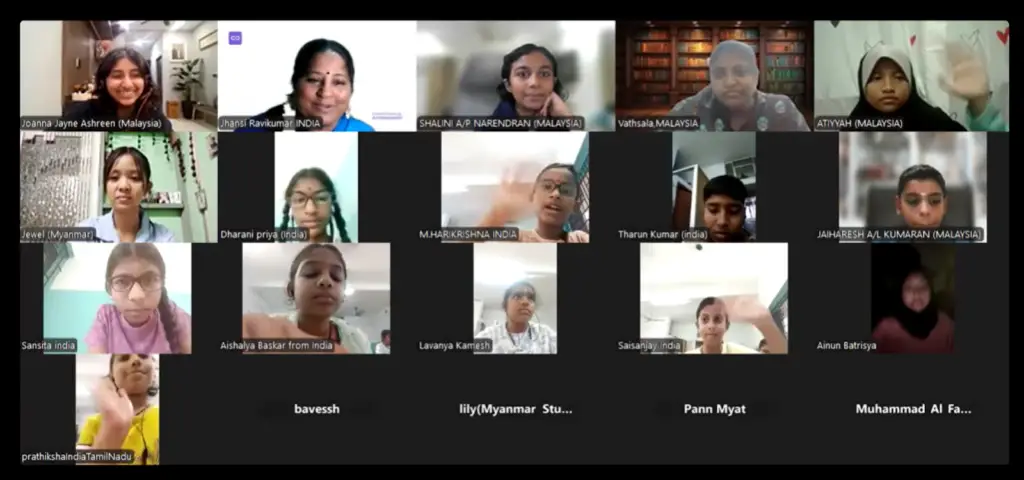
Driving question: What does equality look like where we live? Students aged 10 to 15 in classrooms from Myanmar to Argentina interviewed local women leaders, made posters, wrote pledges for a shared "Equality Tree" and presented their work to each other in a live online session. Read the full story.
PBL project ideas for middle and high school
Climate Chats: a student podcast across seven countries
Driving question: How is climate change affecting communities like ours? Seventh graders at a school in the United States interviewed students in Argentina, Tunisia, Brazil, Bulgaria, India and Bangladesh and turned the conversations into a podcast and a website. Students practised interviewing, listening and editing for a real audience. Read the full story.
Should rivers be connected? A debate across 10 countries
Driving question: Should rivers be connected to share water between regions? In the documented exchange, participants aged 10 to 25 from 10 countries researched the question, prepared a two-minute speech, recorded it as a video and took part in a live online debate workshop. Students practised building an argument with evidence and listening respectfully to the other side. Read the full story. That historical age range includes adults. For a school project, adapt the debate to your pupils and agree an appropriate partner age group.
Cut Bullying Out: design solutions for a safer school
Driving question: How can we make our schools safer from bullying? Students in Tunisia and India shared experiences and ideas through video calls and used design thinking to create solutions. The class in Tunisia made a spinning-wheel game with positive messages and anti-bullying bracelets; the class in India set up a complaint box, an anti-bullying squad and a notice board. Read the full story.
Inclusion project: adapt your school for every student
Driving question: How can our school work better for every student? Students aged 15 to 17 at a school in Argentina used design thinking to reduce inequalities. They wrote a song, made pictograms to help communication and collected 230 tennis balls to adapt desks and chairs. Read the full story.
Ready-made projects for teenagers
Youth-Led Solutions for a Better World asks classes to design solutions to a shared problem and present the evidence. Portraits of Poverty is a photo-essay project in which classes agree a question, research it, choose images and captions and present a virtual exhibition.
Referenced projects

Use the Gold Standard PBL elements to plan your project
PBLWorks describes seven essential project design elements in its Gold Standard PBL model. Use them as a planning checklist when adapting an example; the brief case stories above do not document every element in every project:
- A challenging problem or question: frame a meaningful question at an appropriate level of challenge.
- Sustained inquiry: plan time to ask questions, find sources and use the evidence.
- Authenticity: connect the work to a real context or a concern students understand.
- Student voice and choice: offer meaningful decisions about the process or product.
- Reflection: ask students to consider what they learned and how they worked.
- Critique and revision: schedule feedback and time to improve the work.
- A public product: agree an appropriate audience beyond the teacher, following school sharing rules.
New to PBL? Start with what project-based learning is in education.
Turn an example into your own PBL project
- Start from a local question your students care about.
- Plan three or four milestones, such as research, a first draft, feedback and the final product.
- Find a partner class to act as a real audience and give feedback.
- Decide how you will assess both the product and the process.
For common problems and how to fix them, read our strategies for project-based learning.
Frequently asked questions
What is an example of a PBL project?
In Cut Bullying Out, students in Tunisia and India used design thinking to tackle bullying. They started with a real problem at their own schools and ended with products such as a game, bracelets and a complaint box.
How long should a PBL project take?
Many classroom projects run for several weeks. The ready-made Class2Class projects in this guide are planned for four weeks, with time to research, make and share.
Does project-based learning work with young children?
Yes. Keep the question concrete and the steps short. Water Warriors, for example, has versions for age groups from 6 to 15.
Is Class2Class free?
Yes. Class2Class is free for teachers and students.
Choose a project to adapt
Pick the example closest to your subject and age group, then explore ready-made projects you can run with a partner class.