International Youth Day on 12 August: theme, history and classroom activities
International Youth Day is on 12 August each year. The UN marks it to bring youth issues to world attention and celebrate young people as partners. The 2026 theme is “Different Contexts, Common Aspirations”; the 2027 theme is not yet announced. Teachers can use it for youth-voice lessons and class exchanges.
Last updated
What is International Youth Day, and when is it?
International Youth Day is a United Nations observance held every year on 12 August. The UN uses the day to put young people's issues before the international community and to recognize young people as partners in society today.
There is no universally agreed definition of youth. For statistical purposes, the UN uses ages 15 to 24, and countries may define it differently. Younger students can still take part: the activities on this page start at age 6.
International Youth Day at a glance
- Date: 12 August every year (in 2027, a Thursday)
- Established: endorsed by the UN General Assembly in resolution 54/120 on 17 December 1999
- First observed: 12 August 2000
- 2026 theme: “Different Contexts, Common Aspirations”
- 2027 theme: not yet announced (last checked on 26 September 2026)
International Youth Day 2026 theme: Different Contexts, Common Aspirations
The UN theme for 2026 is “Different Contexts, Common Aspirations”. It starts from a simple observation: young people grow up in very different national and local situations, yet their hopes are remarkably alike. Across countries, they want dignity, opportunity, a real say in decisions, decent work, quality education and a sustainable future.
The 2026 observance gives particular attention to young people in Least Developed Countries, Landlocked Developing Countries and Small Island Developing States, where poverty, climate change, geographic isolation and unequal access to digital technology often overlap. The UN frames the theme through three sub-themes:
- Global Solidarity: youth development is a shared responsibility that depends on international cooperation, partnerships and fair access to opportunities.
- Shared Challenges: education, employment, climate change, digital inclusion and mental well-being connect young people across borders, and responses should draw on their lived experience.
- Youth Innovation: young people are already building practical solutions, from climate action to community projects, often with very few resources.
In a classroom, the theme becomes a comparison question: what is different about growing up here and in a partner community, and what do young people in both places hope for? Activities 2, 3 and 8 below are built around it.
The theme changes every year. According to UN DESA, the UN Focal Point on Youth chooses it, often with input from youth organizations and UN agencies. The 2027 theme had not been announced when we last checked on 26 September 2026. We will add it here once the UN publishes it.
Recent International Youth Day themes
- 2026: Different Contexts, Common Aspirations
- 2025: Local Youth Actions for the SDGs and Beyond
- 2024: From Clicks to Progress: Youth Digital Pathways for Sustainable Development
- 2023: Green Skills for Youth: Towards a Sustainable World
- 2022: Intergenerational Solidarity: Creating a World for All Ages
- 2021: Transforming Food Systems: Youth Innovation for Human and Planetary Health
Past themes still work as lesson lenses. The 2022 theme suits the intergenerational panel in activity 5, and the 2024 theme on digital pathways suits the data lab in activity 6.
A short history of International Youth Day
The day began as a request from young people. The UN's own history of it runs like this:
- 1991: Young people at the first session of the World Youth Forum of the United Nations System, in Vienna, propose an International Youth Day.
- 1998: The first World Conference of Ministers Responsible for Youth, hosted by Portugal with the UN in Lisbon from 8 to 12 August, adopts a resolution proclaiming 12 August as International Youth Day.
- 17 December 1999: The UN General Assembly endorses that recommendation in resolution 54/120, “Policies and programmes involving youth”, and asks for public information activities at all levels to support the day.
- 12 August 2000: The first International Youth Day is observed.
- Today: the UN chooses a theme each year and encourages young people around the world to organize activities about the situation of youth in their country.
Paragraph 7 of resolution 54/120 is the one-sentence endorsement of the day. It is short enough to read with older students as a primary source.
How International Youth Day is observed
There is no single official way to mark the day. The UN described its 2026 commemoration as an online campaign inviting young people worldwide to share messages of hope, support and collaboration, with the hashtag #YouthDay.
The UN also suggests formats that organizers can adapt: public debates on young people's contributions to global issues, round tables between adults and young people, youth forums on cultural backgrounds, and exhibitions about the challenges young people face or how they contribute to development.
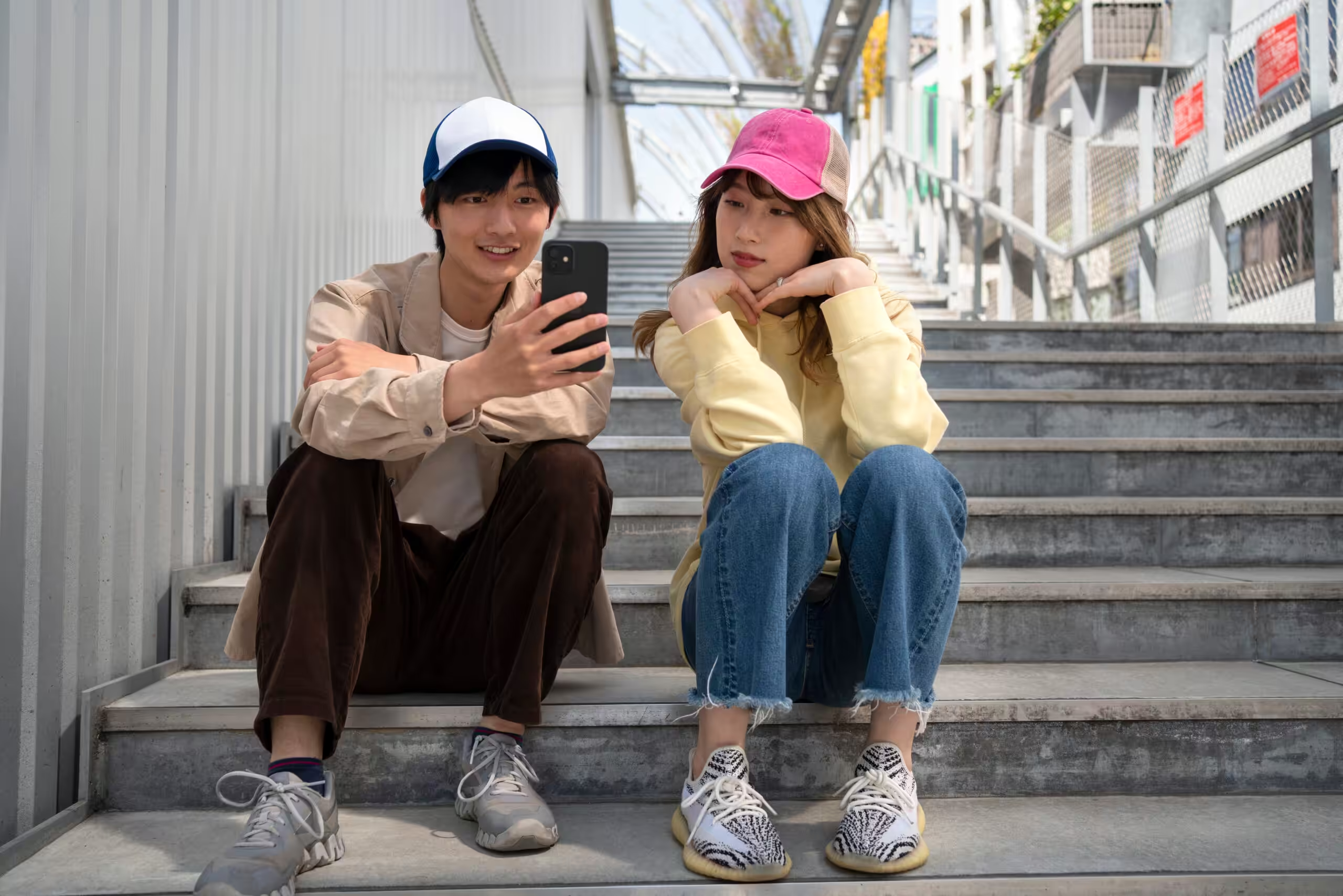
Most of these work in a school at a smaller scale: a class debate, a panel with school staff, a photo exhibition or an exchange of messages with a partner class in another country. The activities below turn each one into a lesson plan.
Eight International Youth Day activities for your classroom
These activities are Class2Class editorial proposals, written for this page. They have not been tested as a formal intervention, so adapt timings, language and content to your students and your school's policies. Each works with a single class, and six also work as an exchange with a partner class.
If 12 August falls in your school holidays, run an activity in the last week before the break or in the first weeks back, and date the exhibition or message exchange as close to 12 August as your calendar allows. Check both schools' calendars before you agree a date with a partner teacher.
Choose an activity
Swipe horizontally to see all columns
| Activity | From age | Total minutes |
|---|---|---|
| 1. Timeline detective | 9 | 30 |
| 2. Theme decoder | 13 | 45 |
| 3. Common hopes wall | 6 | 40 |
| 4. Youth Lens photo walk | 6 | 90 |
| 5. Intergenerational panel | 13 | 75 |
| 6. Shared challenges data lab | 13 | 50 |
| 7. Youth innovation sprint | 13 | 100 |
| 8. Messages across borders | 6 | 30 |
Each card below gives the full age bands and how the time splits across lessons.
1. Timeline detective: how the day began
In pairs, students put five event cards in order: the 1991 youth forum in Vienna, the 1998 ministers' conference in Lisbon, the 1999 UN resolution, the first observance in 2000 and this year's theme. The class then discusses two questions: why might young people have asked for a day of their own, and who made the decision?
- Ages and time: 9 to 12 and 13 to 15; 30 minutes
- Materials: the five timeline cards from the planning pack, or the dates in the history section above
- Learning outcome: students can explain when International Youth Day is, who established it and why, using dates from UN sources
- Differentiation: give younger students three cards and a word bank (forum, conference, resolution); ask older students to rewrite paragraph 7 of resolution 54/120 in plain language
2. Theme decoder
Students read the title of this year's theme and predict what it means before reading the UN description. Small groups take one sub-theme each (Global Solidarity, Shared Challenges or Youth Innovation), find one example from their own town or region, and write one question they would ask young people somewhere else. The class ends by writing the theme in its own words in one sentence.
- Ages and time: 13 to 15 and 16 to 18; 45 minutes
- Materials: the UN description of the current theme, printed or projected (swap in the new text each year); sticky notes
- Learning outcome: students can interpret an official UN text and connect it to their own community
- Differentiation: provide a glossary for context, aspiration, solidarity and the three country groups named in the 2026 theme; ask confident groups to compare the 2026 and 2025 themes
- With a partner class: swap the one-sentence versions and compare them
3. Common hopes wall
Each student writes or draws one hope for young people in their town or school, without their name. The class sorts the cards into groups, such as learning, friendship, nature, safety and future work, and looks at which hopes come up most. With a partner class, swap photos of both walls and ask: which hopes do we share, and which are different?
- Ages and time: 6 to 8, 9 to 12 and 13 to 15; 40 minutes, plus time for an exchange
- Materials: blank cards, pens and a wall or board
- Learning outcome: students can describe shared and different hopes respectfully, the central idea of the 2026 theme
- Differentiation: younger students draw and complete the sentence “I hope young people here can…”; older students link each group of cards to one of the 17 Sustainable Development Goals
- Privacy: ask for hopes about the community, not about students' families or circumstances. Read every card before you photograph or share the wall.
4. Youth Lens photo walk
Using the three prompts from the Class2Class Youth Lens project (My Learning Space, Education in My Community and What I Hope For), students photograph places and objects that show what learning means to them, then write a caption for each picture. The class curates a small exhibition, on the wall or online, to open on or near 12 August.
- Ages and time: 6 to 8, 9 to 12 and 13 to 15; two lessons of 45 minutes
- Materials: school cameras or tablets, or paper for drawings; a caption sheet
- Learning outcome: students can tell a short story about education with one photo and a caption
- Differentiation: younger students direct the teacher to take the photo, draw instead, or use caption starters; older students build a three-photo sequence with a 50-word reflection
- Privacy: no faces or other identifiable people, names, school badges, street signs or house numbers. Use school devices, remove location data before sharing, and follow your school's photo consent rules.
- With a partner class: exchange a set of photos and captions, then ask each class to write one question about the other's pictures
5. Intergenerational panel
The UN suggests round tables between adults and young people to build understanding between generations. Students prepare open questions about being young then and now (school, technology, work and hopes), invite two or three school staff members to a class panel and run it themselves, with a chair, a timekeeper and note-takers. They finish by summarizing three things that have changed and one that has not.
- Ages and time: 13 to 15 and 16 to 18, or upper primary with more support; 45 minutes to prepare and a 30-minute panel
- Materials: question cards and two or three adults from the school community who have agreed to take part
- Learning outcome: students can plan open questions, listen actively and summarize different points of view
- Differentiation: provide a question bank and fixed roles; for a stretch, compare the findings with the 2022 theme, Intergenerational Solidarity
- Privacy: keep questions on public topics and away from anyone's family life. Record the panel only if your school has the consent it requires.
6. Shared challenges data lab
Students chart three figures that the UN's 2026 concept note quotes from International Telecommunication Union data: 93 per cent of people in high-income countries used the internet in 2023, compared with 35 per cent in Least Developed Countries and 39 per cent in Landlocked Developing Countries. They discuss what the gap means for how young people learn and work, then redesign a class exchange so that it works without live video, using photos, voice notes or written posts.
- Ages and time: 13 to 15 and 16 to 18; 50 minutes
- Materials: the three figures above; graph paper or a spreadsheet
- Learning outcome: students can read a simple dataset, ask where it comes from, and explain one way unequal internet access affects young people
- Differentiation: give a ready-made bar chart to annotate; ask advanced students to find the original ITU figures and check the year and definitions
- Privacy: discuss countries, not classmates. Do not survey students about their own internet access or devices at home.
- With a partner class: share the redesigned exchange plan and agree which formats both classes can use
7. Youth innovation sprint
Teams choose a challenge young people face at school or in the local area, such as a quiet place to study or litter at the bus stop. They interview two classmates about the problem, sketch ideas, build a paper prototype, give a two-minute pitch and improve the idea using the feedback. Our guide to design thinking in a school project explains each step.
- Ages and time: 13 to 15 and 16 to 18; two lessons of 50 minutes
- Materials: sticky notes, paper and card for prototypes, a one-page pitch template
- Learning outcome: students can work through understanding a problem, generating ideas, prototyping and testing, and justify one idea with what users told them
- Differentiation: offer a shortlist of challenges and team roles; ask stretch teams to estimate costs and name who could help put the idea into practice
- Privacy: choose shared problems, not personal ones, and do not name or describe individuals. If a student raises a personal concern, follow your school's procedures.
- With a partner class: pitch to each other in a scheduled call, or swap one-page pitches
8. Messages across borders
The UN's 2026 campaign invited young people to share messages of hope, support and collaboration. Students write or draw a message to young people in another country: one thing they hope for them and one thing they could do together. Send the messages to a partner class through your project space, or display them at school.
- Ages and time: 6 to 8, 9 to 12, 13 to 15 and 16 to 18; 30 minutes
- Materials: the postcard template from the planning pack, or your Class2Class project space
- Learning outcome: students can write a respectful message for an audience they do not know, with attention to language and culture
- Differentiation: sentence frames or a drawing with one line of text for younger students; a message in two languages, or one that responds to the year's theme, for older students
- Privacy: first names only or no names, and no contact details, social media handles or photos of students. Post publicly, for example with #YouthDay, only from your school's official account and under school policy.
Download the International Youth Day planning pack
The planning pack puts all eight activities on printable cards, together with the timeline cards, a theme decoder sheet, the postcard template, a privacy checklist for partner exchanges and a short reflection sheet. Download the International Youth Day planning pack (PDF).
Take it global with two Class2Class project ideas
Both project ideas are free on the Class2Class platform and are planned as four-week projects in English. Start about a month ahead and you can finish with a shared event on or near 12 August. Adapt either plan with your partner teacher.
Two International Youth Day project ideas
Youth Lens: age groups 6 to 8, 9 to 12 and 13 to 15
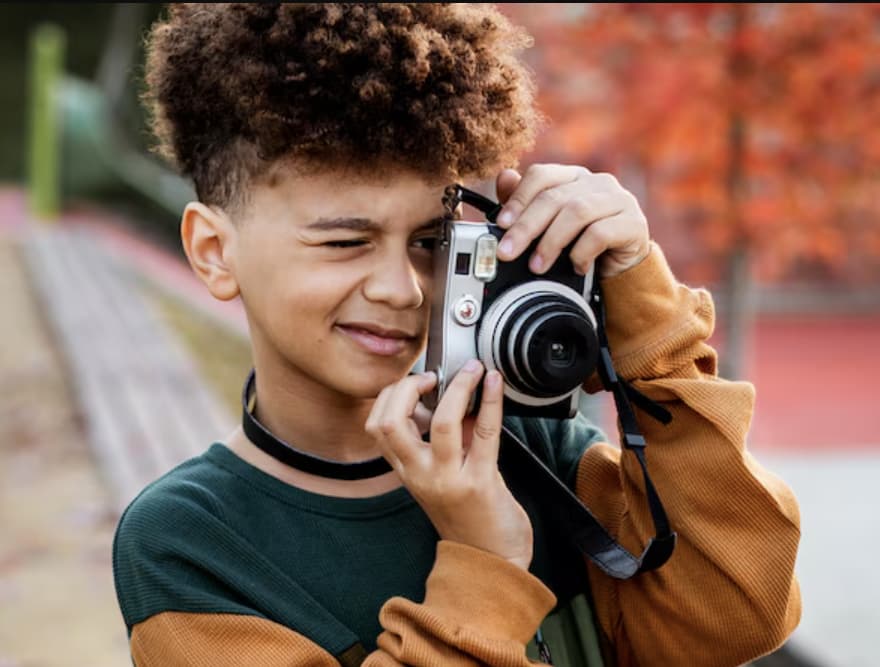
Students document their school and community through photography, exchange images with a partner class in another country, and finish with a virtual photo exhibition on International Youth Day. The project suggests three photo themes: My Learning Space, Education in My Community and What I Hope For. It is linked to SDG 4, Quality Education, and the photo walk in activity 4 can serve as its first week.
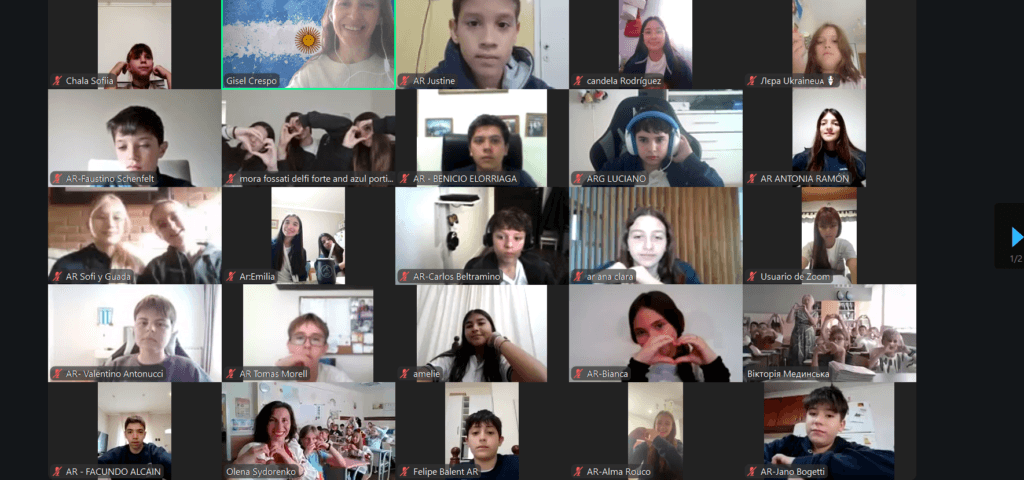
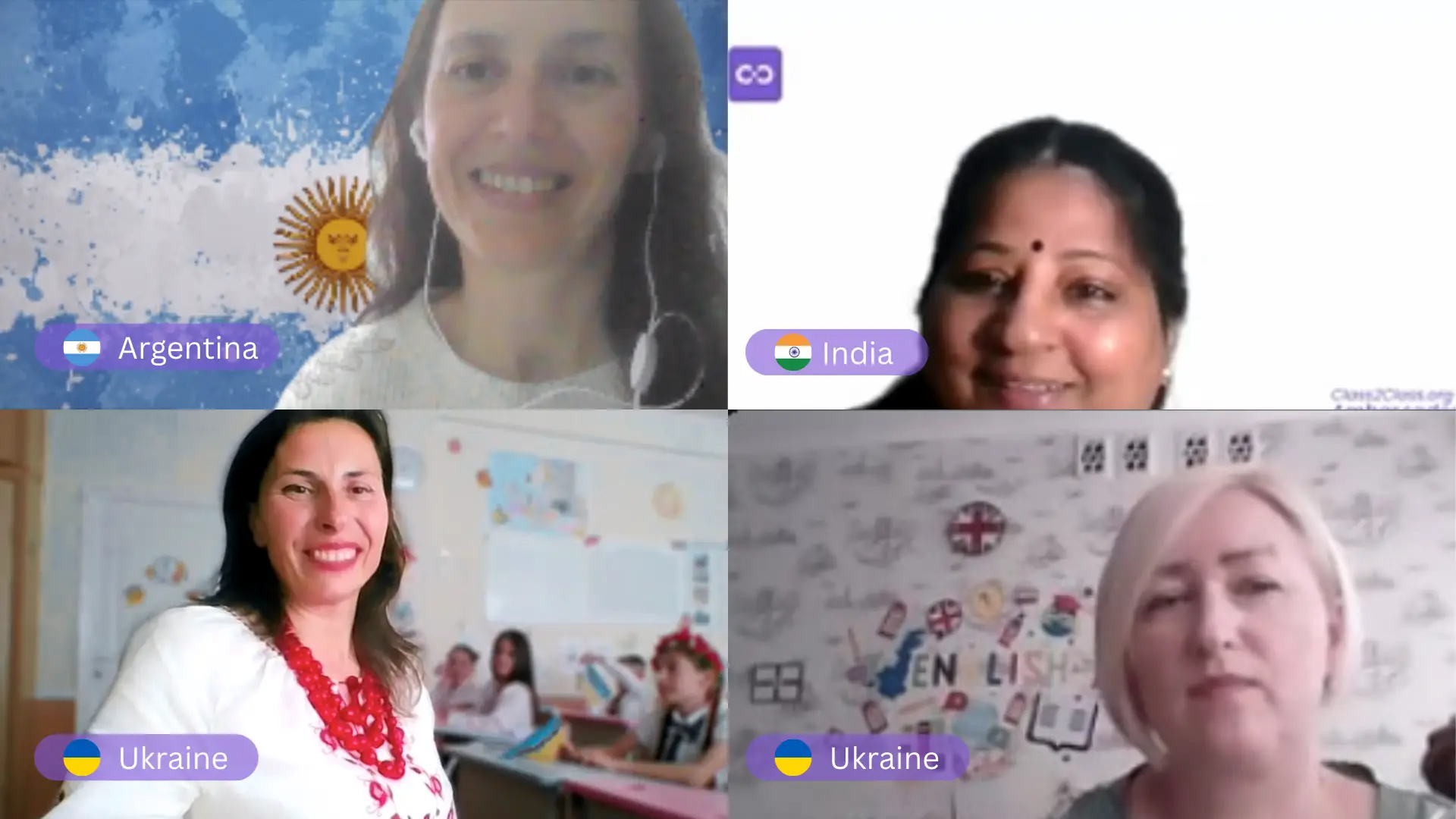
For a real example of classes comparing school life, read how classes in Argentina, India and Ukraine presented their schools to each other.
Youth-Led Solutions for a Better World: age groups 13 to 15, 16 to 18 and 18+
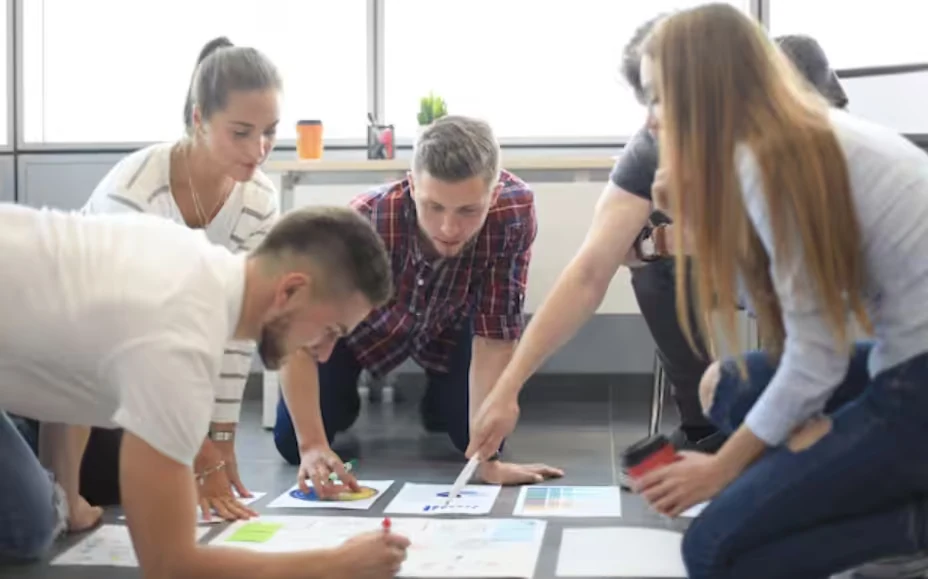
Teams from different countries research the challenges and opportunities young people face, from access to education and digital inclusion to climate anxiety and community well-being. They use a design-thinking process to plan solutions and present their action plans in an international showcase. It is linked to SDG 10, Reduced Inequalities. Treat climate anxiety and well-being as community topics, never as personal disclosures.
Intended learning focus
Both projects are designed to give students structured practice in the skills below. They are intended learning goals, not measured outcomes.
- Tell visual stories about everyday learning and compare different educational contexts.
- Identify and analyze the challenges and inequalities young people face in different places.
- Research, communicate and solve problems with peers in another country.
- Create and present solutions to issues that matter to young people.
Planning a longer unit? Our guides to teaching SDG 4 in the classroom and to global citizenship education show where these projects fit in a wider curriculum.
Safeguarding and privacy in youth-voice activities
Youth-voice work asks students to talk about their lives, so agree the boundaries before anyone shares anything. These rules apply to every activity on this page:
- Keep questions at community level. Ask about the school, town or country, never about students' families, health, money, religion or legal status.
- Use first names only, or no names, in anything that leaves your classroom.
- Share photos, messages and recordings only inside a teacher-moderated project space. The Class2Class Ethical Guidelines ask everyone not to record or screenshot others without permission, and not to share session images outside the project.
- Publish an image of a student or their work only with the consent your school requires. The Class2Class child safeguarding policy holds our own staff to the consent of the child, their teacher and, for children under 13, a parent or guardian.
- Before students meet, agree with your partner teacher what will be shared, who moderates, and when either of you will pause the activity.
- Offer an equivalent private task to any student who prefers not to join an exchange.
- If a student discloses something worrying, pause the activity and follow your school's safeguarding procedure.
The Class2Class platform safeguards support these rules: teachers invite their own students, students under 13 cannot send one-to-one messages, and chats for students under 16 are group-only.
How we prepared this page
Gloria Palomino Silva maintains this guide for Class2Class. The dates, the resolution and the themes link to the United Nations pages they come from, and we last checked those pages on 26 September 2026. The activities are our editorial proposals, not tested interventions. Gloria reviews the page each year when the UN announces the new theme; the date at the top shows the latest update.
Continue from planning to action
Choose one activity for this year, or browse current collaboration projects to find a partner class. Class2Class is free for teachers and students. The two teachers in an exchange stay responsible for adapting any activity to their students and school policies. For other dates across the school year, see the SDG Calendar.
Frequently asked questions
When is International Youth Day?
International Youth Day is on 12 August every year. The UN first observed it on 12 August 2000, and in 2027 the date falls on a Thursday.
What is the theme of International Youth Day 2026?
The 2026 theme is “Different Contexts, Common Aspirations”, with three sub-themes: Global Solidarity, Shared Challenges and Youth Innovation. The UN had not announced the 2027 theme when we last checked on 26 September 2026.
Who started International Youth Day?
Young people at the first session of the World Youth Forum of the United Nations System, in Vienna, proposed it in 1991. The World Conference of Ministers Responsible for Youth recommended 12 August in 1998, and the UN General Assembly endorsed it in resolution 54/120 on 17 December 1999.
How can we mark International Youth Day if school is closed on 12 August?
Run a short activity in the last week before the holidays or in the first weeks back, and date your exhibition or message exchange as close to 12 August as you can. Both Class2Class project ideas on this page run for four weeks, so a partner exchange can span the date.
Is International Youth Day the same as World Youth Skills Day?
No. World Youth Skills Day is a separate UN day on 15 July. The UN General Assembly declared it in 2014 to highlight skills for employment, decent work and entrepreneurship.
Do students have to share personal information in these activities?
No. Every activity works with community-level or anonymous responses. Do not ask students about their families, health, money or other private matters, and share names, photos or messages only inside a teacher-moderated project space, following your school's rules.